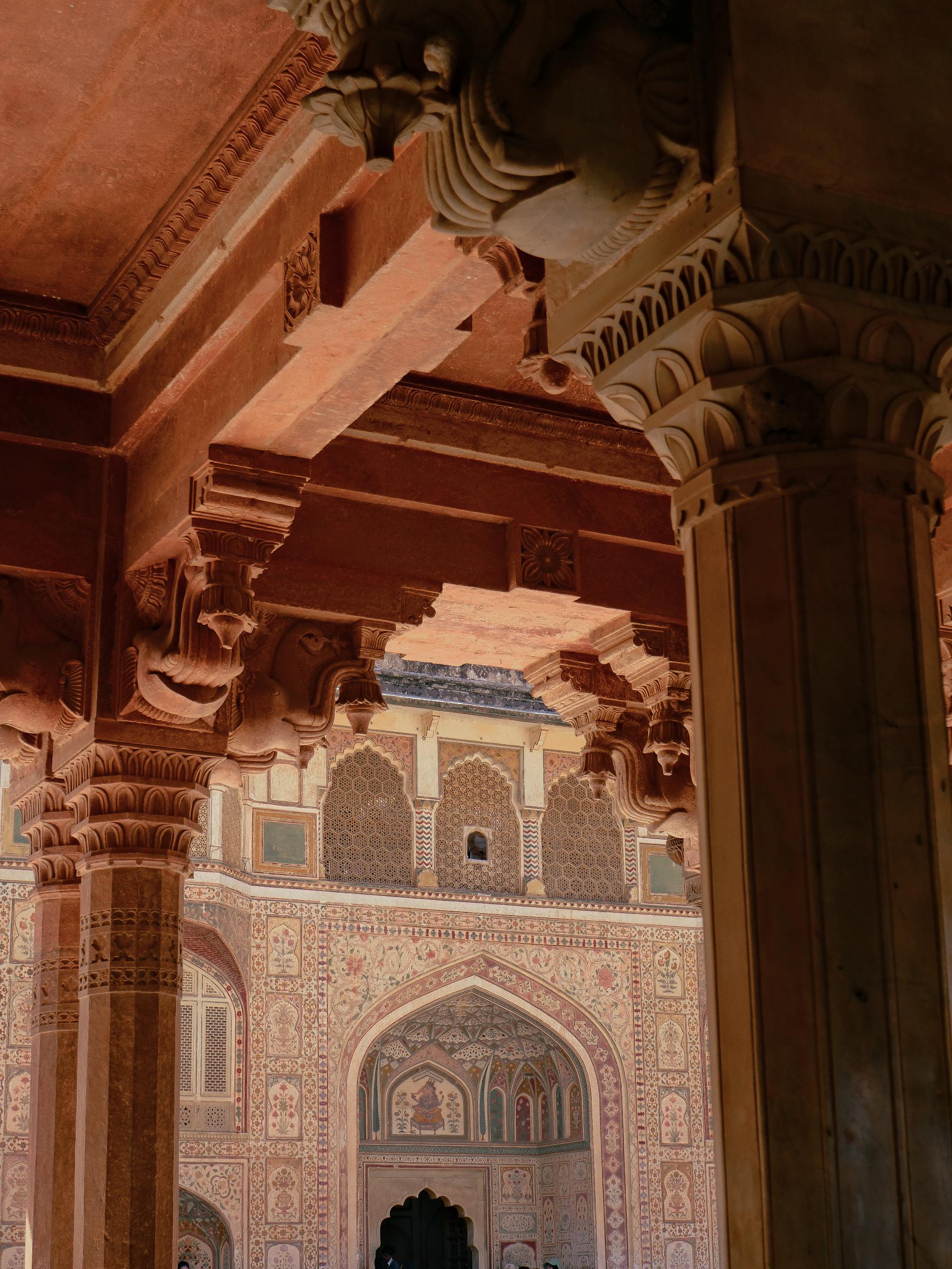
Jaipur, the Pink City of Rajasthan, is one of India's most visually arresting destinations. Founded in 1727 by Maharaja Jai Singh II, it was the first planned city in India — its broad grid streets and rose-pink painted buildings creating an architectural harmony that still captivates visitors today.
Jaipur, the Pink City of Rajasthan, is one of India's most visually arresting destinations. Founded in 1727 by Maharaja Jai Singh II, it was the first planned city in India — its broad grid streets and rose-pink painted buildings creating an architectural harmony that still captivates visitors today. Jaipur forms the third vertex of India's Golden Triangle (with Delhi and Agra), and for good reason: within a compact area you'll find three UNESCO-recognised hill forts, a magnificent royal palace still occupied by the royal family, jewellery bazaars selling some of India's finest gemstones, and a food culture built on spiced meats, flaky breads, and sweet indulgences that rivals anywhere in the country.
Top Attractions
Amber Fort (Amer Fort) is Jaipur's crown jewel — a palatial hilltop fortress built from pale yellow and pink sandstone, with mirrored halls, elephant stables, and sweeping views across the Aravalli hills. Arrive early to beat crowds and take the elephant ride (or walk) up the zigzag approach. The Hawa Mahal (Palace of Winds), Jaipur's most photographed facade, is a five-storey pink sandstone screen of 953 windows through which royal ladies once watched street processions without being seen. The City Palace complex in the old city remains the residence of Jaipur's royal family; the public museum section displays royal costumes, weapons, and the famous pair of giant silver urns — the largest silver objects in the world — used to carry Ganges water to England. The Jantar Mantar astronomical observatory, a UNESCO World Heritage Site, is an extraordinary collection of masonry instruments built in 1734 that can measure time to within two seconds' accuracy. Jaipur is also within easy reach of Nahargarh Fort, which crowns the ridge above the city and offers the best sunset panoramas.
Cultural Experiences
Jaipur is a living craft city. The old city's bazaars are India's finest concentration of artisan workshops: Johari Bazaar for gemstones and jewellery, Bapu Bazaar for block-printed textiles and jootis (traditional leather shoes), Kishanpole Bazaar for lac bangles, and Tripolia Bazaar for brasswork. Many workshops allow visitors to watch craftspeople at work. The Anokhi Museum of Hand Printing in Amber village provides an excellent introduction to Rajasthan's textile traditions with live demonstrations. For performing arts, the Rajasthani folk dance and puppet shows at Chokhi Dhani (a heritage village resort on the outskirts) are a crowd-pleasing introduction to local culture. Cooking classes focused on Rajasthani cuisine — dal baati churma, laal maas (red meat curry), and ghevar (a festival sweet) — are offered by several guesthouses in the old city.
Day Trips
Jaipur's surrounding region is rich with day-trip options. Pushkar (1.5 hours) is one of India's holiest Hindu towns — a surreally beautiful lake city dotted with ghats and one of the few Brahma temples in the world. Visit during the Pushkar Camel Fair (November) for one of Asia's most extraordinary spectacles. Ranthambore National Park (3 hours) is one of India's best places to spot Bengal tigers in the wild; early morning and evening safaris in open jeeps are thrilling. The ruined city of Bhangarh (2.5 hours), reputedly one of India's most haunted locations, makes a fascinating excursion. The hilltop temples at Abhaneri Step Well (Chand Baori), a 9th-century geometric marvel with 3,500 steps, is one of India's most photogenic historical sites.
Food Culture
Jaipur's food scene is anchored by Rajasthan's robust, spice-heavy cuisine. Dal baati churma — baked wheat balls served with lentil soup and sweet crumbled bread — is the definitive Rajasthani meal and available at every dhaba (roadside restaurant). Laal maas, a fiery lamb curry slow-cooked with dried red chilies, is one of India's great regional dishes; try it at Suvarna Mahal or Handi. Jaipur is also India's finest city for pyaaz ki kachori (onion-filled fried pastry) and mirchi vada (chili fritters) — both street snacks available at Rawat Mishthan Bhandar, open since 1930. The old city's lassi shops serve thick, creamy yogurt drinks in clay cups. For modern dining, the rooftop restaurants around Hawa Mahal and M.I. Road offer both Rajasthani and international menus with fort views.
Practical Tips
The Jaipur City Palace, Amber Fort, Jantar Mantar, and Nahargarh Fort can be accessed on a combined ticket (Composite Ticket) valid for two days, saving considerable money. Auto-rickshaws and cycle rickshaws are the best way to navigate the narrow lanes of the old city; agree on prices before departure. The old city is best explored on foot in the early morning before the heat builds. Dress modestly at religious sites — the Govind Dev Ji Temple inside the City Palace complex requires arms and legs to be covered. Bargaining is expected in bazaars but maintain good humour. The currency is the Indian Rupee (INR). October to March is by far the best time to visit — summer temperatures reach 45°C and are brutal for sightseeing.