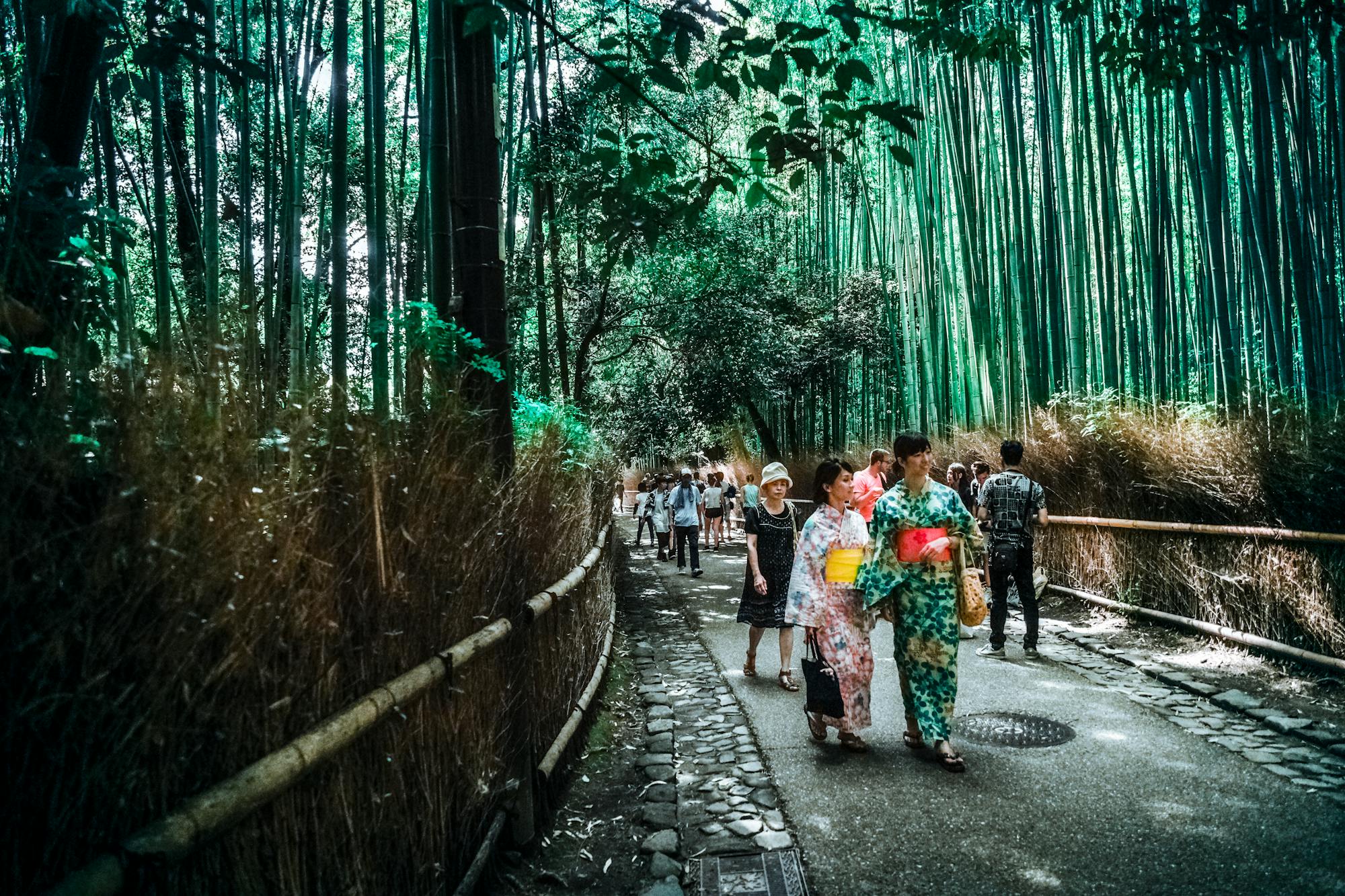
Kyoto is Japan's cultural soul — a city of over 2,000 temples and shrines, 17 UNESCO World Heritage Sites, intact geisha districts, and the country's finest cuisine, best explored by walking ancient pilgrimage paths at dawn and watching geiko glide through lantern-lit alleys at dusk.
Top Things to Do in Kyoto
1. Walk the Fushimi Inari Torii Gates at Dawn
Fushimi Inari Taisha's thousands of vermillion torii gates winding 4 km up Mt. Inari is Kyoto's single most iconic image — and one of Japan's greatest walks. The famous lower gates are photographed by millions every day; hike to the summit (90 minutes) and the trail becomes nearly silent, the gates fading into deep cedar forest. Arrive at 6am before the tour buses and you'll have the lower gates almost entirely to yourself. Free, open 24 hours.
2. Explore Arashiyama: Bamboo, Temples & the River
The Arashiyama district in western Kyoto combines several unmissable experiences within walking distance of each other:
- Arashiyama Bamboo Grove: A cathedral of towering bamboo — at its most atmospheric in early morning before 7am, when mist lingers between the stalks and the hollow knocking of bamboo in the wind is the only sound.
- Tenryu-ji Garden: One of Kyoto's finest Zen gardens, with a central pond reflecting the forested Arashiyama mountains. The garden was designed 700 years ago to frame the natural landscape beyond its walls — a technique called shakkei (borrowed scenery).
- Jojakko-ji & Nison-in: Two quieter temples on the Arashiyama hillside that most visitors skip. Jojakko-ji's moss-covered stone steps beneath maple trees is one of Kyoto's most beautiful scenes in autumn.
- Hozu River boat ride: A 2-hour ride downstream through mountain gorges on traditional flat-bottomed boats. The scenery is stunning; the boatmen skilled.
3. Wander Gion at Dusk
Kyoto's most famous geisha district is best experienced in the early evening, when wooden machiya townhouses glow with warm lantern light and the occasional geiko (Kyoto's geisha) rushes to an appointment along Hanamikoji Street. The best time for geiko sightings is 5:30–7pm. Photography of geiko on the street has become contentious — admire from a distance and don't block their path.
Gion Matsuri (the entire month of July) transforms the district into one of Japan's greatest festivals, with the main float processions on July 17 and 24 drawing hundreds of thousands of visitors.
4. Walk the Philosopher's Path
A 2 km canal-side path connecting Nanzen-ji to Ginkaku-ji (the Silver Pavilion) through Kyoto's Higashiyama foothills. Named after philosopher Nishida Kitaro, who supposedly contemplated life during his daily walks here. The path is lined with cherry trees — one of Kyoto's finest blossom corridors in late March to early April. Along the way: Eikan-do, Honen-in, and Otoyo Shrine (famous for its fox statues).
5. Kinkaku-ji (The Golden Pavilion)
Japan's most photographed building — a Zen temple covered in gold leaf reflected in a mirror pond. Yes, the crowds are significant. No, that doesn't diminish it. The gold catches the light differently at each season: brilliant in autumn sun, ethereal in winter snow, softened by cherry blossoms in spring. Visit early morning (opening at 9am) or on weekday afternoons for the thinnest crowds.
6. Experience a Tea Ceremony
Kyoto is the birthplace of Japanese tea culture, and authentic tea ceremony experiences range from 30-minute introductory sessions to multi-hour formal ceremonies in historic tea rooms. En tea ceremony experience in Gion, and Urasenke Foundation (the most prestigious tea school in Japan) both offer experiences to visitors. A genuine chado ceremony is one of the most memorable hours you can spend in Japan.
7. Nishiki Market — Kyoto's Kitchen
A narrow, 400-metre covered market in central Kyoto packed with over 100 stalls and shops selling pickled vegetables, tofu, yuba (tofu skin), fresh mochi, grilled skewers, and matcha everything. This is where Kyoto's restaurants source their ingredients, and where visitors eat their way from one end to the other. Go at lunch; most vendors close by 6pm.
8. Kiyomizudera — The Stage Temple
Built into the eastern Higashiyama mountains, Kiyomizudera's wooden stage juts out 13 metres over the forested hillside — constructed without a single nail. The views over Kyoto are remarkable. The surrounding Higashiyama district — stone-paved lanes of traditional craft shops, tea houses, and smaller temples — deserves as much time as the temple itself.
Best Things to Do in Kyoto: Hidden & Overlooked
- Fushimi Momoyama: South of central Kyoto, the Fushimi district combines the torii gates of Fushimi Inari with sake brewery tours in the adjacent Fushimi Momoyama area — one of Japan's most historically significant brewing regions. Gekkeikan Okura Sake Museum offers excellent tastings.
- Kurama & Kibune: Two mountain villages north of Kyoto connected by a hiking trail through cedar forest. Kurama-dera temple sits dramatically on the mountainside; Kibune's riverside restaurants serve kaiseki meals above a rushing mountain stream in summer.
- Daitoku-ji Temple Complex: A walled complex of 24 sub-temples in northern Kyoto — most entirely crowd-free. Several sub-temples open their gardens seasonally; Daisen-in has one of Kyoto's finest dry rock gardens.
- Fushimi Inari night walk: The torii gate mountain is open 24 hours and lit at night. Walking up after dark with a lantern is eerie, atmospheric, and crowd-free. One of Kyoto's best-kept secrets.
- Nijo Castle: The shogun Tokugawa's Kyoto headquarters — famous for its "nightingale floors" that squeak underfoot to alert guards to intruders. The painted screen interiors are some of the finest examples of Momoyama-period art in Japan.
Top Things to Do in Kyoto by Season
- Spring (March–April): Cherry blossoms along Maruyama Park, Philosopher's Path, and Hirano Shrine; Yasaka Shrine lanterns at night
- Early Summer (May–June): Hydrangea season at Mimurotoji and Meigetsu-in; pre-summer quiet; Aoi Matsuri festival (May 15)
- Autumn (November): Koyo foliage at Tofuku-ji, Eikan-do, and Arashiyama; night illuminations at Kiyomizudera and Kodai-ji
- Winter (January–February): Snow on Kinkaku-ji and Fushimi Inari; the quietest days of the year; Setsubun at Yoshida Shrine (February 3)