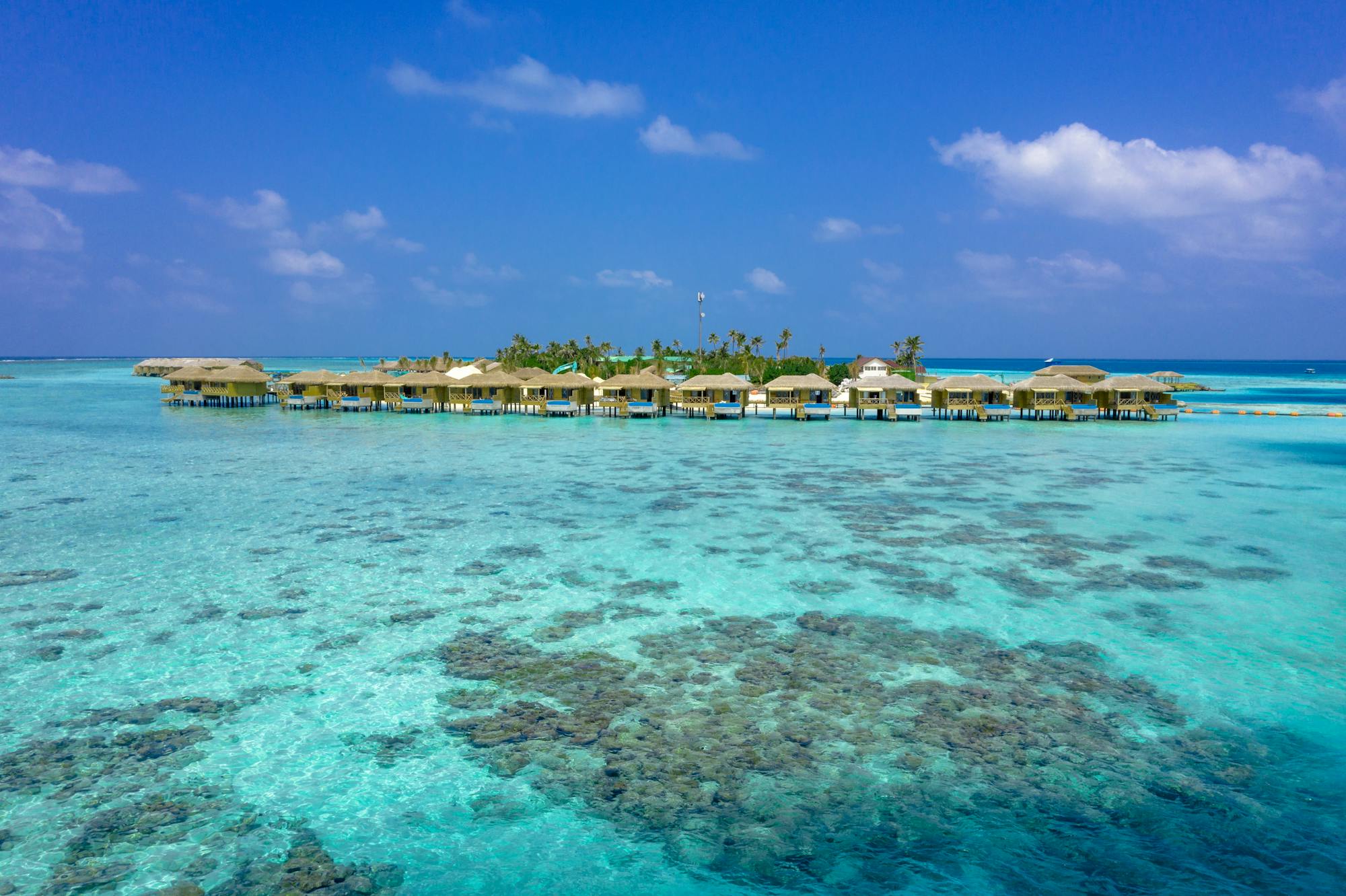
The Maldives — 1,200 coral islands scattered across the Indian Ocean southwest of Sri Lanka — is the world's lowest country and arguably its most visually perfect tropical destination. Here, the sea is so clear you can see fish from the deck of an overwater bungalow. The coral reefs that encircle each atoll are among the healthiest on the planet, nurturing populations of reef sharks, manta rays, turtles, and thousands of fish species.
The Maldives — 1,200 coral islands scattered across the Indian Ocean southwest of Sri Lanka — is the world's lowest country and arguably its most visually perfect tropical destination. Here, the sea is so clear you can see fish from the deck of an overwater bungalow. The coral reefs that encircle each atoll are among the healthiest on the planet, nurturing populations of reef sharks, manta rays, turtles, and thousands of fish species. While the Maldives has long been synonymous with luxury resort escapes, the destination offers far more — from local island culture and Maldivian cuisine to world-class surf breaks and unforgettable underwater adventures.
Top Attractions
Snorkelling is available directly from the beaches and jetties of almost every resort and local island, with coral gardens beginning just metres from the shore. The house reef at many resorts supports incredible biodiversity — nurse sharks resting on the sandy bottom, hawksbill turtles grazing on coral, and clouds of parrotfish and butterflyfish. Scuba diving is the Maldives' premier activity: sites like Maaya Thila (Ari Atoll), Fish Head, and the Banana Reef in North Malé Atoll regularly feature among the world's top dive sites. Night dives reveal bioluminescent plankton and sleeping reef sharks. Whale shark encounters in South Ari Atoll, where these gentle giants congregate year-round, are life-defining experiences. Manta ray cleaning stations at Hanifaru Bay in Baa Atoll (a UNESCO Biosphere Reserve) host the world's largest known gatherings of manta rays during the southwest monsoon season (May–November). Sandbanks (finolhu) — tiny temporary islands of pure white sand appearing at low tide — are perfect for private picnic excursions arranged by resorts.
Cultural Experiences
Visiting a local island provides genuine insight into Maldivian life beyond the resort bubble. Islands like Maafushi, Thoddoo, and Fulhadhoo have guest houses, local restaurants, Friday mosques, and community life that contrasts sharply with resort living. Maldivian culture is shaped by its Islamic faith (Friday prayers are a central community event), Dravidian and Arab maritime trading heritage, and the ever-present relationship with the sea. Traditional bodu beru music and dance performances — featuring large drums, choral singing, and increasingly energetic dance — are held at many resorts and on local islands. Visit a local fishing village in the early morning as the traditional dhoni boats return with the night's catch of tuna — the cornerstone of Maldivian cuisine. Sunset dolphin cruises in traditional dhonis are a nightly ritual at most resorts, with spinner dolphins reliably putting on spectacular displays.
Day Trips
Male city, the tiny but densely populated capital, is a fascinating contrast to resort life — a city of 150,000 people crammed onto a 2 km² island, with the Old Friday Mosque (Hukuru Miskiy), the National Museum, and the vibrant local market all within walking distance. Most resorts near North Malé Atoll offer Male day trips. Hulhumale, the artificially created island adjacent to the airport, has growing cafés, beach areas, and the pink-sand beaches of Coral Garden. Day trip to sandbanks (organized by resorts) typically include snorkelling, a beach barbecue, and snorkelling gear. For surf enthusiasts, the wave breaks around North and South Malé Atolls — including Pasta Point, Chickens, and Coke's — are world-class from February to November.
Food Culture
Maldivian cuisine is built around fresh tuna — grilled, smoked, dried, or shredded into every dish. Mas huni (shredded smoked tuna with coconut, onion, and chili) served with roshi (flatbread) is the quintessential Maldivian breakfast, available at every local island café. Garudhiya, a clear tuna broth seasoned with lime and chili, is the national soup — deceptively simple but deeply satisfying. Rihaakuru, a thick brown tuna paste, is stirred through rice or eaten with flatbread. On local islands, small restaurants (known as hotaa) serve fresh seafood, curries, and short eats (fried snacks) at a fraction of resort prices. Resorts offer international menus and overwater dining experiences — sunset cocktails and lobster on your own deck above the lagoon are a Maldivian cliché for good reason.
Practical Tips
The Maldives is an Islamic country — alcohol is only available on resort islands (not local islands), and dress conservatively when visiting local communities (cover arms and legs, no bikinis in public areas of local islands). Travel between islands is by speedboat transfer (20–90 minutes depending on resort location) or seaplane (the most dramatic arrival possible, landing on the lagoon). Seaplane transfers only operate in daylight hours, so late-arriving flights may require a night in Male. Book seaplane transfers well in advance during peak season. The Maldivian currency is the Rufiyaa (MVR) but US dollars are accepted everywhere. Tipping is appreciated at resorts. Apply reef-safe sunscreen and never touch or stand on coral — the reefs are under significant climate pressure and require every diver and snorkeller's respect.