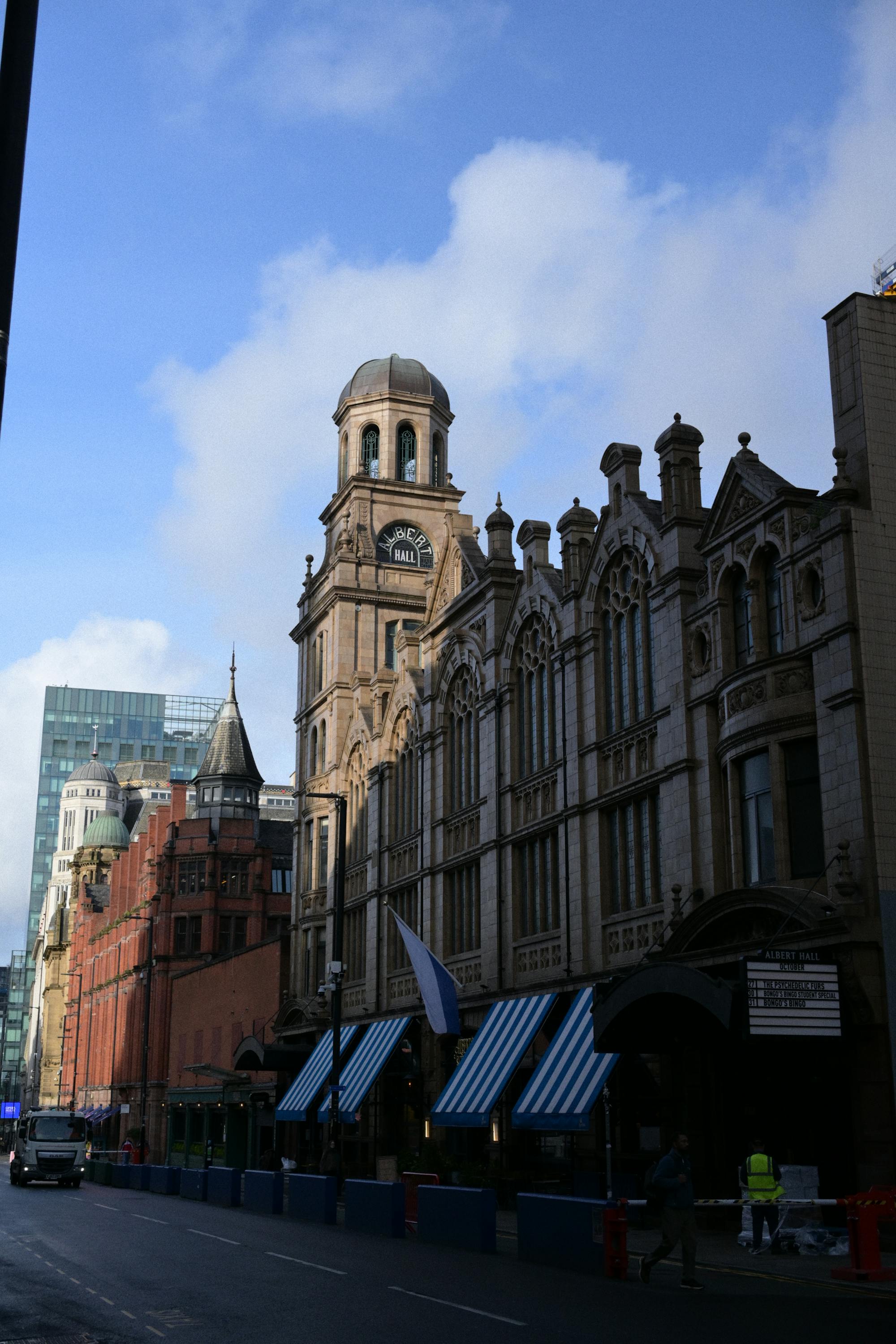
Manchester is northern England's most dynamic and culturally vibrant city — a former industrial powerhouse that reinvented itself as a global centre for music, art, sport, and food. This is the city that gave the world the Hallé Orchestra, the Haçienda and the Madchester movement, Oasis and The Smiths, two of the world's most famous football clubs, and a civic confidence that has driven one of Europe's most remarkable urban regeneration stories.
Manchester is northern England's most dynamic and culturally vibrant city — a former industrial powerhouse that reinvented itself as a global centre for music, art, sport, and food. This is the city that gave the world the Hallé Orchestra, the Haçienda and the Madchester movement, Oasis and The Smiths, two of the world's most famous football clubs, and a civic confidence that has driven one of Europe's most remarkable urban regeneration stories. Modern Manchester is ambitious, creative, proudly working-class in its roots yet increasingly international in its outlook.
Top Attractions
The Science and Industry Museum in Castlefield occupies the world's oldest surviving railway station and tells the story of Manchester's role in the Industrial Revolution with extraordinary original machinery — one of the best free museums in Britain. The Manchester Art Gallery holds an exceptional collection of Pre-Raphaelite paintings alongside outstanding temporary exhibitions. Old Trafford Stadium tours (Manchester United) and the Etihad Campus (Manchester City) are essential for football lovers. The John Rylands Library on Deansgate is a jaw-dropping Victorian Gothic building housing one of the world's great collections of rare books — the interior rivals any cathedral in England. Chetham's Library, the oldest free public library in the English-speaking world (1653), has the desk where Marx and Engels researched Das Kapital. The Northern Quarter is Manchester's creative heart — vintage shops, independent record stores, street art, and the legendary Afflecks Palace market.
Local Culture and Food
Manchester's food scene has exploded, with Michelin-starred restaurants alongside outstanding street food markets. Mackie Mayor in the Northern Quarter is a Victorian market hall converted to a spectacular food hall. Manchester's Chinatown is the second-largest in Britain and outstanding for dim sum. The city's music heritage is unmatched — the Manchester International Festival (biennial, odd years) is one of the world's great arts events; the Warehouse Project and Parklife Festival cement Manchester's status as the UK's dance music capital. The HOME arts centre on First Street combines theatre, cinema, and visual art in one of the UK's most impressive contemporary cultural buildings.
Day Trips and Excursions
Manchester is one of Britain's best-connected cities for day trips. The Peak District begins just 30 minutes from the city centre — Kinder Scout plateau and Chatsworth House are all easily accessible. Liverpool is 45 minutes by train. Chester (45 minutes) offers Roman and medieval history. Salford's MediaCityUK, connected by tram, is home to the BBC and ITV studios and the outstanding Lowry gallery and theatre.
Practical Tips
Manchester has excellent transport: Piccadilly station connects to London Euston in 2 hours, and the city has Britain's largest tram network (Metrolink) linking the airport, suburbs, and major attractions. Most central attractions are within a 20-minute walk of Piccadilly or Victoria station. Manchester's weather is famously rainy — always carry a waterproof. Most major museums and galleries are free. The Metrolink day ticket (around £5) gives unlimited tram travel throughout the city region.