Mexico holds more UNESCO World Heritage sites than any other country in the Americas — a country of breathtaking diversity where ancient civilizations built monumental cities, Caribbean turquoise waters lap pristine beaches, and colonial-era towns preserve centuries of Spanish and indigenous heritage. It is the 14th largest country on Earth, and its landscapes range from the stark beauty of Baja California's desert coastline to the lush rainforests of Chiapas, from the volcanic highlands of central Mexico to the coral-fringed shores of the Yucatán Peninsula. Add to this a culinary tradition recognized by UNESCO as an Intangible Cultural Heritage of Humanity, and Mexico reveals itself as a destination of inexhaustible richness.
Top Attractions
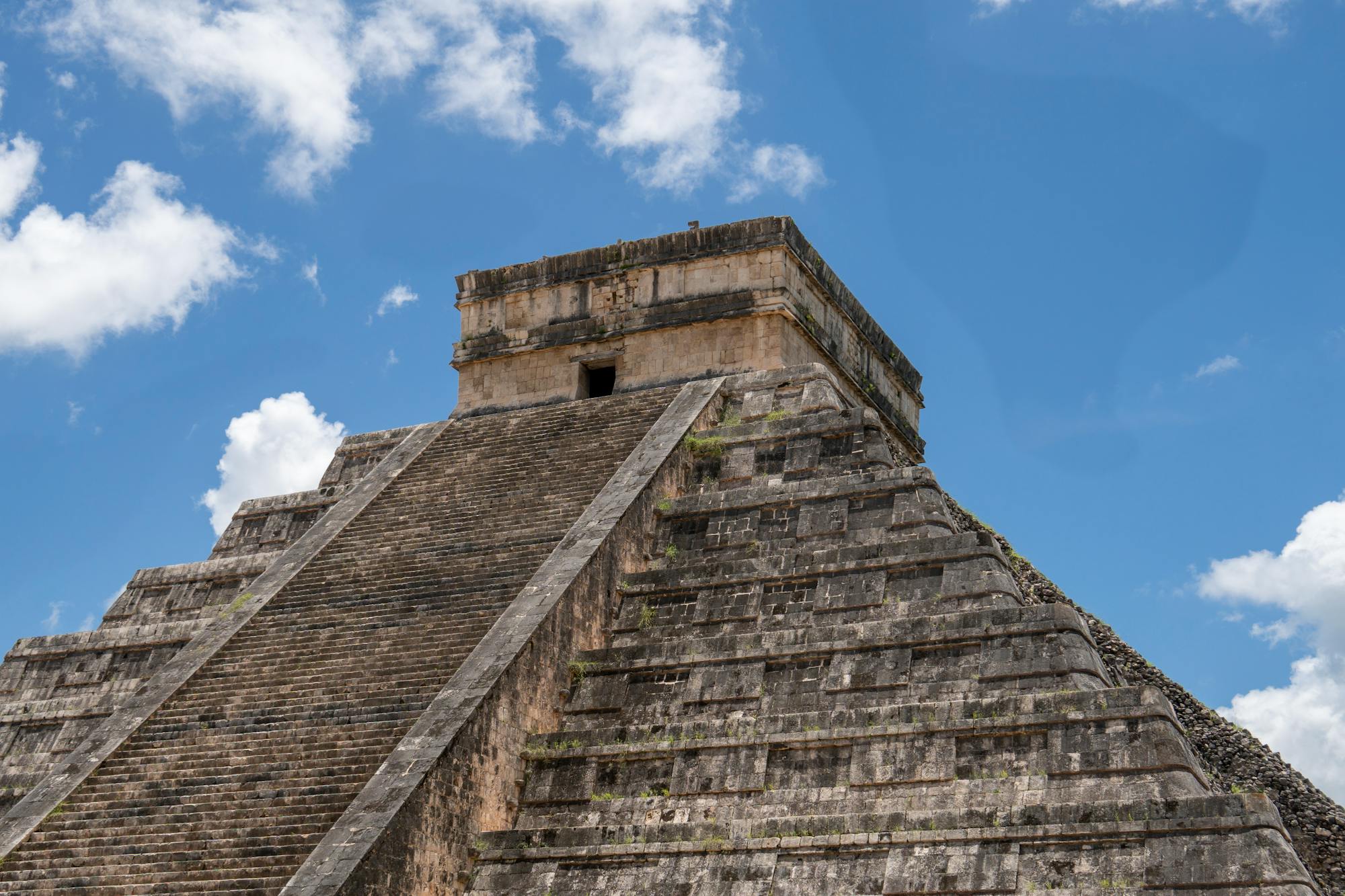
Chichén Itzá in the Yucatán Peninsula is one of the New Seven Wonders of the World — the massive El Castillo pyramid, built by the Maya civilization, is perfectly aligned with the sun during the spring and autumn equinoxes, creating a serpent shadow effect that draws tens of thousands of visitors, particularly around the March and September equinoxes; arriving soon after the site opens at 8am is the best way to see El Castillo before the tour buses from Cancún arrive and the midday heat sets in. Teotihuacán, just outside Mexico City, is one of the largest pre-Columbian cities ever built — the Pyramid of the Sun and Pyramid of the Moon are among the most impressive ancient structures in the Americas. The Cenotes of the Yucatán — natural sinkholes filled with crystal-clear fresh water connected to underground river systems — are magical swimming and snorkeling destinations. Palenque in Chiapas is a stunning Maya ruin complex emerging from the jungle with intricately carved temples and palaces. The colonial city of Guanajuato with its colorful hillside buildings, underground road network, and vibrant cultural life is one of Mexico's most beautiful cities.
Unique Experiences
Mexico's unique cultural offerings go far beyond archaeology. Witnessing the Día de los Muertos (Day of the Dead) celebrations in Oaxaca, Michoacán, or Mexico City in late October and early November is one of the world's most powerful cultural experiences — elaborately decorated altars, marigold-strewn cemeteries, and community celebrations — nowhere more atmospheric than Janitzio Island on Lake Pátzcuaro in Michoacán, where fishing families keep candlelit vigil among the graves through the night — honoring deceased ancestors. Visiting a mezcal distillery in Oaxaca's Valleys to learn about the ancient tradition of agave spirits production is deeply rewarding. Whale watching in Baja California (January–March) offers close encounters with gray whales, blue whales, and humpbacks in their calving lagoons. Exploring the Riviera Maya — snorkeling the world's second-largest coral reef, swimming in cenotes, and visiting the clifftop ruins of Tulum overlooking the Caribbean — offers a perfect blend of nature and history.
Day Trips from Major Hubs
Mexico's well-connected transport network makes day trips easy from major visitor hubs. From Mexico City, visit the floating gardens of Xochimilco — best combined with a trajinera boat ride and a wander through the capital's Roma Norte and Condesa neighbourhoods — the ancient city of Teotihuacán, and the colonial town of Taxco famous for silver craftsmanship. From Cancún, day trips reach Chichén Itzá, the Sian Ka'an Biosphere Reserve, the archaeological site of Cobá (with its climbable pyramid), and the cenote-dotted towns of the Yucatán interior. From Oaxaca City, visit the ancient Zapotec site of Monte Albán, the Hierve el Agua petrified waterfalls, and indigenous villages known for hand-woven textiles. From Puerto Vallarta, boat trips reach the secluded beaches of the Marietas Islands (including the famous Hidden Beach).
Food and Culture
Mexican cuisine is among the world's greatest — a sophisticated tradition built on corn, chili, chocolate, beans, and an extraordinary range of regional ingredients and techniques. Oaxaca is Mexico's culinary capital — home to seven mole varieties, tlayudas, chapulines (toasted grasshoppers), and world-class mezcal. Tacos come in infinite regional variations: pastor (spit-roasted pork) in Mexico City, fish tacos in Baja, cochinita pibil (slow-roasted pork) in the Yucatán. Ceviche and seafood are exceptional along all coastal regions. Street food culture is extraordinary across the country, and Mexico City's permanent markets — among them Mercado de San Juan for exotic ingredients and the vast Mercado de la Merced — are as good a place as any to eat like a local — from tamales and elotes (grilled corn) to churros and fresh-squeezed juices. Culturally, Mexico's folk art tradition produces extraordinary textiles, pottery, alebrijes (painted wooden creatures), and silver jewelry found in markets and craft shops throughout the country.
Practical Tips
Mexico's domestic flight network is extensive and well-priced, anchored by Mexico City's Benito Juárez International Airport and served by the flag carrier Aeroméxico alongside low-cost operators Volaris and VivaAerobus, making it easy to combine a Yucatán beach stay with a few days in the colonial highlands or on the Pacific coast. Spanish is the official language — learning basic phrases is appreciated and makes travel much smoother outside tourist areas. The Mexican peso (MXN) is the currency, and tipping (propina) of around 10–15% is customary in sit-down restaurants, alongside small cash tips for hotel staff and tour guides — US dollars are accepted at many tourist spots but often at unfavorable rates. Safety varies significantly by region — tourist areas like the Yucatán Peninsula, Oaxaca, Los Cabos, and Mexico City's main neighborhoods are generally safe for tourists, while some states have significant security concerns. Always research your specific destination before visiting. Broadly, Mexico has a dry season from November to April, when skies are clearest across the highlands and the Yucatán, and a wetter season from May to October bringing short, heavy afternoon showers rather than all-day rain; both the Caribbean and Pacific coasts also sit within hurricane belts between June and November, so it's worth checking the forecast before booking a coastal stay in late summer. Tap water is not safe to drink in most of Mexico — stick to bottled or purified water. Sun protection is essential — Mexico City and the colonial highlands sit above 2,000 metres, where UV exposure is stronger than the temperature suggests, and many cenotes and marine parks along the Riviera Maya now require reef-safe, mineral sunscreen to protect the coral and the underground aquifer systems that feed them. Travel insurance with medical coverage is strongly recommended.