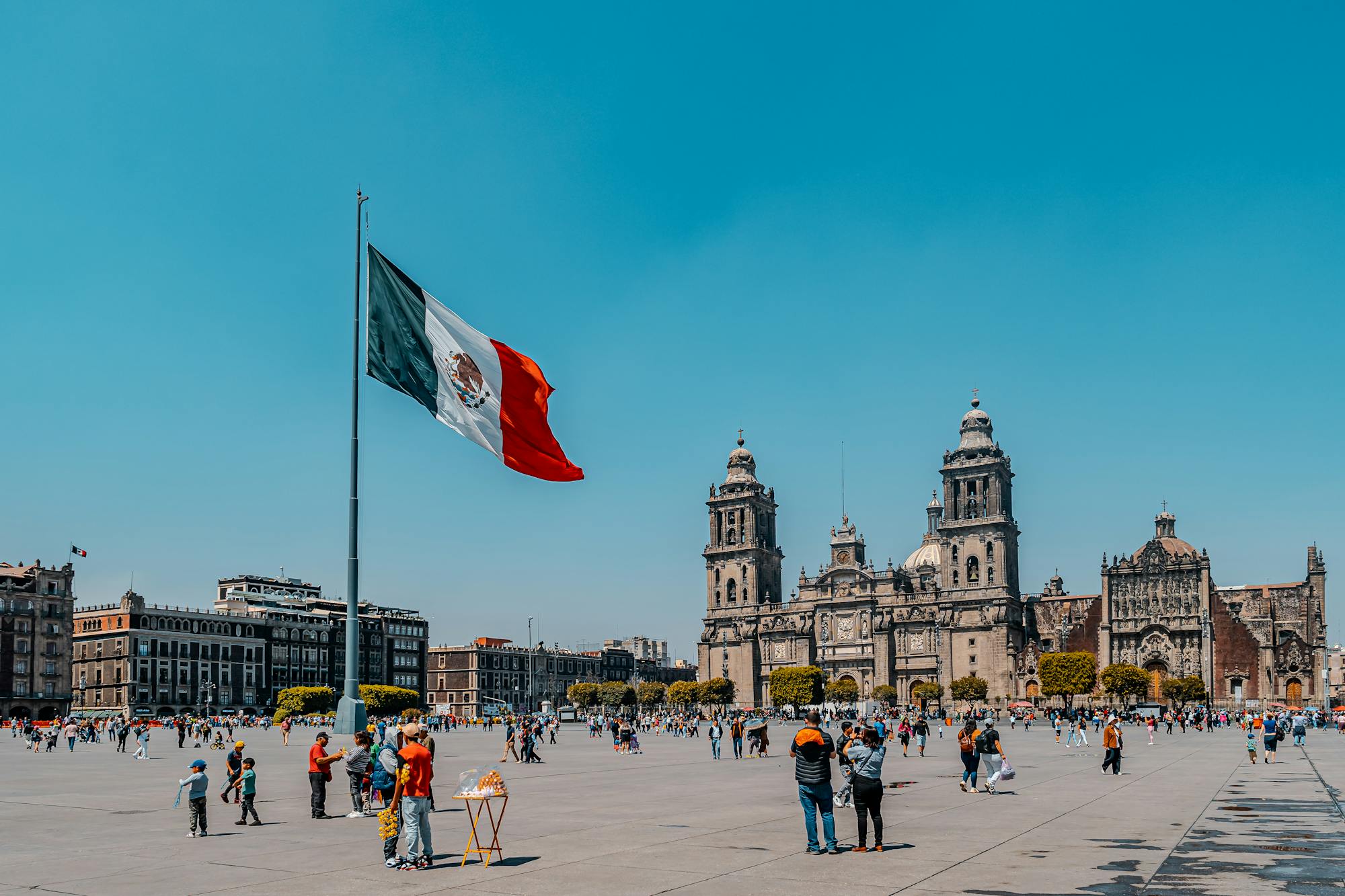
Mexico City — known locally as CDMX — is one of the world's great megacities, a sprawling metropolis of over 21 million people that pulses with artistic energy, gastronomic ambition, and millennia of history. Built atop the ruins of the ancient Aztec capital Tenochtitlán, then transformed by Spanish colonialism, then shaped by revolution, modernism, and an extraordinary creative class, Mexico City is a city of extraordinary layers.
Top Attractions
The Zócalo — the main plaza of the Centro Histórico — is one of the largest public squares in the world, surrounded by the National Palace, Metropolitan Cathedral (begun in 1573), and ruins of the Aztec Templo Mayor beneath. The Templo Mayor museum and archaeological site offers one of the most extraordinary encounters with pre-Columbian history anywhere in the Americas. Chapultepec Park, the vast "lung" of the city, contains the National Museum of Anthropology — indisputably one of the world's great museums, housing the Aztec Sun Stone and unparalleled collections from all of Mexico's ancient civilizations. The Palacio de Bellas Artes is both Mexico's premier performing arts venue and an architectural marvel housing spectacular Diego Rivera murals.
Neighborhoods to Explore
Mexico City rewards deep neighborhood exploration. Roma Norte and Condesa are the epicenter of CDMX's creative renaissance — tree-lined boulevards, Art Deco architecture, excellent coffee shops, bookstores, mezcal bars, and some of Latin America's most acclaimed restaurants. Coyoacán, once a village on the city's edge, retains its colonial character — this is where Frida Kahlo lived, and her blue house (La Casa Azul) is now one of Mexico City's most visited museums. San Ángel, another historic enclave, has a remarkable Saturday artisan market (Bazar del Sábado). Polanco is the upscale district of luxury hotels, high-end shopping, and formal restaurants including Pujol. Xochimilco, a UNESCO World Heritage Site, preserves the ancient Aztec canal system — hire a trajinera (wooden boat) to float through the chinampas (floating gardens).
Art and Culture
Mexico City has one of the world's densest concentrations of museums. Beyond the Museum of Anthropology, must-visits include the Frida Kahlo Museum (book weeks in advance), the Soumaya Museum (Carlos Slim's extraordinary free museum with an astonishing collection from pre-Columbian art to Rodin), the Jumex Museum (contemporary art), and the MUNAL (National Art Museum). The city's mural tradition is unmatched — Diego Rivera's work appears in the National Palace, the Ministry of Public Education, and the Palace of Fine Arts. Lucha libre wrestling at Arena México is both spectacle and genuine cultural institution.
Food Scene
Mexico City is currently one of the world's most exciting food destinations, with a culinary scene that spans everything from street tacos to globally ranked fine dining. Pujol, repeatedly ranked among the world's top 10 restaurants, showcases elevated Mexican cuisine. Quintonil, Rosetta, and Sud 777 are among the many other internationally acclaimed restaurants. But the soul of CDMX food is street-level: the tacos al pastor at spots like El Huequito (since 1959), tlayudas from Oaxacan restaurants in Roma, and tamales from market stalls. The Mercado de la Merced and Mercado de Medellín offer immersive food market experiences.
Day Trips
Mexico City is exceptionally well-placed for day trips. Teotihuacán, 50km northeast, was the Americas' largest city 1,500 years ago — the Pyramid of the Sun and Pyramid of the Moon are among the most impressive ancient monuments in the Western Hemisphere (go early, get a guide). Puebla, 2 hours by bus, is a colonial city renowned for its baroque architecture, Talavera tile work, and as the birthplace of mole poblano and chiles en nogada. Taxco, the silver city, has a stunning hilltop historic center. Tepoztlán, a mystical village in Morelos, makes an excellent weekend escape with its pyramid-topped cliff and excellent market.
Practical Tips
Mexico City's altitude (2,240 meters / 7,350 feet) can cause altitude sickness in some visitors — take it easy the first day or two, stay hydrated, and avoid heavy exercise initially. The Metro is fast, cheap, and covers most of the city. Uber is widely available and recommended for late-night travel. The city has improved dramatically in safety — the neighborhoods listed here are generally safe, but remain vigilant as in any large city. Book Frida Kahlo Museum tickets weeks in advance online — same-day tickets often unavailable. Air quality can be a concern, particularly in winter — check the index if you have respiratory concerns.