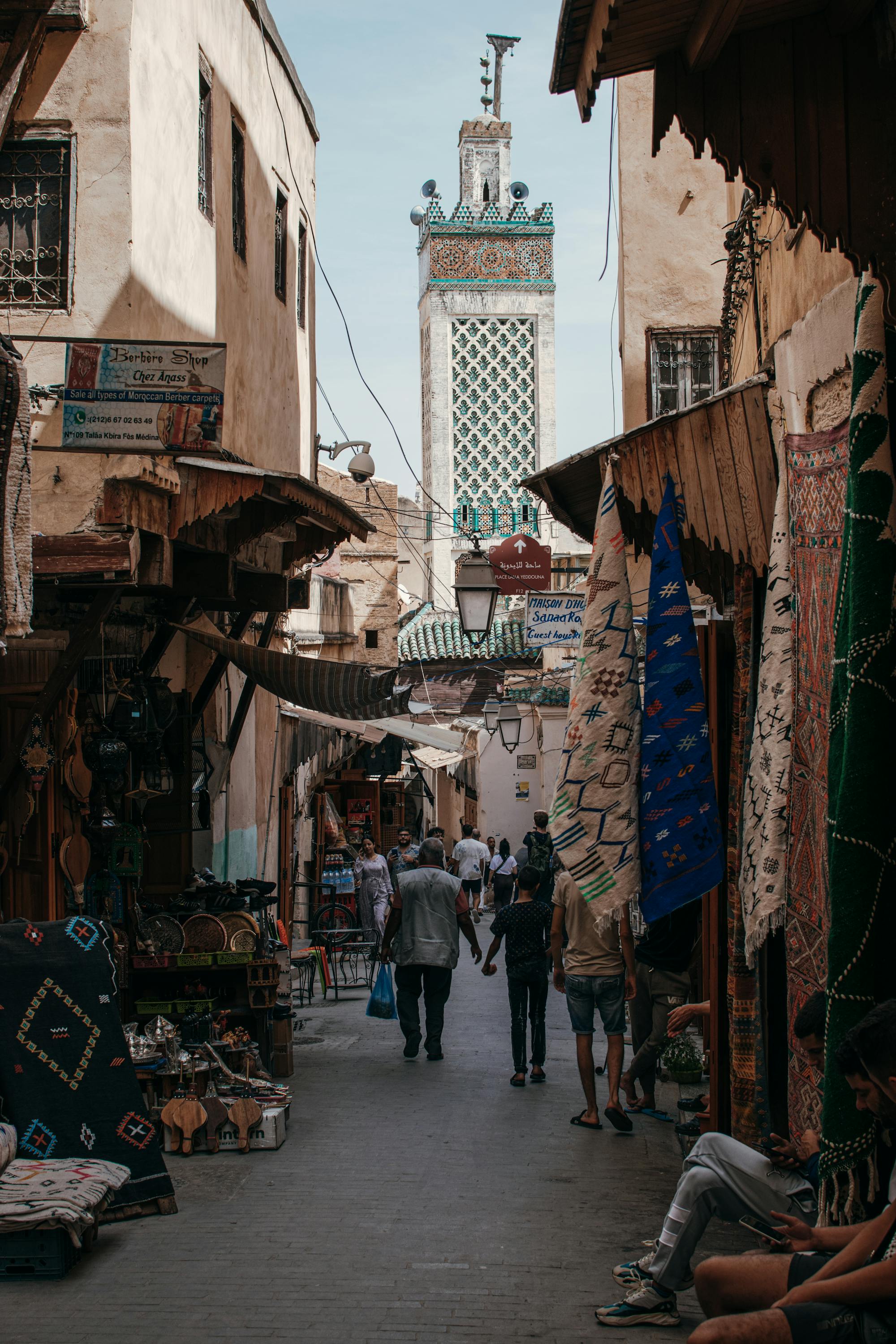
Morocco is a sensory immersion unlike anywhere else — a country where ancient Berber traditions, Arab Islamic culture, French colonial legacies, and Jewish heritage have woven together into something entirely unique. Ancient walled medinas hide 1,000-year-old mosques and tanneries behind their labyrinthine lanes.
Morocco is a sensory immersion unlike anywhere else — a country where ancient Berber traditions, Arab Islamic culture, French colonial legacies, and Jewish heritage have woven together into something entirely unique. Ancient walled medinas hide 1,000-year-old mosques and tanneries behind their labyrinthine lanes.
The Imperial Cities
Morocco's four imperial cities — Marrakech, Fes, Meknes, and Rabat — are the country's historical and cultural core. Marrakech's Djemaa el-Fna square is one of the world's great public spectacles: snake charmers, storytellers, acrobats, and food stalls filling a vast medieval plaza from morning to midnight. Fes el-Bali is the world's largest car-free urban area — a UNESCO World Heritage Site of astonishing complexity where the medieval city functions essentially as it has for 1,200 years. The Fes tanneries, where leather has been worked using traditional plant-dye methods since the 11th century, are one of the world's most startling sights. Meknes and Rabat add Roman ruins (Volubilis), a magnificent Atlantic kasbah, and the mausoleum of Mohammed V to any imperial circuit.
The Sahara Desert
A night in the Sahara Desert is for many visitors the emotional peak of a Morocco trip. The Erg Chebbi dunes near Merzouga rise to 150 metres — great orange walls of sand with a scale and silence that is genuinely humbling. The standard experience is camel trek in, camp dinner, sunrise return — but spending two nights allows you to experience the dunes at every light quality and in the profound silence of mid-afternoon. The approach from Marrakech through the Draa Valley and Dadès Gorge is itself one of Morocco's great drives, passing through kasbahs, palm oases, and rose-growing valleys.
Atlantic and Mediterranean Coasts
Morocco has over 3,500km of coastline and the beaches are, by European standards, remarkably uncrowded and undeveloped. Essaouira, the blue-and-white Atlantic port city, is Morocco's most atmospheric coastal destination — a UNESCO-listed medina with excellent seafood, strong surf winds that make it Africa's premier kiteboarding destination, and a creative arts scene that attracts artists and musicians year-round. The Legzira Beach arches near Sidi Ifni, the empty Atlantic strands of the Souss plain, and the Mediterranean coves near Chefchaouen offer very different coastal experiences.
The Mountains
The High Atlas Mountains offer dramatic trekking centred on Toubkal National Park, home to North Africa's highest peak (4,167m). Summit attempts on Jebel Toubkal from Imlil are typically done in 2 days and require no technical climbing in summer. The Atlas also contains the remarkable Berber villages of the Aït Benhaddou valley (a UNESCO World Heritage Site used as a filming location for dozens of major films) and the spectacular Dadès and Todra Gorges. The Rif Mountains in the north shelter the famous blue city of Chefchaouen — a village of such photogenic beauty that it has become one of Morocco's most visited destinations.
Food and Souks
Moroccan cuisine is one of the world's great culinary traditions — slow-cooked tagines of lamb with preserved lemon and olives, b'stilla pigeon pastry with almonds and cinnamon, couscous on Fridays, harira soup, fresh-baked bread, and the extraordinary pastry tradition of gazelle horns and chebakia. Eating well in Morocco requires no expensive restaurants — the best food is often found in neighbourhood restaurants or at market stalls. Shopping in Morocco's souks is an experience in itself: the carpet merchants, spice sellers, leather goods makers, and argan oil cooperatives of Marrakech, Fes, and Essaouira are world-famous for quality and negotiation.