Mumbai, India's financial capital and the home of Bollywood, is the country's most cosmopolitan and energetically contradictory city. Seventeen million people share this narrow peninsula, creating a metropolis that layers Victorian Gothic architecture over Art Deco promenades over ancient fishing villages — all existing simultaneously, at full volume.
Mumbai, India's financial capital and the home of Bollywood, is the country's most cosmopolitan and energetically contradictory city. Seventeen million people share this narrow peninsula, creating a metropolis that layers Victorian Gothic architecture over Art Deco promenades over ancient fishing villages — all existing simultaneously, at full volume. It is a city of ambition: of slums that birth billionaires, of fishing boats anchored in the shadow of glass towers, of street-food vendors who have perfected the same recipe for three generations. Mumbai demands engagement. It is relentless, exhilarating, and like nowhere else on earth.
Top Attractions
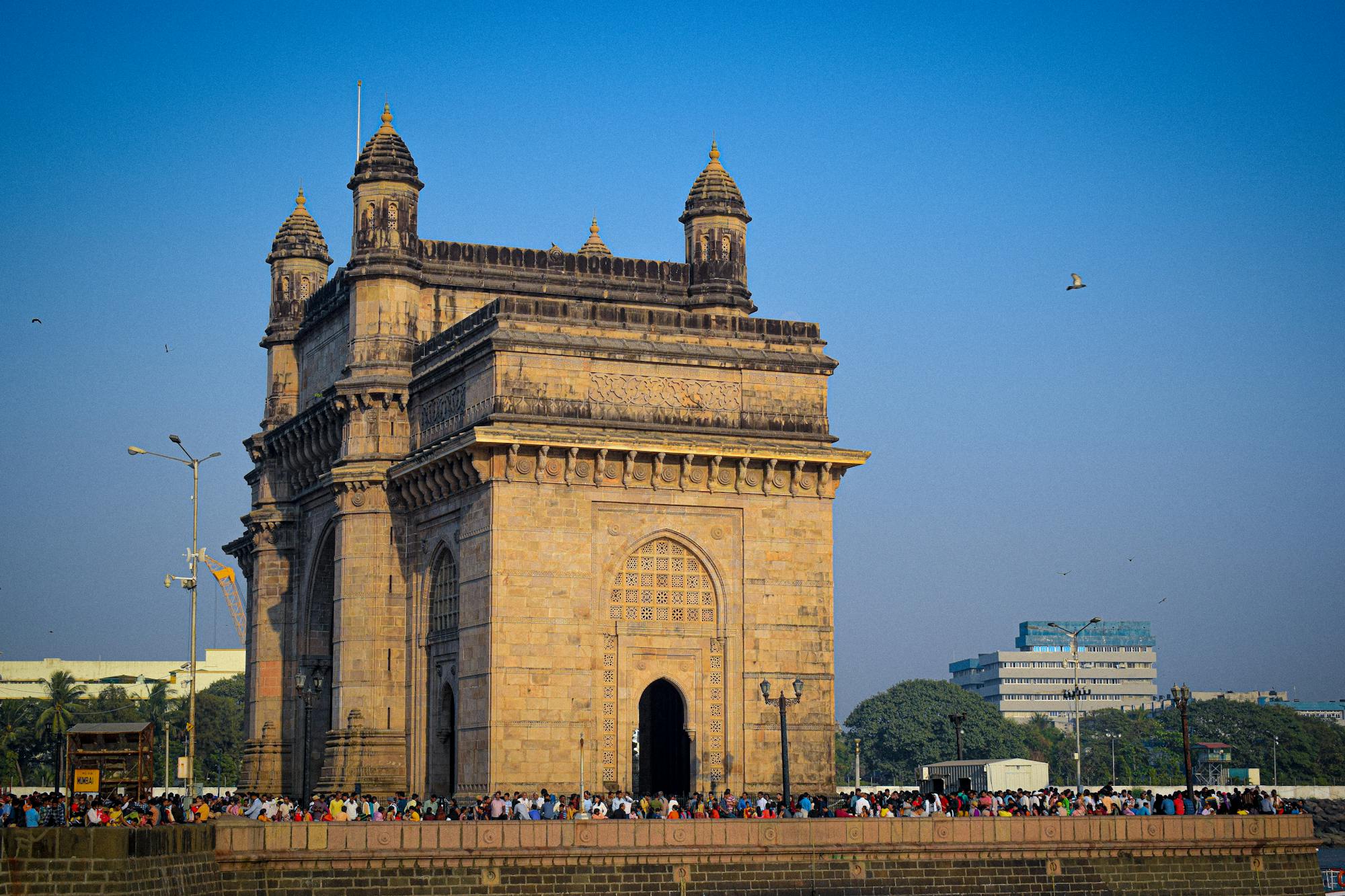
The Gateway of India, Mumbai's defining monument, stands at the harbour's edge in Apollo Bunder — a 26-metre basalt arch built in 1924 to commemorate King George V's visit. Ferries depart from here to Elephanta Island, whose 5th–8th century cave temples contain some of the finest rock-cut sculpture in India, including the monumental three-faced Shiva (Trimurti). The Chhatrapati Shivaji Maharaj Vastu Sangrahalaya (formerly Prince of Wales Museum) in the Fort district is one of India's finest museums, with galleries of Mughal miniature paintings, Buddhist sculpture, and decorative arts housed in a magnificent Indo-Saracenic dome. Dharavi, one of Asia's largest and most densely populated informal settlements, is also one of Mumbai's most productive economic communities — guided walking tours reveal its astonishing recycling industries, pottery workshops, and leather goods factories. The Marine Drive (Queen's Necklace) promenade, curving for 3.5 km around the Back Bay, is Mumbai's great public space: lit at night in a string of street lamps that give it its jewel-like nickname, it is perpetually filled with joggers, couples, vendors, and daydreamers.
Cultural Experiences
Mumbai is India's film capital — Bollywood produces more films than any other industry in the world. Studio tours at Film City in Goregaon give a behind-the-scenes look at sets and productions. The Kala Ghoda Arts Precinct in South Mumbai is the city's cultural nucleus: galleries, heritage buildings, and the annual Kala Ghoda Arts Festival (February) transform the neighbourhood into a month-long outdoor cultural event. Attend a performance at the National Centre for the Performing Arts (NCPA) on Marine Drive, which hosts classical music, theatre, and dance. The Dhobi Ghat — the world's largest outdoor laundry — is a fascinating window into Mumbai's working life: hundreds of washermen beat clothes against concrete slabs in a complex that processes thousands of garments daily. Traditional Parsi architecture in the Dadar neighbourhood reflects Mumbai's unique Zoroastrian community, while the Haji Ali Dargah, a beautiful mosque on a tidal islet accessible only at low tide, is one of the city's most atmospheric religious sites.
Day Trips
Elephanta Island (1 hour by ferry from Gateway) is the most popular day trip and should not be missed. Alibaug (1.5 hours by ferry or 2.5 hours by road) is a coastal town with fort ruins, beaches, and excellent seafood — a popular weekend escape for Mumbaikars. Khandala and Lonavala (2 hours by train or car) in the Western Ghats offer waterfalls, trekking trails, and cool air during monsoon. Nashik (3 hours by road) is one of India's most important wine-producing regions, with several wineries offering tours and tastings — a surprising discovery for many visitors to Maharashtra.
Food Culture
Mumbai's street food is legendary and non-negotiable. Vada pav — a spiced potato fritter in a bread roll with chutneys — is Mumbai's defining snack, available from vendors across the city for around ₹20. Pav bhaji, a buttery vegetable mash served with bread rolls, was invented in Mumbai in the 1850s and remains a staple. Bhel puri, the puffed-rice chaat sold along Marine Drive and Chowpatty Beach, is a masterclass in contrasting flavours. For seafood, the Koli fishing community's restaurants in Versova and Mahim serve the freshest pomfret, prawns, and surmai (kingfish) with coconut curries and sol kadhi (pink kokum juice). Colaba's iconic Britannia & Co. restaurant has served berry pulao and caramel custard for over a century. The Irani cafés of South Mumbai — Kyani & Co., Café Military — are living pieces of the city's colonial history.
Practical Tips
Mumbai's local train network is the fastest way to move across the city, though carriages are extremely crowded during rush hours (7–10am, 5–8pm). The new Metro lines provide a more comfortable alternative for key tourist routes. Pre-book ferry tickets to Elephanta Island in advance during peak season (November–February) as they can sell out. Dress modestly at religious sites — cover shoulders and knees at the Haji Ali Dargah and Siddhivinayak Temple. The monsoon (June–September) brings heavy flooding in low-lying areas; check weather warnings before heading out. Currency is the Indian Rupee (INR); tap water is not safe to drink — always use bottled or purified water. Taxis (metered black-and-yellow cabs) are plentiful in South Mumbai; use the Uber or Ola app for reliable pricing across the city.