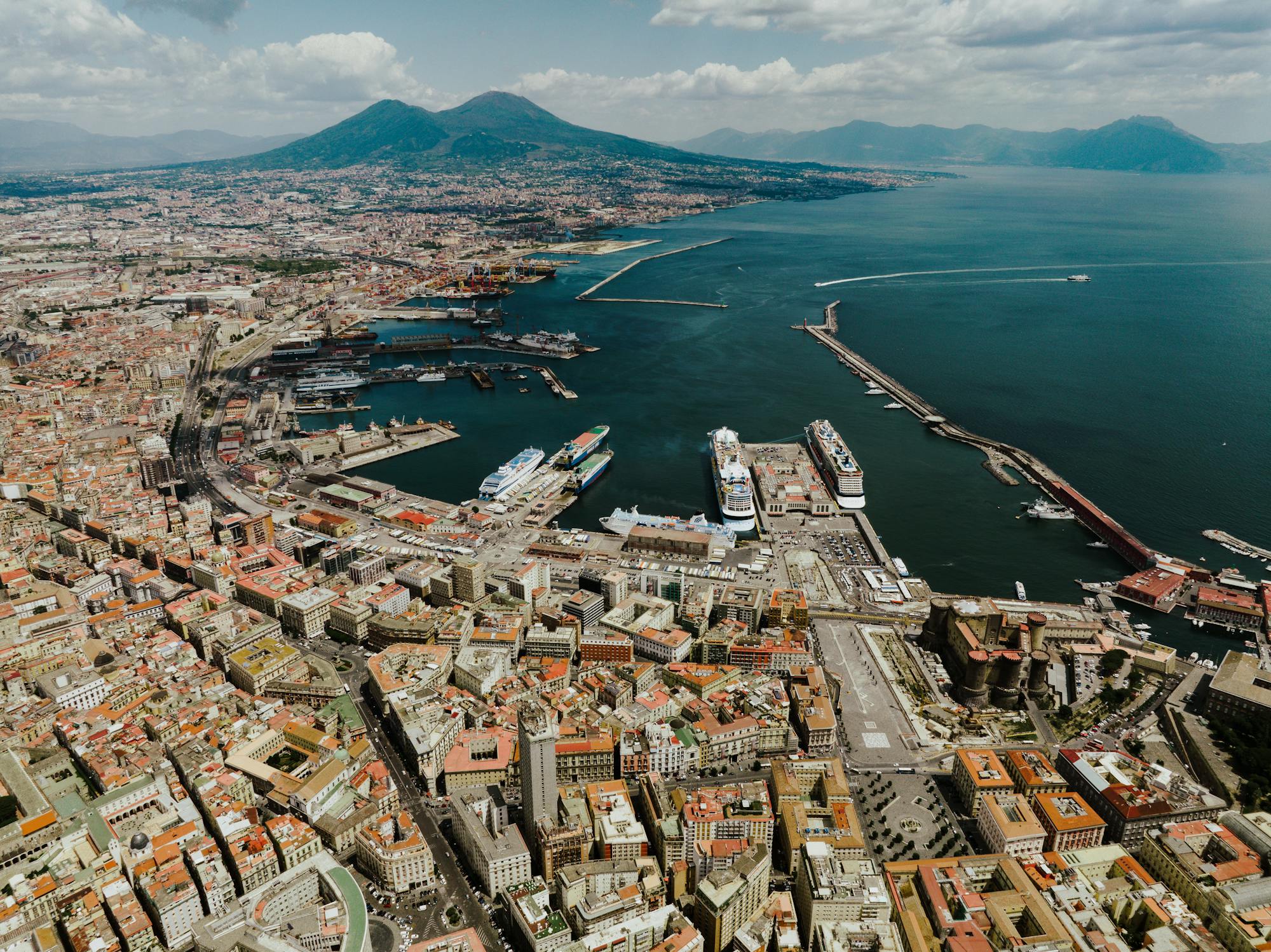
Naples is Italy's most intense, most contradictory, and arguably most rewarding city — a teeming, operatic metropolis where baroque churches crowd next to crumbling palazzi, where the world's best pizza was invented and still reigns supreme, and where Mount Vesuvius looms over the bay. It is the birthplace of pizza, of the tarantella, of commedia dell'arte, and of a street culture so vivid and chaotic that first-time visitors are simultaneously overwhelmed and enchanted.
Naples is Italy's most intense, most contradictory, and arguably most rewarding city — a teeming, operatic metropolis of over three million people where baroque churches crowd next to crumbling palazzi, where the world's best pizza was invented and still reigns supreme, and where Mount Vesuvius looms over the bay in a constant reminder of the precariousness of existence. It is the birthplace of pizza, of the tarantella, of commedia dell'arte, and of a street culture so vivid and chaotic that first-time visitors are simultaneously overwhelmed and enchanted. Naples demands effort but gives back in full — those who engage with its raw, magnificent energy find it one of the most unforgettable cities in Europe.
Must-See Attractions
The National Archaeological Museum of Naples (MANN) is one of the world's great museums — home to the finest collection of Greco-Roman antiquities on Earth, including the Farnese Hercules, the Farnese Bull, and the extraordinary treasures excavated from Pompeii and Herculaneum: mosaics, frescoes, household objects, and erotic art from the Secret Cabinet. This museum alone justifies a trip to Naples. The Historic Centre of Naples, a UNESCO World Heritage Site, is one of the densest concentrations of historic churches and monuments in the world: Spaccanapoli — the arrow-straight street that cuts through the ancient city following the original Greek grid — is lined with baroque masterpieces including the Gesù Nuovo, Santa Chiara, and the Cathedral of San Gennaro. The underground Naples (Napoli Sotterranea) — a labyrinth of Greek aqueducts, Roman cisterns, and WWII air raid shelters beneath the modern city — offers extraordinary tours. The Castel dell'Ovo, a medieval sea castle on a tiny island in the bay connected to the waterfront, offers wonderful views of the gulf and Vesuvius. The Castel Nuovo (Maschio Angioino) in the city centre is a formidable 13th-century Angevin fortress with a magnificent triumphal arch.
Cultural Experiences
Naples is where Italian culture reaches its most exuberant and uninhibited. The Quartieri Spagnoli (Spanish Quarter) — a grid of narrow streets west of Via Toledo — is the heart of traditional Neapolitan street life: laundry strung between buildings, motorbikes weaving through impossible gaps, shrines to Diego Maradona (worshipped here with near-religious devotion) on nearly every corner. San Gregorio Armeno, the street of nativity scene (presepe) craftsmen, is where intricate handmade figures of shepherds, saints, and contemporary celebrities have been sold for centuries — one of Naples' most extraordinary artisan traditions. The San Carlo Theatre, opened in 1737 and older than Milan's La Scala, is one of the world's greatest opera houses; attending a performance here is an unforgettable cultural experience. Naples' street art scene, particularly in the Forcella neighbourhood and around the Quartieri Spagnoli, is vibrant and politically engaged.
Day Trips and Excursions
Pompeii, the Roman city buried by Vesuvius in 79 AD and preserved in volcanic ash for nearly 1,800 years, is 30 minutes by Circumvesuviana train from Naples — one of the world's most extraordinary archaeological sites, where ancient streets, bakeries, brothels, and homes have been excavated from the pumice. Herculaneum, 20 minutes from Naples, is smaller but better preserved than Pompeii — wooden furniture, carbonised food, and organic materials survived in ways impossible at Pompeii. Mount Vesuvius itself can be hiked from a car park near the summit; the crater views are extraordinary and the geological immediacy sobering. The Amalfi Coast — Positano, Amalfi, Ravello — is 1.5–2 hours from Naples by bus or boat and is among the most dramatic coastlines in the world. The island of Capri, reachable by hydrofoil in 50 minutes from the port, offers the famous Blue Grotto, rugged limestone cliffs, and the ruins of Emperor Tiberius's villa.
Local Food and Drink Scene
Naples is the world capital of pizza, and no visit is complete without eating the real thing. Pizza Margherita — tomato, mozzarella di bufala, and basil — was invented here in 1889; seek out historic pizzerie like L'Antica Pizzeria da Michele (famously featured in Eat Pray Love), Pizzeria Starita, or the Michelin-starred 10 Diego Vitagliano for contemporary interpretations. Beyond pizza, Naples' street food is exceptional: frittatina di pasta (fried pasta cake), cuoppo (fried seafood in a paper cone), sfogliatella (flaky pastry filled with ricotta and candied citrus), and babà (rum-soaked sponge cake) are all quintessentially Neapolitan. The city's coffee culture is also distinctive — espresso here is served shorter, darker, and cheaper than anywhere else in Italy, and the tradition of the caffè sospeso (paying for a coffee for a stranger in need) is a uniquely Neapolitan social custom. The fish market near the port and the Porta Nolana market supply the city's extraordinary seafood restaurants.
Tips for Getting Around
Naples is best explored on foot in the historic centre — the distances between major sights are short, though the hills and the chaotic traffic make navigation an adventure. The metro (Line 1 and Line 2) connects the main areas efficiently; Line 1's stations are famous for their extraordinary contemporary art installations and are nicknamed the "Art Stations." The Circumvesuviana railway connects Naples to Pompeii, Herculaneum, and Sorrento. Ferries to Capri, Ischia, and Procida depart from Molo Beverello near the Castel Nuovo. For the Amalfi Coast, ferries (summer season) and buses (SITA) connect Naples via Sorrento. The city's taxi system is metered and regulated — fixed rates apply for journeys to/from the airport. Naples has a well-earned reputation for petty theft (phone and bag snatching from scooters); keep bags on the inside of pavements and be attentive in crowds. Download the Trenitalia app for train connections to other Italian cities.