<h2>1. Viking Ship Museum</h2> <p>The Viking Ship Museum on the Bygdøy peninsula houses three remarkably preserved Viking ships dating to the 9th century — among the finest examples of Viking craftsmanship in the world. The Oseberg ship, unearthed from a burial mound in 1904, is particularly spectacular, its prow carved with intricate spiral patterns. The museum also displays a rich collection of grave goods, sledges, and textiles recovered from the burial mounds. A new and expanded museum building is planned to display the collections with even greater impact.</p> <h2>2. Vigeland Sculpture Park</h2> <p>Frogner Park's Vigeland installation is the world's largest sculpture park by a single artist — Gustav Vigeland's extraordinary vision of the human life cycle rendered in 214 bronze, granite, and cast-iron sculptures. The centerpiece is the 17-metre Monolith, a column of 121 intertwined human figures. The park is free to enter, open year-round, and surprisingly moving. Visit in winter when the sculptures are dusted with snow for an especially atmospheric experience.</p> <h2>3. The National Museum (Nasjonalmuseet)</h2> <p>The new National Museum, opened in 2022, is the largest art museum in the Nordic countries. Its permanent collection includes Edvard Munch's most famous works — including the iconic "The Scream" — alongside Norwegian and international art from antiquity to the present. The building itself, designed by Kleihues + Schuwerk, is a monumental yet elegant structure on the Aker Brygge waterfront. Entry is affordable and the collection is outstanding.</p> <h2>4. Explore Aker Brygge and the Waterfront</h2> <p>Oslo's redeveloped waterfront at Aker Brygge is the city's social hub — a former shipyard now lined with restaurants, bars, and shops with views across the Oslofjord to the Bygdøy peninsula. Walk east along the waterfront to the striking Opera House, where the roof slopes down to water level and is designed to be walked on — offering panoramic city and fjord views. The Barcode district behind the Opera House has some of Oslo's boldest modern architecture.</p> <h2>5. The Munch Museum</h2> <p>The striking new Munch Museum (MUNCH), opened in 2021 on the Bjørvika waterfront, holds the world's largest collection of Edvard Munch's work — around 28,000 works including paintings, drawings, prints, and watercolors. The building tilts dramatically over the Oslofjord, and the museum's top floor restaurant has one of Oslo's finest views. The permanent collection provides extraordinary insight into Munch's complete artistic output, far beyond the famous Scream.</p> <h2>6. Holmenkollen Ski Jump</h2> <p>The Holmenkollen ski jump, perched on a forested ridge above Oslo, is one of Norway's most iconic structures and has hosted ski jumping competitions since 1892. The current modernist jump tower, built for the 2011 World Championships, can be visited year-round. Take the T-bane (metro) from the city center for a 20-minute ride through the forest, then climb the 114-metre jump tower for extraordinary views across Oslo and the Oslofjord. In winter, the adjacent Holmenkollen ski museum and toboggan run add to the experience.</p> <h2>7. Kayak on the Oslofjord</h2> <p>Oslo's unique position at the head of the Oslofjord means extraordinary water access from the city center. Kayak rental and guided tours operate from Aker Brygge and the Sørenga seawater pool, allowing you to paddle through the harbor, explore nearby islands, and see Oslo's skyline from the water. The Oslofjord archipelago — 40 islands within the city boundaries — can be reached by public ferry (boats 91, 92, and 93 from Aker Brygge) for swimming, hiking, and picnicking in summer.</p> <h2>8. Eat at Mathallen Food Hall</h2> <p>Mathallen Oslo, in the Vulkan district near Grünerløkka, is Norway's finest food market — a converted industrial building filled with specialty food stalls, artisan producers, and restaurants. Local cheeses, cured meats, smoked fish, craft beer, and Norwegian specialties like raspeballer (potato dumplings) and pinnekjøtt (cured lamb ribs) are all available. The market is a great introduction to Norwegian food culture and a good lunch spot before exploring the adjacent Grünerløkka neighborhood's vintage shops and coffee houses.</p> <h2>9. Grünerløkka</h2> <p>Grünerløkka, Oslo's most vibrant neighborhood, has transformed from an industrial working-class district into the city's creative hub. Its streets are lined with independent coffee shops, vintage stores, record shops, and some of Oslo's best restaurants. The Akerselva river runs through the neighborhood, its banks planted with parks and walking paths. Birkelunden park is a local gathering spot in summer. The neighborhood is best explored on foot and is excellent for an afternoon of browsing followed by dinner and drinks.</p> <h2>10. Day Trip to Norsk Folkemuseum</h2> <p>The Norsk Folkemuseum on the Bygdøy peninsula is one of the world's largest open-air museums — 160 historic buildings from across Norway, relocated here and arranged to recreate a Norwegian village from different eras. The highlight is a completely preserved 12th-century stave church from Gol, one of the finest examples of medieval Norwegian architecture. The museum also has excellent permanent exhibitions on Norwegian folk culture, Sami traditions, and urban life.</p>
1. Viking Ship Museum
The Viking Ship Museum on the Bygdøy peninsula houses three remarkably preserved Viking ships dating to the 9th century — among the finest examples of Viking craftsmanship in the world. The Oseberg ship, unearthed from a burial mound in 1904, is particularly spectacular, its prow carved with intricate spiral patterns. The museum also displays a rich collection of grave goods, sledges, and textiles recovered from the burial mounds. A new and expanded museum building is planned to display the collections with even greater impact.
2. Vigeland Sculpture Park
Frogner Park's Vigeland installation is the world's largest sculpture park by a single artist — Gustav Vigeland's extraordinary vision of the human life cycle rendered in 214 bronze, granite, and cast-iron sculptures. The centerpiece is the 17-metre Monolith, a column of 121 intertwined human figures. The park is free to enter, open year-round, and surprisingly moving. Visit in winter when the sculptures are dusted with snow for an especially atmospheric experience.
3. The National Museum (Nasjonalmuseet)
The new National Museum, opened in 2022, is the largest art museum in the Nordic countries. Its permanent collection includes Edvard Munch's most famous works — including the iconic "The Scream" — alongside Norwegian and international art from antiquity to the present. The building itself, designed by Kleihues + Schuwerk, is a monumental yet elegant structure on the Aker Brygge waterfront. Entry is affordable and the collection is outstanding.
4. Explore Aker Brygge and the Waterfront
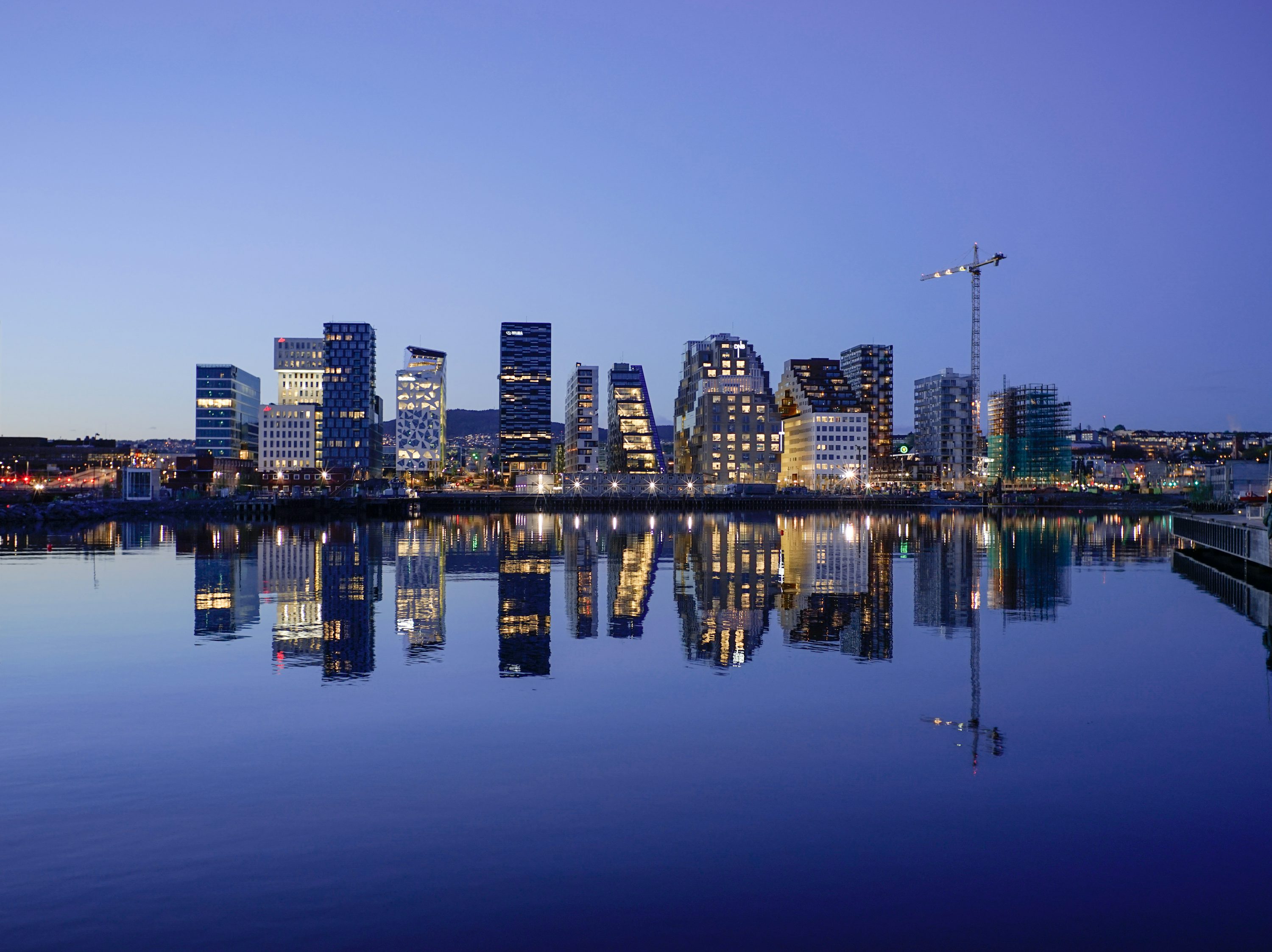
Oslo's redeveloped waterfront at Aker Brygge is the city's social hub — a former shipyard now lined with restaurants, bars, and shops with views across the Oslofjord to the Bygdøy peninsula. Walk east along the waterfront to the striking Opera House, where the roof slopes down to water level and is designed to be walked on — offering panoramic city and fjord views. The Barcode district behind the Opera House has some of Oslo's boldest modern architecture.
5. The Munch Museum
The striking new Munch Museum (MUNCH), opened in 2021 on the Bjørvika waterfront, holds the world's largest collection of Edvard Munch's work — around 28,000 works including paintings, drawings, prints, and watercolors. The building tilts dramatically over the Oslofjord, and the museum's top floor restaurant has one of Oslo's finest views. The permanent collection provides extraordinary insight into Munch's complete artistic output, far beyond the famous Scream.
6. Holmenkollen Ski Jump
The Holmenkollen ski jump, perched on a forested ridge above Oslo, is one of Norway's most iconic structures and has hosted ski jumping competitions since 1892. The current modernist jump tower, built for the 2011 World Championships, can be visited year-round. Take the T-bane (metro) from the city center for a 20-minute ride through the forest, then climb the 114-metre jump tower for extraordinary views across Oslo and the Oslofjord. In winter, the adjacent Holmenkollen ski museum and toboggan run add to the experience.
7. Kayak on the Oslofjord
Oslo's unique position at the head of the Oslofjord means extraordinary water access from the city center. Kayak rental and guided tours operate from Aker Brygge and the Sørenga seawater pool, allowing you to paddle through the harbor, explore nearby islands, and see Oslo's skyline from the water. The Oslofjord archipelago — 40 islands within the city boundaries — can be reached by public ferry (boats 91, 92, and 93 from Aker Brygge) for swimming, hiking, and picnicking in summer.
8. Eat at Mathallen Food Hall
Mathallen Oslo, in the Vulkan district near Grünerløkka, is Norway's finest food market — a converted industrial building filled with specialty food stalls, artisan producers, and restaurants. Local cheeses, cured meats, smoked fish, craft beer, and Norwegian specialties like raspeballer (potato dumplings) and pinnekjøtt (cured lamb ribs) are all available. The market is a great introduction to Norwegian food culture and a good lunch spot before exploring the adjacent Grünerløkka neighborhood's vintage shops and coffee houses.
9. Grünerløkka
Grünerløkka, Oslo's most vibrant neighborhood, has transformed from an industrial working-class district into the city's creative hub. Its streets are lined with independent coffee shops, vintage stores, record shops, and some of Oslo's best restaurants. The Akerselva river runs through the neighborhood, its banks planted with parks and walking paths. Birkelunden park is a local gathering spot in summer. The neighborhood is best explored on foot and is excellent for an afternoon of browsing followed by dinner and drinks.
10. Day Trip to Norsk Folkemuseum
The Norsk Folkemuseum on the Bygdøy peninsula is one of the world's largest open-air museums — 160 historic buildings from across Norway, relocated here and arranged to recreate a Norwegian village from different eras. The highlight is a completely preserved 12th-century stave church from Gol, one of the finest examples of medieval Norwegian architecture. The museum also has excellent permanent exhibitions on Norwegian folk culture, Sami traditions, and urban life.