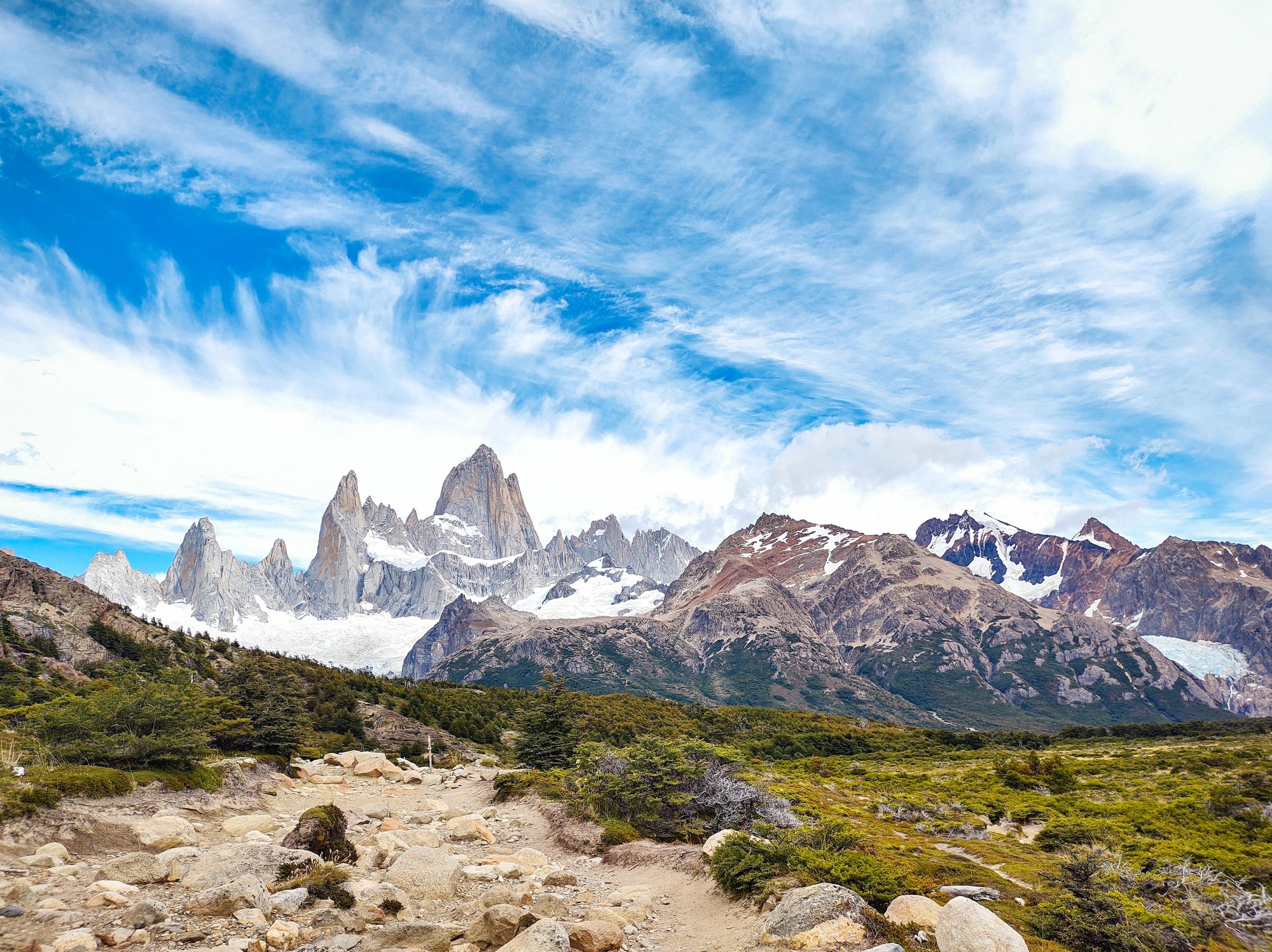
Patagonia is one of the last great wilderness regions on earth — a vast, wind-swept plateau at the bottom of South America shared between Argentina and Chile, encompassing glaciers, turquoise lakes, jagged granite peaks, ancient beech forests, and immense open steppe.
Patagonia: Earth's Final Frontier
Patagonia is one of the last great wilderness regions on earth — a vast, wind-swept plateau at the bottom of South America shared between Argentina and Chile, encompassing glaciers, turquoise lakes, jagged granite peaks, ancient beech forests, and immense open steppe. Stretching from roughly 39°S latitude down to the Strait of Magellan, it encompasses some of the planet's most spectacular and least visited landscapes. Whether you come to trek world-class trails, watch glaciers calve into lakes, spot Andean condors, or simply stand in awe of a landscape that makes humans feel reassuringly small, Patagonia delivers one of travel's most profound experiences.
Top Attractions in Patagonia
The Perito Moreno Glacier, in Los Glaciares National Park near El Calafate, is Argentina's most extraordinary natural spectacle and one of the few advancing glaciers on earth. A 5-kilometre-wide, 60-metre-high wall of blue-white ice extending 30 kilometres into Lago Argentino, it is dramatic under any conditions. The glacier periodically advances until it blocks the lake, creating a natural dam that eventually ruptures in a thunderous collapse of ice and water. Elevated boardwalks bring visitors within metres of the calving face — the sound alone (thunderclaps of splitting ice followed by roaring crashes into the lake) is unforgettable. Most visitors combine it with a 90-minute boat trip around the glacier's face for different perspectives.
El Chaltén, 220 km north of El Calafate, is Patagonia's trekking capital — a tiny village of 1,500 people at the base of the Fitz Roy massif. The granite spire of Cerro Fitz Roy (3,405m) and the needle of Cerro Torre (3,128m) are among the world's most spectacular mountain formations, rising almost vertically from the valley floor and perpetually wreathed in clouds and lenticular caps. El Chaltén offers exceptional free day hiking — the Laguna de los Tres trail (20km round trip) takes you to a glacial lake at the very foot of Fitz Roy. No permits or fees required, and trails start directly from the village.
Torres del Paine National Park in Chilean Patagonia is arguably South America's finest national park — the three granite towers (Torres) rising from a turquoise lake surrounded by ancient forest, glaciers, and condors. The W Trek (4–5 days) and the full Circuit (8–10 days) are among the world's great multi-day hikes. Chilean park fees and campsite reservations must be booked well in advance for the November–February season.
Unique Experiences
Ice trekking on Perito Moreno is one of Patagonia's most thrilling activities. Guided walks on the glacier's surface bring you into a landscape of blue crevasses, ice tunnels, and meltwater streams, with crampons strapped to your boots. Mini-trekking (2 hours on ice) and Big Ice (5 hours on ice) tours depart daily from El Calafate. The experience of standing on a 300-metre-thick glacier is genuinely awe-inspiring.
Kayaking in Patagonia — whether on the turquoise waters of Lago Nordenskjöld in Torres del Paine, among the icebergs of Lago Argentino near El Calafate, or through the channels of the Beagle Channel near Ushuaia — offers an intimate, water-level perspective on Patagonia's extraordinary landscapes. Multi-day kayaking expeditions are available for experienced paddlers.
Whale watching at Península Valdés (UNESCO World Heritage Site), on Patagonia's Atlantic coast near Puerto Madryn, offers some of the world's best southern right whale encounters from June to December. The same reserve hosts enormous penguin colonies (October–March), elephant seals, sea lions, and orcas that occasionally beach themselves hunting sea lion pups — one of the most dramatic wildlife spectacles on earth.
Day Trips and Regional Exploration
From Bariloche in northern Patagonia, the Ruta de los Siete Lagos (Seven Lakes Route) is one of South America's great scenic drives — 110 kilometres of mountain road connecting seven stunning glacial lakes through lenga beech forests. Easily done as a full-day cycling or driving excursion in summer. The nearby Cerro Catedral ski resort offers some of Argentina's best skiing from July to September.
Ushuaia, the world's southernmost city, is the gateway to Antarctica and a destination in its own right. The Beagle Channel boat trips, Tierra del Fuego National Park (accessible by the Tren del Fin del Mundo heritage railway), and the dramatic landscapes surrounding this end-of-the-world city make Ushuaia a compelling destination.
Wildlife in Patagonia
Patagonia's wildlife is extraordinary and relatively easy to observe. Andean condors — the world's largest flying bird with a wingspan of up to 3 metres — soar on thermals over mountain passes near El Chaltén and Torres del Paine. Guanacos (wild relatives of the llama) roam the Patagonian steppe in herds. Pumas are present throughout Torres del Paine, and patient dawn or dusk viewing can result in extraordinary encounters. The Valdés Peninsula is essential for marine wildlife.
Practical Tips
- Season: December to February is peak summer — trails are open, days are long (up to 18 hours daylight), and weather is best. November and March are excellent shoulder months with fewer crowds.
- Wind: Patagonian wind is legendary and can reach 120 km/h. Wind-resistant outer layers are essential regardless of season.
- Book in advance: Torres del Paine campsites, Perito Moreno glacier trek tours, and accommodation in El Chaltén book out months ahead for January. Plan early.
- Getting there: El Calafate has an international airport with flights from Buenos Aires. Bariloche also has good flight connections. El Chaltén is 3 hours by bus from El Calafate.
- Currency in Chile: Chilean pesos are used in Torres del Paine — bring cash as ATMs in Puerto Natales are sometimes unreliable.