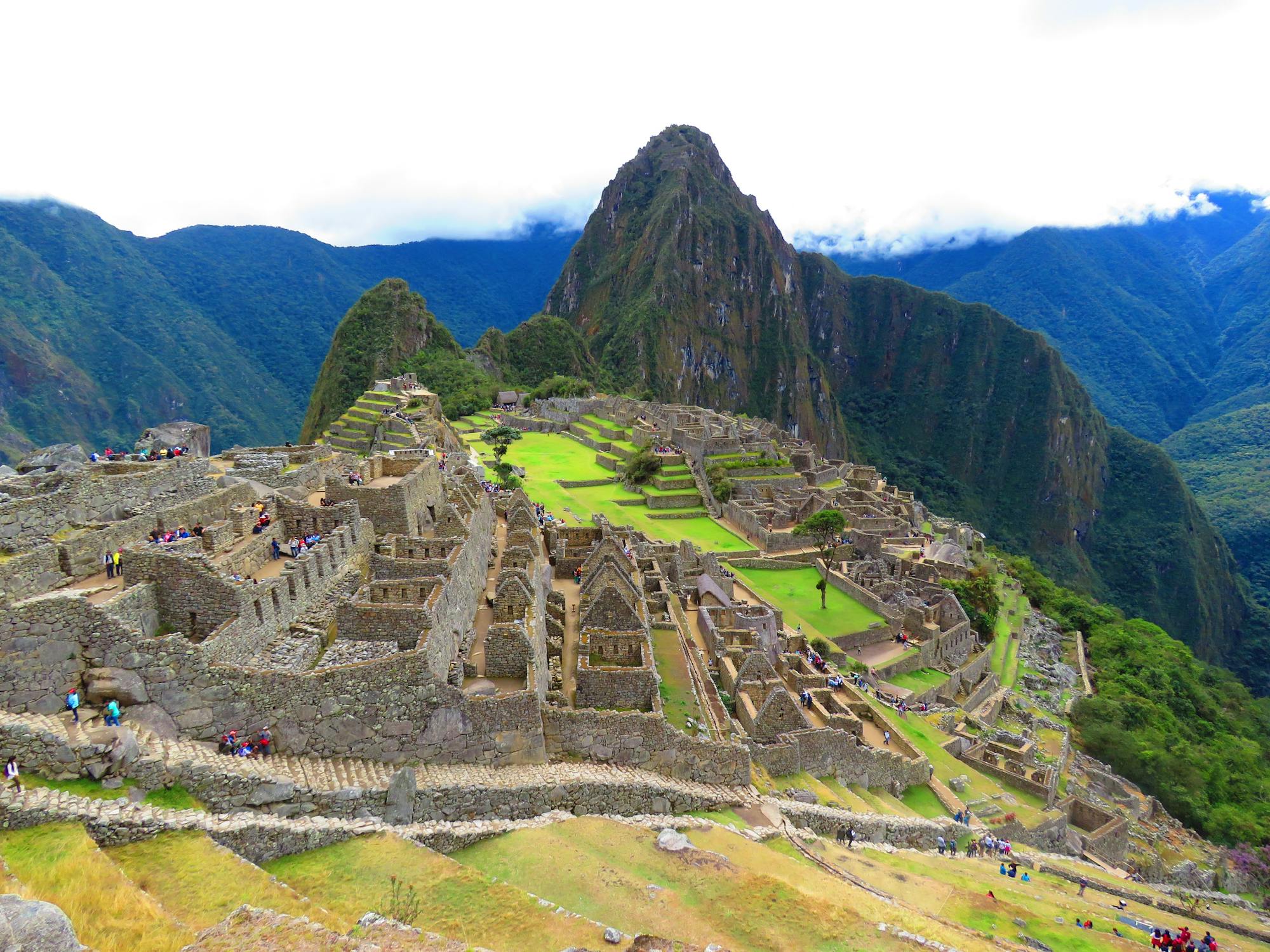
Peru is one of the world's great travel destinations — a country of staggering diversity where one of Earth's most extraordinary ancient civilizations left behind monuments and cities of breathtaking ambition, where the Amazon Basin harbors unimaginable biodiversity, where the Pacific coast feeds one of the world's most celebrated cuisines, and where colonial cities preserve centuries of layered history. At the center of it all stands Machu Picchu, arguably the most spectacular archaeological site in the Americas.
Top Attractions
Machu Picchu is Peru's crown jewel and one of the world's most iconic destinations — the 15th-century Inca citadel set among dramatic mountain peaks above the Sacred Valley is a genuinely humbling sight. Book entrance tickets well in advance (daily visitor numbers are strictly limited) and take the train from Cusco to Aguas Calientes. The Sacred Valley of the Incas between Cusco and Machu Picchu contains extraordinary Inca sites including Ollantaytambo (a fortress and town still inhabited today), Pisac (with its impressive terraced ruins and Sunday market), and Moray (circular terraced amphitheaters used as an agricultural laboratory). Lake Titicaca on the Peru-Bolivia border at 3,812 meters (12,507 feet) is the world's highest navigable lake — boat trips to the floating reed islands of the Uros people and the island of Taquile offer remarkable encounters with living Andean traditions. The Nazca Lines, enormous geoglyphs etched into the desert plain 450km south of Lima, remain one of archaeology's great mysteries — best viewed from a small plane.
Unique Experiences
Peru's unique offerings extend far beyond Machu Picchu. Hike the Inca Trail — the 4-day classic trek through cloud forest, mountain passes, and Inca ruins to Machu Picchu is one of the world's great hiking experiences; permits sell out months in advance. Visit the Amazon jungle from Puerto Maldonado or Iquitos — Peru's Amazon contains extraordinary biodiversity including pink river dolphins, caimans, macaws, and giant river otters. The Colca Canyon near Arequipa is one of the world's deepest canyons — a superb multi-day trek passes through Andean villages, hot springs, and the condor viewing point at Cruz del Cóndor where the world's largest flying birds soar on thermals. Rainbow Mountain (Vinicunca), a recently accessible peak near Cusco, has multi-colored mineral striations that look almost impossibly vivid against the Andean sky.
Day Trips and Regional Highlights
Peru's regions each offer distinct day trip possibilities. From Cusco, visit the Sacred Valley, Machu Picchu (full day with train), the salt flats of Maras, the Inca ruins of Sacsayhuamán overlooking the city, and the textiles cooperative of Chinchero. From Lima, visit the Pachacamac archaeological complex (30km south) or the Reserva Nacional de Paracas and Ballestas Islands (4 hours south) where sea lions, Humboldt penguins, and seabirds thrive in the cold Pacific current. From Arequipa, the Colca Canyon trek and the Cotahuasi Canyon are outstanding multi-day options. Huaraz in the Blanca mountain range is Peru's premier trekking destination with routes through glaciated peaks that rival anything in Patagonia.
Food and Culture
Peruvian cuisine has become one of the world's most celebrated food cultures — Lima is home to several restaurants consistently ranked in the World's 50 Best, including Central and Maido. The cuisine's strength lies in its biodiversity: Peru has over 3,000 varieties of potato, hundreds of chili varieties, extraordinary seafood from the cold Pacific, and ingredients from jungle, coast, and highlands. Ceviche — raw fish cured in lime juice with chili and onion — is Peru's national dish and a revelation when fresh. Lomo saltado (wok-fried beef with tomatoes and potatoes, Chinese-Peruvian in origin) exemplifies the chifa (Chinese-Peruvian) fusion. Cuy (guinea pig, roasted or fried) is a traditional Andean delicacy served throughout the highlands. Culturally, Peru's living indigenous traditions are extraordinarily rich — from the weaving communities of the Chinchero highlands to the festivals of Inti Raymi (Festival of the Sun) in Cusco each June solstice.
Practical Tips
Altitude sickness (soroche) is a genuine concern in Cusco (3,400m), Puno (3,830m), and other highland destinations — spend at least a day acclimatizing in Cusco before trekking. Drink coca tea, rest, and avoid alcohol on arrival. Book Machu Picchu tickets and the Inca Trail permit months in advance — both are strictly limited and sell out fast. The Peruvian sol (PEN) is the currency. Spanish is the official language; Quechua is widely spoken in highland communities. Most of Peru is relatively safe for tourists, but standard urban precautions apply in Lima and Cusco cities. Travel insurance with emergency medical evacuation is highly recommended given Peru's remote areas and altitude challenges.