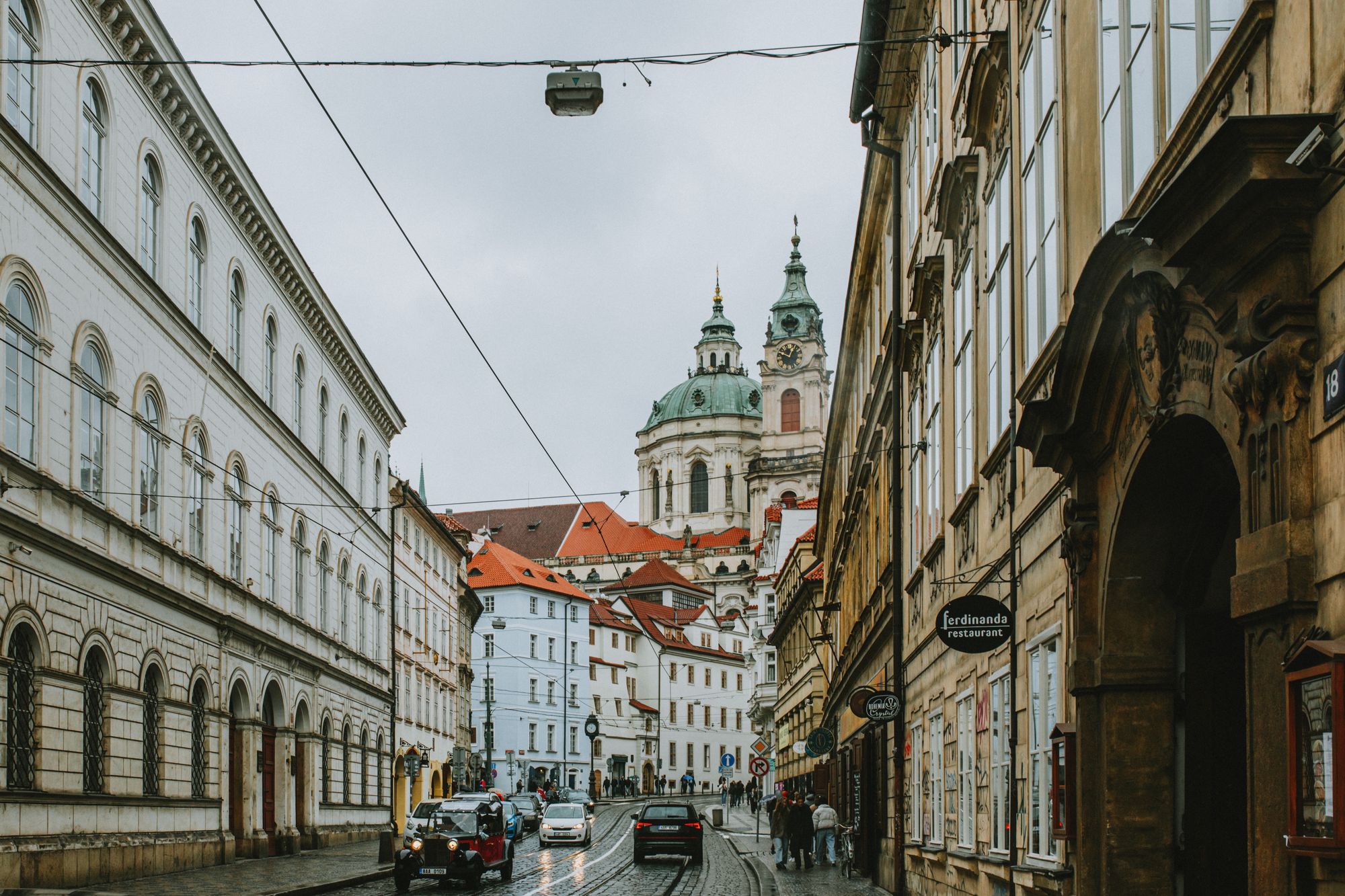
Prague is one of Europe's most visually arresting cities — a remarkably intact medieval townscape of Gothic towers, baroque churches, and art nouveau facades that somehow survived both World Wars largely undamaged. The Vltava river curves through the city in a graceful arc, spanned by the 14th-century Charles Bridge with its parade of baroque saints.
Things to Do in Prague
Prague is one of Europe's most visually arresting cities — a remarkably intact medieval townscape of Gothic towers, baroque churches, and art nouveau facades that somehow survived both World Wars largely undamaged. The Vltava river curves through the city in a graceful arc, spanned by the 14th-century Charles Bridge with its parade of baroque saints. Walking Prague's cobbled streets feels like moving through an open-air architectural museum, yet the city is alive with excellent restaurants, world-class music venues, and a craft beer culture that predates the global trend by centuries. Its central location makes it an ideal base for exploring Bohemia, and it remains one of Central Europe's most affordable capitals.
Iconic Landmarks, Prague Castle, and Museums
Prague Castle (Pražský hrad) is the world's largest ancient castle complex and one of the main reasons people come to Prague, the Czech capital and a historic city. Its main attractions, along with many other tourist attractions across the historic centre, are part of what makes it such a beautiful city. The Prague Castle complex is a fortified hill comprising St. Vitus Cathedral, the Old Royal Palace, the Golden Lane, and multiple museums, all open to visitors across a sprawling hillside campus. St. Vitus Cathedral contains the Bohemian Crown Jewels and tombs of Czech kings, including links to Holy Roman emperors, while the site is often described as the largest castle complex in the world. The medieval Charles Bridge, built in 1357 on the orders of Emperor Charles IV, spans the river Vltava and remains one of Europe's most atmospheric river crossings; it is also part of Prague's UNESCO World Heritage site core. From here, Old Town Square is just a short walk away. The Old Town Square (Staroměstské náměstí) hosts the Prague astronomical clock on the Old Town Hall, where the hourly procession of apostles draws crowds, and the clock itself was damaged during World War II. You can also climb the old town hall tower, or town hall tower, for sweeping views across the city centre. The Jewish Quarter (Josefov) contains six surviving synagogues, including the Spanish Synagogue, as well as the old Jewish cemetery; the Jewish Museum helps tie these monuments together and adds important context on Czech history. The Veletržní Palace (National Gallery of Modern Art) houses an outstanding collection including works by Picasso, Cézanne, and Czech masters, with strong holdings in contemporary art. All of these major sights are within walking distance for many travelers staying in the Prague city centre, making them easy to explore when you visit Prague.
Neighborhoods and Old Town Square Worth Exploring
Malá Strana (Lesser Town) at the foot of the castle hill is Prague's most romantic neighbourhood — Baroque houses, palaces, hidden garden courtyards, and the Church of St. Nicholas create an atmosphere of faded grandeur. Nearby, the Lennon Wall is one of the area's best-known photo stops, while the John Lennon Wall also stands as a lasting symbol of anti-communist resistance. The Vinohrady district, a 20-minute tram ride from the centre, has become Prague's most desirable residential neighbourhood — art nouveau apartment buildings, excellent wine bars, and the beautiful Peace Square (Náměstí Míru) with its neo-Gothic church make this a rewarding off-the-beaten-path area, with plenty of hidden gems if you want to linger beyond the main sights. Žižkov adjacent to Vinohrady is Prague's alternative quarter — famously possessing more pubs per capita than anywhere else in the Czech Republic, anchored by the extraordinary Žižkov Television Tower with its crawling baby sculptures.
Outdoor Activities, Parks, and the Vltava River
Letná Park atop the cliff above Malá Strana offers the most iconic panoramic view of Prague — the red metronome (replacing a giant Stalin statue) marks the skyline, and the park's beer garden is one of the city's most beloved. Stromovka Park, the former royal hunting grounds in Holešovice, is Prague's largest park and perfect for cycling. The Vyšehrad fortress and park on the south bank of the Vltava contains the national cemetery (burial place of Dvořák, Smetana, and Mucha) and stunning views over the river. Boat trips on the Vltava offer a beautiful perspective on the Charles Bridge and Old Town, and they pair well with short day trips beyond the center. Nearby, Malá Strana is worth a walk for its cobbled lanes, Baroque houses, and easy access to the Lennon Wall and Kampa Island, also known as the Prague Venice. For families heading farther out, Prague Zoo is another easy option on the edge of the city.
Food, Czech Beer, Drink, and Nightlife
Czech cuisine is hearty and satisfying: svíčková (braised beef sirloin with bread dumplings and cream sauce), trdelník (chimney cake sold across Old Town — touristy but delicious), and goulash served in bread bowls are staples, but for a more traditional Czech food experience it's worth seeking out classic kitchens beyond the busiest tourist strips. Czech beer — Pilsner Urquell, Budvar, Kozel, and local Prague microbreweries — is the best in the world, and a half-litre typically costs 50–70 Kč (€2–€3). The Lokál chain of Czech beer restaurants serves perfectly conditioned Pilsner Urquell with traditional food. For novelty wellness, a beer spa like Beer Spa Bernard lets guests relax in oak tubs with a private beer tap. Prague's nightlife ranges from Old Town tourist bars to the excellent club scene in Holešovice and Žižkov — Cross Club and Klub 007 are local institutions for electronic music. The Dancing House rooftop Glass Bar offers city panoramas with drinks.
Practical Tips
The Prague City Tourist Pass covers public transport and major museum entries. Prague's tram network runs 24 hours and is the best way to get around the city centre. The Czech currency is the Czech Koruna (CZK) — not the Euro; use bank ATMs rather than tourist exchange bureaus. English is widely spoken in tourist areas. Prague's Old Town can feel overwhelming with crowds in summer — plan early morning visits to Charles Bridge and the castle.