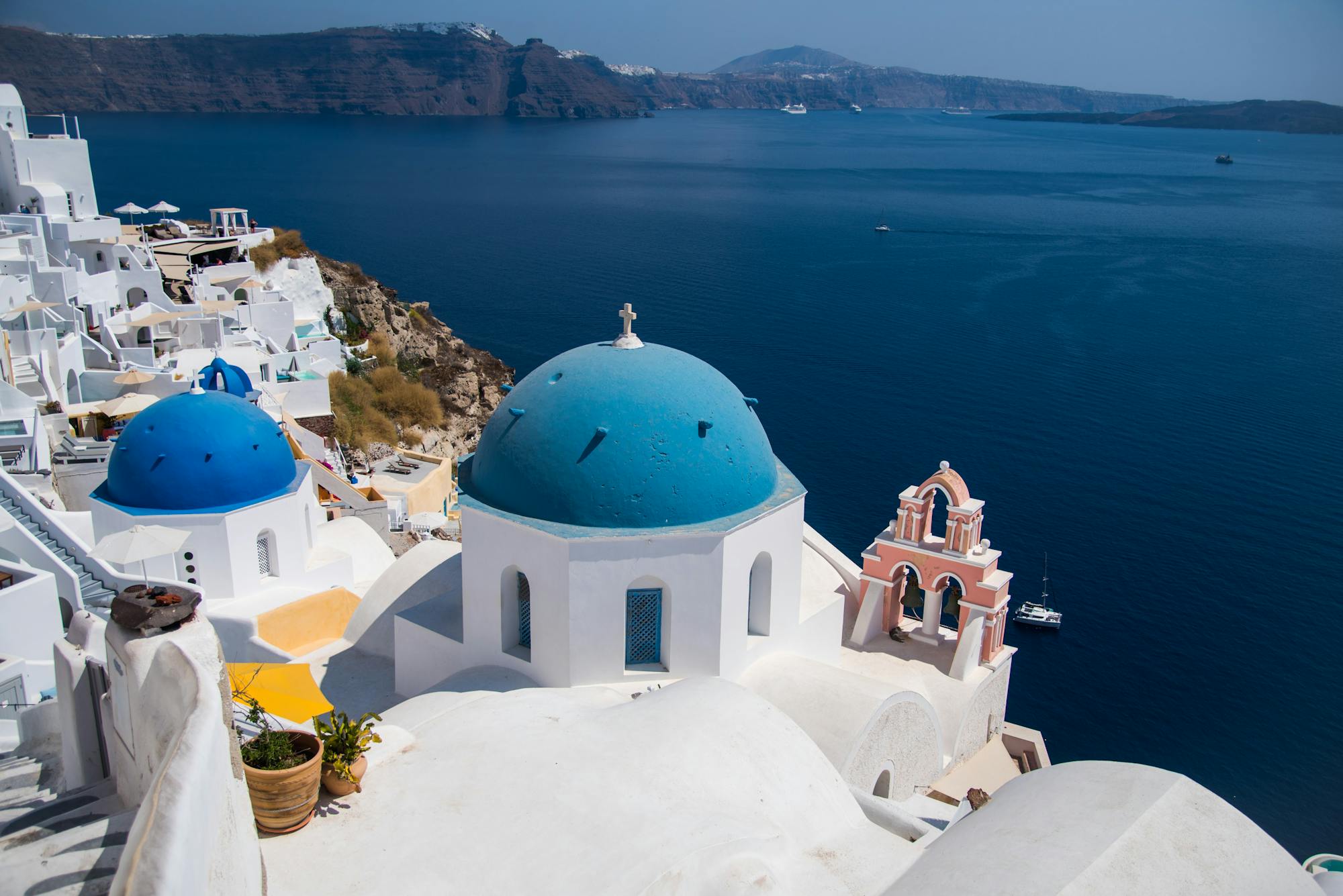
Santorini is one of the world's most photographed and instantly recognisable islands — a crescent of sheer volcanic cliffs draped in whitewashed villages, their iconic blue-domed churches gazing out over the impossibly blue caldera of an ancient supervolcano. Yet behind the Instagram-famous postcard views of Oia lie black sand beaches, ancient ruins, superb local cuisine, and a wine culture rooted in vines grown in volcanic soil like nowhere else on earth.
Oia and the Caldera Villages
The clifftop village of Oia, at the northern tip of the island, is Santorini's most celebrated spot and one of the most photographed places on the planet. Its labyrinth of whitewashed lanes, cave houses, boutique hotels, and blue-domed churches cascading down the caldera's edge is undeniably spectacular — particularly at sunset, when crowds gather along the castle walls for what is, despite the competition, still one of the world's great golden-hour spectacles. The island's capital Fira sits further south along the caldera rim, with more restaurants, bars, and access to cable car rides down to the old port. Imerovigli, between the two, offers arguably the finest caldera views of all in a quieter setting.
Beaches
Santorini's beaches are unlike any others in Greece. The famous Red Beach, near Akrotiri, is backed by dramatic red and ochre volcanic cliffs and requires a short scramble over rocky terrain to reach. Perissa and Perivolos in the south are long stretches of black volcanic sand backed by tavernas, beach bars, and watersports operators — the island's most popular swimming beaches. The black sand absorbs heat intensely, so beach shoes are advisable in summer. Kamari offers a similar experience with a more developed beachfront promenade. For solitude, smaller black pebble coves can be found on the less-visited eastern coast.
Ancient Akrotiri
Beneath a protective shelter near the island's southern tip lies one of archaeology's great treasures: the Minoan settlement of Akrotiri, buried and preserved by the volcanic eruption of circa 1627 BC. The site is exceptionally well-preserved, with multi-storey buildings, sophisticated drainage systems, and vivid frescoes (displayed in Athens' National Archaeological Museum) that provide an extraordinary window into Bronze Age Aegean civilisation. A visit here, combined with the sunset at the nearby Red Beach, makes for a superb half-day itinerary.
Santorini Wine
Santorini produces some of Greece's most distinctive wines, grown in volcanic ash soil that imparts a unique mineral character to the island's indigenous Assyrtiko grape. The wines — dry, crisp, and high in acidity — are world-class, and several excellent wineries offer tastings with caldera views. Santo Wines and Estate Argyros are the largest and most visitor-friendly, but smaller producers like Domaine Sigalas and Hatzidakis offer more intimate experiences. Santorini's famous Vinsanto, a sweet wine made from sun-dried grapes, is produced in tiny quantities and worth seeking out.
Boat Trips and the Volcano
The caldera is not just a backdrop — it can be explored by boat. Numerous operators run half-day and full-day tours departing from the old port beneath Fira (reached by cable car or donkeys) or from Ammoudi Bay beneath Oia. A typical tour includes a stop at the still-active volcanic islets of Nea Kameni for a hike to the crater's edge, a swim in the warm thermal waters near Palea Kameni, and a visit to the pretty island of Thirassia — the largely undeveloped western fragment of the original caldera, offering a glimpse of traditional Cycladic island life without the tourist infrastructure.