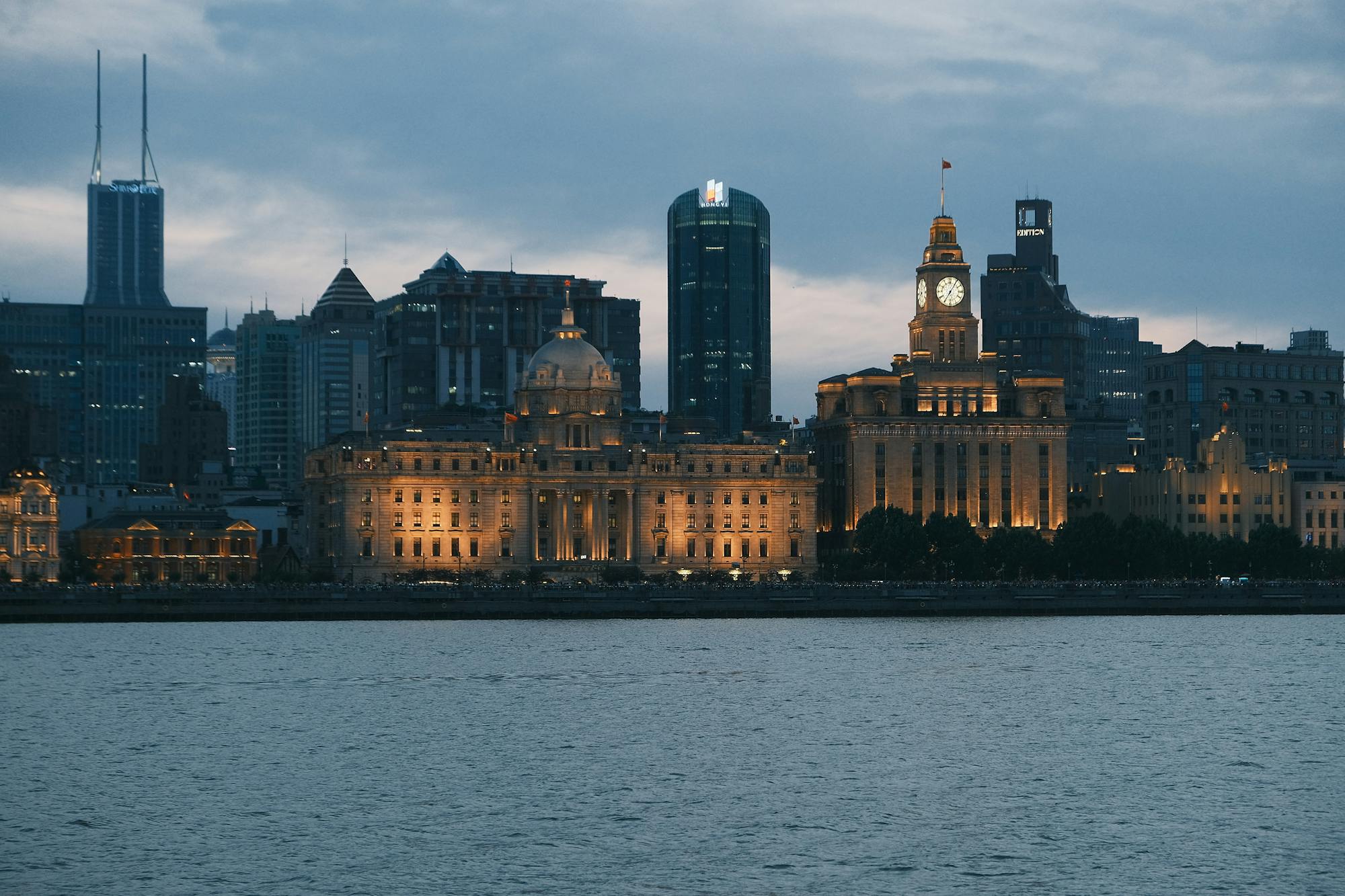
Shanghai is Asia's most cosmopolitan city — a place that has always looked outward, absorbed foreign influences, and transformed them into something uniquely its own. With one of the world's great skylines, the Art Deco lanes of the French Concession, world-class dining, and a cultural scene that never sleeps, Shanghai rewards visitors with bottomless layers of discovery.
Shanghai is Asia's most cosmopolitan city — a place that has always looked outward, absorbed foreign influences, and transformed them into something uniquely its own. The city's skyline is one of the world's great panoramas: the Art Deco European banking halls of The Bund facing the futuristic towers of Pudong across the Huangpu River, the Oriental Pearl TV Tower needle rising between the bottle-shaped World Financial Center and the twisted spire of the Shanghai Tower (the world's second-tallest building). But Shanghai is also a city of extraordinary neighbourhood character: the plane-tree-shaded lanes of the French Concession, the classical pavilions of Yu Garden, the art deco cinemas and lane-house alleyways (longtang) of the old International Settlement. With some of China's finest dining, the country's most vibrant arts scene, and an energy that never fully sleeps, Shanghai rewards visitors with bottomless layers of discovery.
Top Attractions
The Bund (外滩, Wàitān) is Shanghai's most iconic address — the mile-long waterfront promenade of European-style banks, hotels, and trading houses built between 1860 and 1930, now facing the glittering towers of Pudong across the river. Walk it at dusk as the neon begins to reflect on the Huangpu and the towers light up in sequence — one of Asia's great urban spectacles. The Yu Garden (豫园) in the Old City is a classical Ming Dynasty garden of rockeries, pavilions, and koi ponds, surrounded by the Yuyuan Bazaar shopping district where soup dumpling stalls and antique shops jostle for attention. The Shanghai Museum in People's Square houses one of China's finest collections of bronzes, ceramics, paintings, and minority culture artefacts — free entry, world-class quality. The French Concession (Frenchtown) is not a single attraction but an entire neighbourhood of leafy streets, Art Deco villas, boutique restaurants, and independent coffee shops that rewards aimless wandering — particularly the lanes around Xintiandi, Tianzifang, and Wulumuqi Road. For contemporary art, Power Station of Art (China's first state-run contemporary art museum) in a converted power plant and the gallery clusters of the M50 Creative Park make Shanghai the most dynamic art city in China.
Cultural Immersion
Shanghai's longtang (弄堂) lane-house neighbourhoods — the residential typology that defines old Shanghai life — are disappearing fast but can still be experienced in pockets of Jing'an, Xuhui, and Huangpu districts. Wander into the alleyways off Wukang Road or Anfu Road in the French Concession to find barbershops, tofu vendors, elderly men playing Chinese chess, and children doing homework at courtyard tables. The Shanghai Jewish Refugees Museum in the Hongkou district tells the story of the 20,000 Jewish refugees who found sanctuary in Shanghai when no other city would accept them during World War II — a deeply moving and undervisited historical site. For performance culture, the Shanghai Acrobatics Troupe at Shanghai Circus World stages breathtaking shows of balance, flexibility, and aerial work; book tickets online. The 1933 Old Millfun — a 1930s slaughterhouse converted into a cutting-edge dining and retail complex with spiral bridges and a Kafkaesque interior — is one of Shanghai's most fascinating architectural spaces.
Day Trips
Suzhou, 45 minutes from Shanghai Hongqiao station by high-speed train, is the essential day trip — its UNESCO-listed classical gardens (the Humble Administrator's Garden, the Lingering Garden, the Master of the Nets Garden) represent 2,000 years of Chinese landscape design philosophy, and the city's canal network has earned it the title "Venice of the East." The water towns of Zhouzhuang, Xitang, and Wuzhen (all 1–2 hours from Shanghai) offer quieter, less-visited alternatives to Suzhou, with white-walled houses rising directly from dark canal waters, stone bridges, and boat journeys through living Ming and Qing-era streetscapes. Hangzhou, 1 hour by high-speed train, is one of China's most beautiful cities — West Lake (Xihu) with its willow-fringed causeways, pagoda-topped hills, and tea plantations is a landscape Marco Polo called "the finest and most splendid city in the world." The nearby Longjing (Dragon Well) tea plantations in the hills west of Hangzhou produce China's most prized green tea and welcome visitors during the spring harvest (late March–April).
Food Culture
Shanghai cuisine (本帮菜, běnbāng cài) is defined by its use of rich, dark soy sauce, Shaoxing rice wine, and sugar — a sweet-savoury balance that distinguishes it from the heat of Sichuan or the delicacy of Cantonese cooking. Xiaolongbao (小笼包, soup dumplings) are Shanghai's most famous export — gossamer-thin dough parcels filled with minced pork and scalding hot pork gelatin broth that melts to liquid when cooked; the canonical address is Din Tai Fung (Taiwanese origin but perfected in Shanghai), though the local institution Nanxiang Mantou Dian at Yu Garden serves the classic version. Red-braised pork belly (红烧肉, hóng shāo ròu) slow-cooked until the fat collapses into glossy tenderness is a Shanghai home cooking staple, best at traditional Shanghainese restaurants in Huangpu. The French Concession dining scene is China's most internationally diverse and sophisticated — Michelin-starred restaurants serving modern Shanghainese cuisine sit alongside excellent Japanese, Italian, and Middle Eastern kitchens. For street food, the area around Fangbang Road in the Old City and the covered food market at Jing'an Temple serve shengjian bao (pan-fried pork buns with crispy bottoms), cong you bing (spring onion pancakes), and douhua (silken tofu with syrup).
Practical Tips
Shanghai has two airports: Pudong International (PVG) for international long-haul flights and Hongqiao (SHA) for domestic routes and high-speed rail. The Maglev train from Pudong Airport to Longyang Road station (7 minutes, 431km/h) is one of the world's great transport novelties and the fastest way to connect to the metro system. Shanghai's metro is extensive, cheap, and in English — essential for navigating this large city. Download DiDi for app-based taxis and set destination in Chinese characters (copy from Google Translate, downloaded offline before arrival — Google is blocked in China without a VPN). WeChat Pay and Alipay are required for most transactions; link a foreign card to Alipay before arrival. The best months are March–May and September–November; summer (June–August) brings oppressive heat and humidity; winter (December–February) is cold and grey but Christmas and New Year bring excellent light displays along The Bund.