Sintra is a UNESCO World Heritage Cultural Landscape of extraordinary beauty — a fairy-tale town of palaces, castles, and forested hillsides perched dramatically above the Atlantic coast. Just 40 minutes from Lisbon by train, it's one of the most magical destinations in Portugal and in all of Europe.
1. Palácio Nacional da Pena
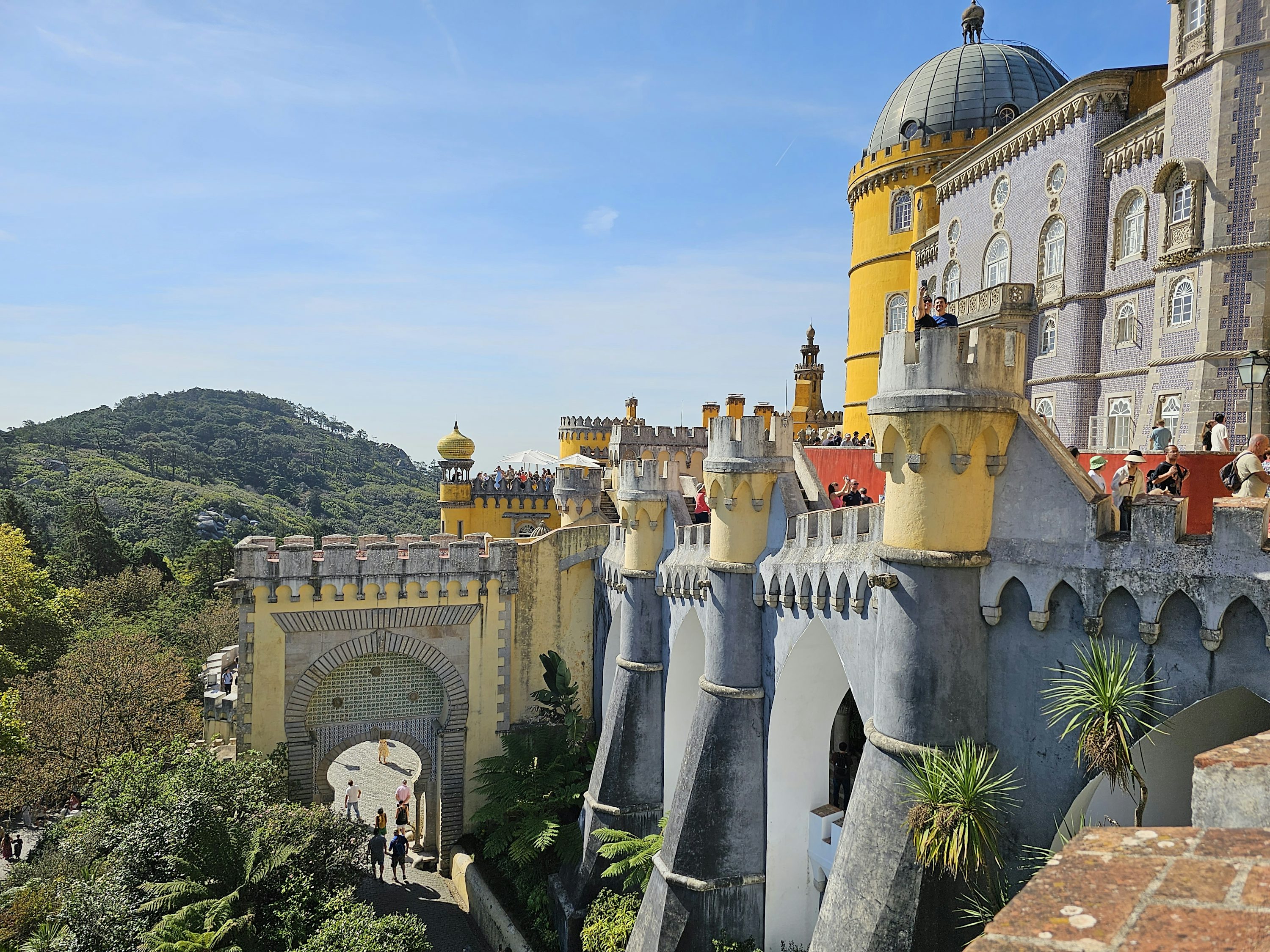
Pena Palace is Sintra's crown jewel — a wildly romantic 19th-century palace of candy-striped towers, battlements, and vivid terracotta and yellow facades perched high on a forested ridge. Built by King Ferdinand II as a royal summer retreat, it blends Gothic, Manueline, Moorish, and Renaissance architecture into a uniquely exuberant whole. The interiors are remarkably well-preserved, with original royal furnishings, Arabesque ceilings, and a stunning panoramic terrace. Buy tickets online in advance, as queues can be long in peak season.
2. Castelo dos Mouros (Moorish Castle)
The ruined Moorish Castle, dating to the 8th–9th centuries, crowns one of the Serra de Sintra's highest peaks and offers some of the most spectacular views in the region — across forests and palace spires to the Atlantic and, on clear days, Lisbon. Walking the ancient walls is a highlight: the path winds between towers and battlements, past a 10th-century cistern, and through dense moss-covered forest. The castle is reached by steep footpath from the town center or by shuttle bus.
3. Quinta da Regaleira
This late 19th-century estate is Sintra's most mysterious attraction. Built for millionaire eccentric António Carvalho Monteiro, the property is layered with Masonic, Templar, and Rosicrucian symbolism. The highlight is the Initiation Well — a 27-metre inverted tower that spirals underground, its nine platforms connected by a stone staircase. Underground tunnels connect the well to the estate's grottoes, chapel, and lake. The palace itself is also beautiful, its interior richly decorated with mythological and alchemical motifs.
4. Palácio Nacional de Sintra
The National Palace in the center of Sintra town is the best-preserved medieval royal palace in Portugal, recognizable by its twin conical chimneys — the largest in Europe — that dominate the skyline. The palace was the summer residence of Portuguese kings for six centuries, and its rooms preserve an extraordinary collection of Moorish and Manueline architecture, royal portraits, and some of the finest 15th-century azulejo panels in existence.
5. Monserrate Palace and Gardens
The Monserrate Palace, on the western edge of the Sintra hills, is a Gothic-Moorish fantasy of lacy stonework and horseshoe arches surrounded by a magnificent botanical garden. Designed for English merchant Francis Cook in the 1860s, the palace has an ethereal, dreamlike quality and the gardens — planted with trees and plants from around the world — are arguably the most beautiful in Portugal. Monserrate tends to be less crowded than Pena or Regaleira.
6. Explore Sintra Village
The historic center of Sintra is worth exploring beyond its palaces. The cobbled streets are lined with pastry shops selling queijadas (cheese tarts) and travesseiros (almond and egg custard pastries) — both Sintra specialties. Browse antique shops, visit the town's small museums, and have lunch at one of the traditional restaurants in the main square. The village gets very crowded midday in summer; early mornings are peaceful and beautiful.
7. Cabo da Roca
A short bus ride from Sintra (or a scenic walk through the Serra), Cabo da Roca is the westernmost point of continental Europe — a dramatic clifftop promontory where the Serra de Sintra meets the Atlantic in a blaze of wind and spray. There's little here but a lighthouse, a cliff path, and a certificate office where you can purchase a "Westernmost Point of Europe" document — but the symbolism and the view are powerful. Combine with a stop at the village of Azóia and the Praia Grande beach.
Practical Tips for Visiting Sintra
Book tickets for Pena Palace, Moorish Castle, and Quinta da Regaleira online at least a day in advance — popular sites sell out weeks ahead in summer. Arrive early (before 9am) to beat the crowds and enjoy the misty morning atmosphere. Sintra's shuttle buses connect the train station with the main sites, but walking between them through the forest is highly recommended if you're fit. Stay overnight if you can: Sintra at dusk, after the day-trippers have gone, is a completely different — and magical — experience.