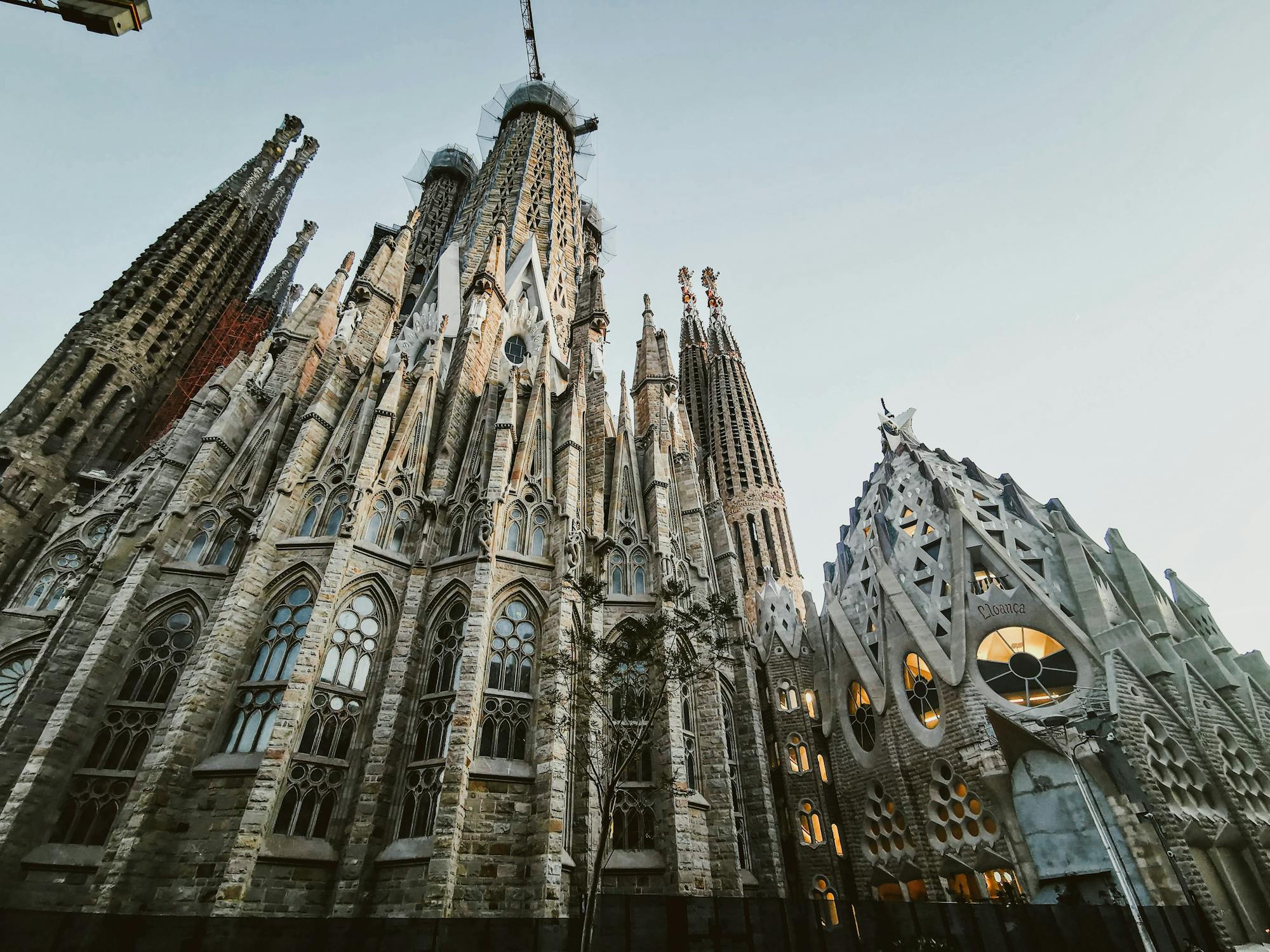
Spain is a country of dramatic contrasts and infectious energy — a destination where flamenco dancers stamp their heels in Seville's cobbled plazas, Gaudí's extraordinary architecture rises from the streets of Barcelona, Michelin-starred pintxos bars line the streets of San Sebastián, and the Alhambra palace glows amber against the Sierra Nevada mountains.
Top Attractions in Spain
The Sagrada Família in Barcelona is the most visited monument in Spain — Antoni Gaudí's unfinished basilica, still under construction after 140 years, is unlike any building on earth, with its forest of soaring towers, kaleidoscopic stained glass, and organic stone facades. Book tickets well in advance. The Alhambra in Granada is Spain's crown jewel: a breathtaking 14th-century Nasrid palace complex of intricately carved stucco, geometric tilework, and Moorish garden courtyards (generalife gardens) perched above the city. Tickets sell out weeks ahead — book the moment they become available. In Seville, the Real Alcázar palace is another masterpiece of Mudéjar architecture, while the Catedral de Sevilla — the world's largest Gothic cathedral — contains the tomb of Christopher Columbus. Toledo, the "City of Three Cultures," is an extraordinary medieval walled city where Christian, Muslim, and Jewish heritage coexist in a UNESCO-listed old town perched above the River Tagus. San Sebastián (Donostia) in the Basque Country has more Michelin stars per capita than almost anywhere on earth — its pintxos bars and beach promenade make it Spain's most seductive city for food lovers.
Unique Experiences
A flamenco show in Seville or Granada in an intimate tablao (performance venue) is an electrifying experience — the raw passion of cante jondo singing, intricate footwork, and guitar mark flamenco as something utterly unique to Andalusia. For a wine experience, the Rioja wine route through La Rioja and Álava takes you to architecturally spectacular bodegas (wineries) designed by Frank Gehry, Zaha Hadid, and Santiago Calatrava, each producing exceptional Tempranillo wines with cellar tours and tastings. The Camino de Santiago pilgrimage route — walking through Galicia's green hills toward the cathedral of Santiago de Compostela — is one of Europe's great spiritual and physical journeys, accessible in sections or as the full 800-kilometre French Way. On the islands, cycling Mallorca's Serra de Tramuntana (a UNESCO World Heritage mountain range) offers world-class road cycling through dramatic limestone scenery.
Regional Highlights
Catalonia (Barcelona, Girona, Costa Brava) offers Gaudí's modernisme, world-class dining, and rocky Mediterranean coves. Andalusia in the south is the heartland of flamenco, Moorish architecture, and sherry — Seville, Granada, Córdoba, and the white hilltop villages of the Ronda area are essential stops. Madrid and Castile combine the Prado Museum's unrivalled art collection (Velázquez, Goya, El Greco) with the nearby UNESCO cities of Toledo, Segovia, and Salamanca. The Basque Country and Navarre deliver Spain's finest food culture in San Sebastián and Bilbao (home of the Guggenheim Museum). Valencia claims the birthplace of paella and hosts the spectacular Las Fallas festival each March. The Canary and Balearic Islands extend Spain's appeal with year-round sun, volcanic landscapes (Teide on Tenerife), and beach-party culture (Ibiza, Formentera).
Practical Travel Tips
Spain uses the Euro (€). Spanish mealtimes are famously late — lunch is the main meal of the day, eaten between 2–4pm, while dinner rarely starts before 9–10pm. Attempting to dine at 6pm will find most restaurants closed. Tipping is not mandatory but rounding up or leaving 5–10% for good service is appreciated. Spaniards are warm and proud people — learning a few words of Spanish, and especially regional languages in Catalonia (Catalan), the Basque Country (Euskara), or Galicia (Galician) shows genuine respect. The Renfe AVE high-speed train network connects Madrid to Barcelona (2.5 hours), Seville (2.5 hours), and Málaga (2 hours 20 minutes) at excellent prices if booked ahead. The Tarjeta Turística tourist transport pass in Madrid and Barcelona offers unlimited metro/bus travel. Pickpocketing is prevalent on Barcelona's La Rambla and Seville's crowded tourist areas — use a money belt or anti-theft bag.