Tanzania is one of Africa's most extraordinary travel destinations — a country of superlatives that encompasses the largest wildlife migration on earth, the continent's highest peak, and some of the Indian Ocean's most beautiful islands. The Serengeti National Park and Ngorongoro Crater sit at the heart of what many travellers consider the ultimate safari experience, while Mount Kilimanjaro draws trekkers from every corner of the globe.
Tanzania is one of Africa's most extraordinary travel destinations — a country of superlatives that encompasses the largest wildlife migration on earth, the continent's highest peak, and some of the Indian Ocean's most beautiful islands. The Serengeti National Park and Ngorongoro Crater sit at the heart of what many travellers consider the ultimate safari experience, while Mount Kilimanjaro draws trekkers from every corner of the globe.
The Serengeti
The Serengeti National Park — 14,750km² of open savannah, woodland, and riverine forest — is the stage for the Great Wildebeest Migration, widely described as the greatest wildlife spectacle on earth. Between 1.5 and 2 million wildebeest, plus hundreds of thousands of zebra and Thomson's gazelle, follow a clockwise annual circuit across the Serengeti ecosystem, driven by grass growth following the rains. The drama peaks at the Mara River crossings (July–October in the north) and at the calving grounds of the Ndutu region (January–February in the south). The Serengeti also holds exceptional resident predator populations year-round — lions, leopards, cheetahs, wild dogs, and the largest hyena clans in Africa. A well-guided Serengeti safari in any season is exceptional.
Ngorongoro Crater
The Ngorongoro Crater — a 2,000km² collapsed volcanic caldera 600 metres deep — is Tanzania's most concentrated wildlife area: approximately 25,000 large mammals live on the crater floor, including one of Africa's largest populations of black rhino. The crater is permanently inhabited by lions, elephants, hippos, flamingos, and an extraordinary density of wildebeest that do not migrate (the natural ring of crater walls contains them). A full crater day begins at dawn on the rim (1,800m, genuinely cold) and descends to the sunlit crater floor for game drives around the central soda lake. The view from the rim at sunrise — the caldera floor appearing below through the morning mist — is one of Africa's great visual experiences.
Mount Kilimanjaro
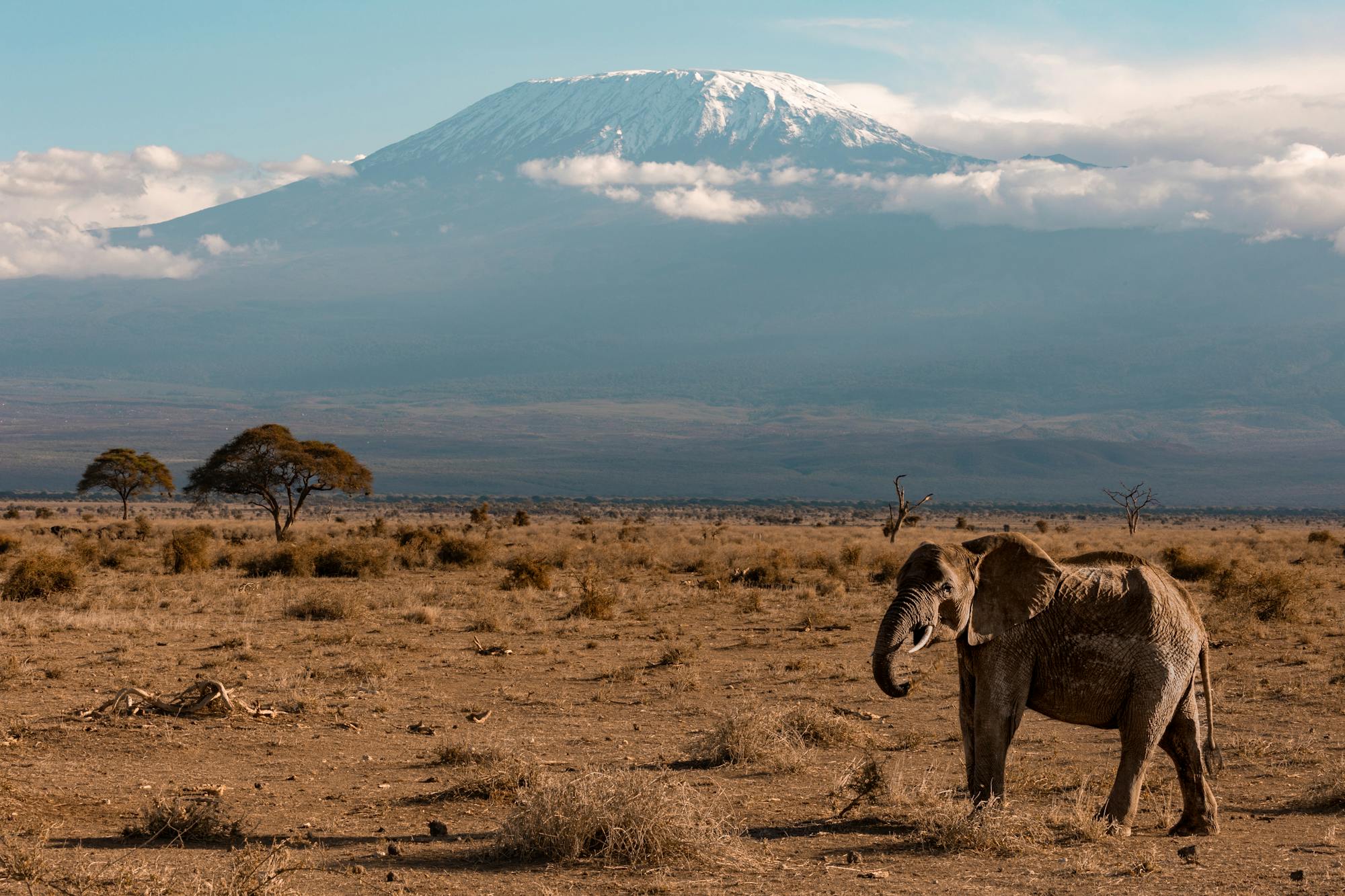
At 5,895m, Mount Kilimanjaro is Africa's highest peak and the world's highest free-standing mountain — an extinct stratovolcano whose summit ice cap is one of the world's most recognisable images. Kilimanjaro is a non-technical climb — no ropes, crampons, or mountaineering experience required — but it is a serious altitude challenge. Success rates vary from 45% to 85% depending on route choice: the Lemosho Route (8 days) and Machame Route (7 days) offer the best acclimatisation and highest summit rates. The mountain passes through five distinct ecological zones — cultivated farmland, rainforest, moorland, alpine desert, and arctic summit — making the ascent a genuinely remarkable ecological journey.
Zanzibar
Zanzibar — Tanzania's semi-autonomous island archipelago 35km off the coast — is East Africa's most seductive island destination. Stone Town, the old Arab trading capital, is a UNESCO World Heritage Site of extraordinary historical depth: narrow alleys, carved wooden doors, mosques, spice markets, and the house where Freddie Mercury was born. The north coast beaches (Nungwi, Kendwa) offer white sand and turquoise water; the east coast (Paje) is the East African kiteboarding capital. Zanzibar's marine park at Mnemba Atoll has some of the finest coral reef diving in the Indian Ocean.
Tarangire and Ruaha
Tarangire National Park (north, near Arusha) is Tanzania's most underrated safari destination — an ancient baobab-studded landscape with the largest elephant concentration in East Africa, exceptional birdlife, and far fewer visitors than the Serengeti. The dry season (July–October) sees elephants congregating around the Tarangire River in extraordinary numbers. Ruaha National Park in southern Tanzania is Tanzania's largest park and one of Africa's wildest — vast, remote, rarely crowded, with exceptional lion prides and large wild dog populations. Southern Tanzania's circuit (Ruaha, Selous/Nyerere) is Tanzania's best-kept secret for those seeking genuine wilderness.