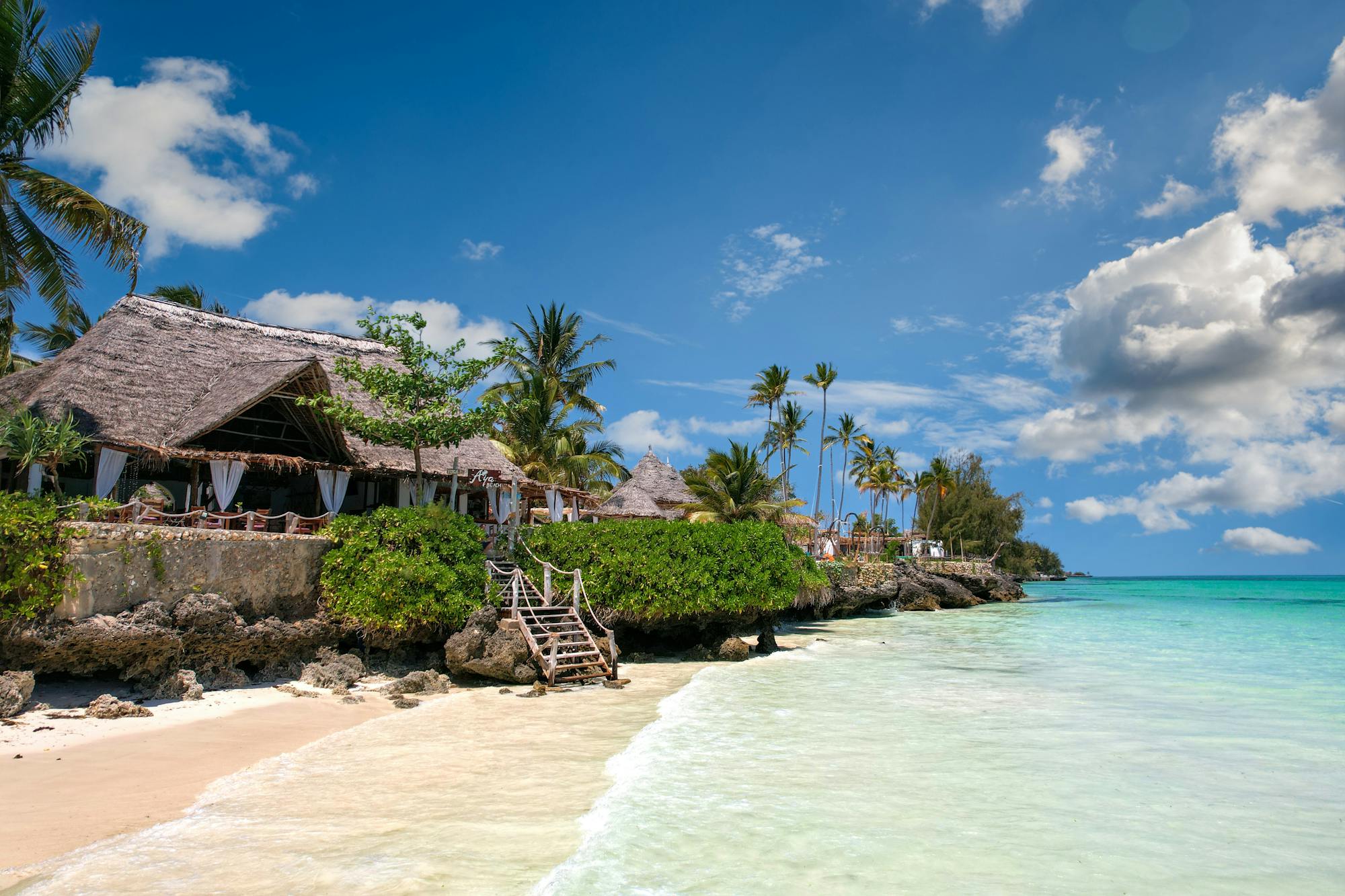
Zanzibar — the Spice Island of the Indian Ocean — is one of Africa's most seductive destinations. An archipelago of white-sand beaches, swaying palm trees and warm turquoise water just 35km off the Tanzanian coast, it combines world-class beach relaxation with a remarkably rich cultural and historical heritage.
Zanzibar — the Spice Island of the Indian Ocean — is one of Africa's most seductive destinations. An archipelago of white-sand beaches, swaying palm trees and warm turquoise water just 35km off the Tanzanian coast, it combines world-class beach relaxation with a remarkably rich cultural and historical heritage.
Stone Town
Stone Town — the old Arab trading capital of Zanzibar City — is a UNESCO World Heritage Site of extraordinary depth: a living Swahili city of narrow alleys, carved wooden doors, mosques, Indian merchant houses, and the old Omani Sultanate palace. The town was the hub of the 19th-century Indian Ocean trade in spices, ivory, and slaves — and the physical fabric of that history is everywhere. The Old Fort (built in 1699) now hosts the annual film festival. The Palace Museum (Beit el-Sahel) was the palace of the last Sultan. The house at Khumbi Road where Farrokh Bulsara — Freddie Mercury — was born is marked and pilgrimage-worthy. Evenings in Stone Town at the Forodhani Gardens food market — Zanzibar mix (a local street food of urojo soup, bhajias, and samosas), fresh seafood grills, and sugarcane juice — are one of East Africa's great street food experiences.
North Coast Beaches: Nungwi and Kendwa
Nungwi, at Zanzibar's northern tip, has the island's liveliest beach scene — a long crescent of white sand with beach bars, water sports, and a genuine sunset strip culture. The beach at Nungwi is one of the few on Zanzibar's coast where the tide doesn't dramatically expose the seabed (the extreme tidal variation is Zanzibar's main beach quirk — at low tide, east coast beaches can expose 500m of mud). Kendwa, just south of Nungwi, is slightly more relaxed and the site of Zanzibar's famous full moon beach parties. Watersports (kiteboarding, windsurfing, sailing), diving, and dolphin watching are all excellent from the north coast.
East Coast: Paje and Jambiani
Zanzibar's east coast has a very different character — quieter, more rural, with a stronger local Zanzibari community presence. Paje is East Africa's premier kiteboarding destination (the consistent southeast trade winds June–October are world-class for kiting), with a relaxed, international backpacker-and-sport atmosphere. Jambiani, just south, is more sedate — village life visible from the beach, seaweed farming in the tidal shallows, and a few excellent boutique guesthouses for those seeking authentic calm rather than resort activity.
Spice Tours and Marine Experiences
A Zanzibar Spice Tour — half-day excursion to the clove, vanilla, nutmeg, cinnamon, and pepper plantations of the interior — is one of the island's most popular and genuinely educational experiences. Guides demonstrate and explain each spice in its natural state; it ends with a fresh Zanzibari lunch. Mnemba Atoll (northeast Zanzibar) is the island's premier dive site — a private-island marine reserve with outstanding coral, reef sharks, green turtles, spinner dolphins, and occasional whale sharks. Chumbe Island (southwest) is an extraordinary eco-sanctuary: a pristine coral reef park and protected forest with a small eco-lodge, accessible for day snorkelling trips. Dolphin watching at Kizimkazi on the southeast coast offers opportunities to snorkel with wild spinner and bottlenose dolphins in their natural habitat.