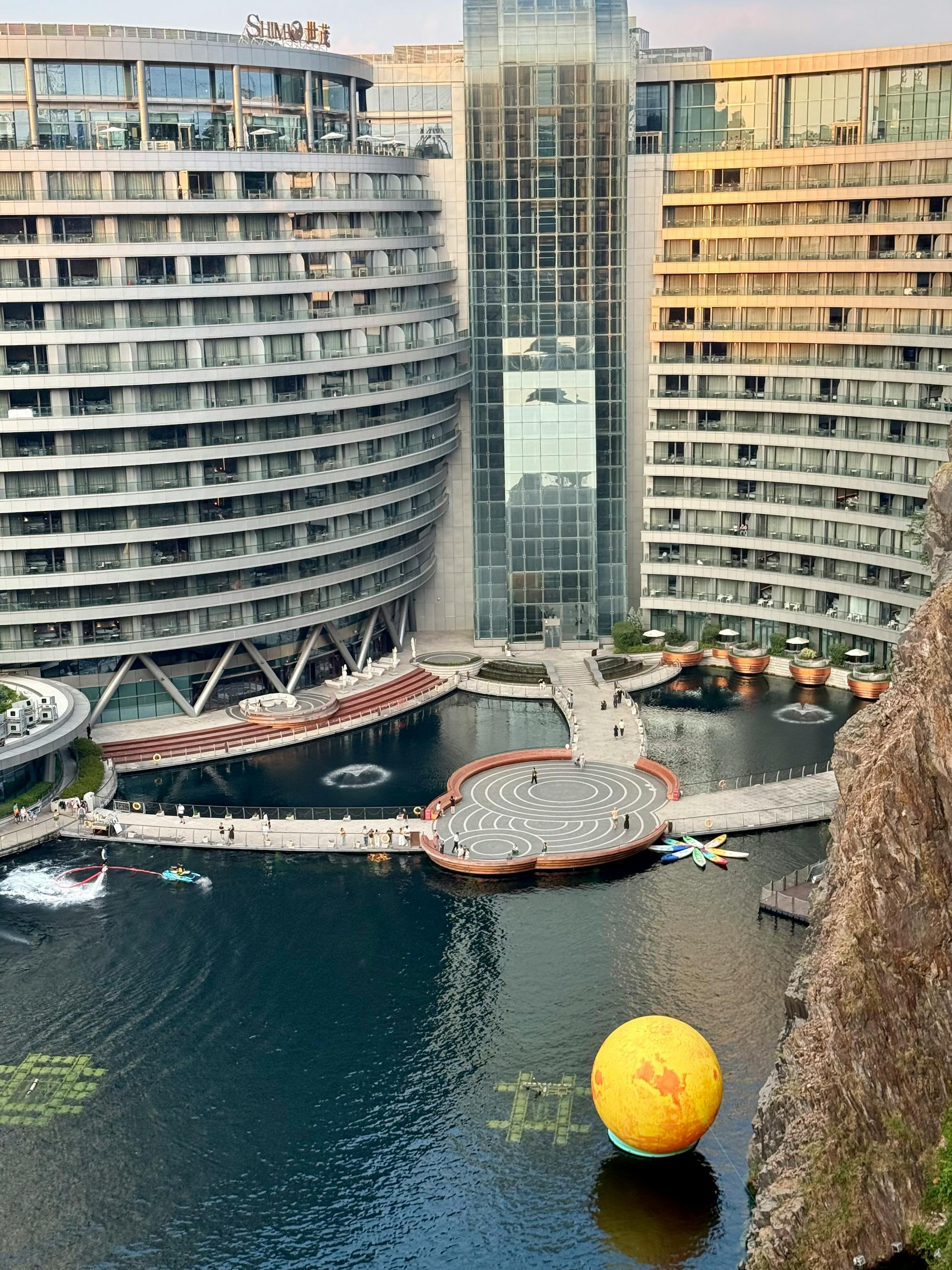
China's accommodation landscape spans an extraordinary range — from ultra-modern international five-star towers in Beijing and Shanghai to intimate courtyard hotels within the capital's hutong alleyways and imperial-era guesthouses in Xi'an's Muslim Quarter. Understanding the geography of each city matters enormously, as China's cities are large and staying in the wrong neighbourhood can mean an hour's commute to the sights you came to see.
China's accommodation landscape spans an extraordinary range — from ultra-modern international five-star towers in Beijing and Shanghai to intimate courtyard hotels (siheyuan) within the capital's hutong alleyways, ancient imperial-era guesthouses in Xi'an's Muslim Quarter, and dramatically positioned mountain resorts at Zhangjiajie or Huangshan. The country's rapid economic development means that mid-range and budget accommodation across all major cities is clean, reliable, and well-connected to public transport. Understanding the geography of each city matters enormously: China's cities are large, traffic can be severe, and staying in the wrong neighbourhood can mean an hour's commute to the sights you came to see.
Best Areas to Stay by City
In Beijing, the historic Dongcheng district — encompassing the hutongs around the Drum Tower, Nanluoguxiang, and Houhai Lake — is the most atmospheric base, within walking or cycling distance of the Forbidden City and Jingshan Park. The upscale Sanlitun district offers the city's best international restaurants and nightlife. For business travellers, the CBD/Guomao area is well-connected but characterless. In Shanghai, staying on or near The Bund (the Huangpu riverside) puts you at the heart of the city's most iconic scenery. The French Concession (Xuhui and Changning) is the most charming residential neighbourhood — tree-lined streets, Art Deco villas, excellent restaurants — and a strong choice for longer stays. In Xi'an, staying inside the Ancient City Walls near the Bell Tower or Drum Tower keeps you within walking distance of the Muslim Quarter and the city's main historical sites. In Chengdu, the areas around Kuanzhai Alley and the trendy Taikoo Li shopping district offer the best base for both culture and nightlife.
Luxury Accommodation
China's luxury hotels are genuinely world-class. In Beijing, the Aman at Summer Palace — occupying Qing Dynasty buildings immediately adjacent to the Summer Palace grounds — is one of Asia's most unique hotel experiences: its long stone corridors, lantern-lit courtyards, and imperial-garden setting are incomparable. The Peninsula Beijing on Chang'an Avenue is the traditional grand dame of the capital. In Shanghai, the Peninsula Shanghai on The Bund delivers Art Deco grandeur with a rooftop terrace overlooking the Huangpu River, while the Waldorf Astoria Shanghai on the Bund occupies the original 1910 Shanghai Club building. For boutique luxury with genuine history, Beijing's The Opposite House in Sanlitun and The Temple Hotel Beijing — a converted Buddhist temple complex — offer design-forward experiences at the cutting edge of hospitality.
Mid-Range Options
China's mid-range tier (CNY 400–1,200 / US$55–165 per night) is mature and reliable. International chains like Marriott, Hilton, and InterContinental operate extensively and offer predictable quality. More interesting are China's boutique courtyard hotels (四合院酒店) in Beijing's hutong districts — properties like Orchid Hotel and Brickyard Retreat at Mutianyu (near the Great Wall) offer atmospheric rooms in converted courtyard homes with genuine character. In Shanghai's French Concession, restored Art Deco properties and lane-house guesthouses offer style at accessible prices. In Xi'an, the Sofitel Legend Peoples Grand Hotel Xi'an occupies a 1953 Soviet-era landmark and remains one of the city's most characterful options.
Budget Stays
China has an excellent hostel culture, particularly in tourist-heavy cities. Beijing's Leo Hostel near Tiananmen Square and Peking Youth Hostel in the hutongs are long-established and well-reviewed. Shanghai's Mingtown Etour Youth Hostel near People's Square and hostels in the French Concession offer social atmospheres and knowledgeable staff. Budget hotels (快捷酒店, kuàijié jiǔdiàn) — chains like Home Inn, 7Days, and Hanting — are available in virtually every city in China at CNY 150–300 (US$20–40) per night; standards are consistent and breakfast is often included. Note that some budget properties require registration and may not accept foreign passports — check before booking or use international booking platforms that confirm foreign guest acceptance.
Booking Tips
The most important booking tip for China is to plan around the Golden Week holidays — the week-long national holidays at Chinese New Year (late January/February) and National Day (October 1–7) when 1.4 billion people travel simultaneously. Hotel prices triple or quadruple and sites like the Great Wall, Forbidden City, and West Lake become impossibly crowded. Book months in advance or avoid these windows entirely. The Qingming Festival (early April), Labour Day Golden Week (May 1–5), and Dragon Boat Festival (June) also create significant travel pressure. For booking platforms, Ctrip/Trip.com has the widest inventory of Chinese hotels, often at better rates than international OTAs. Note that Google-based services (Google Maps, Gmail) require a VPN in China — use Baidu Maps or Apple Maps for navigation, and download your VPN before arriving.