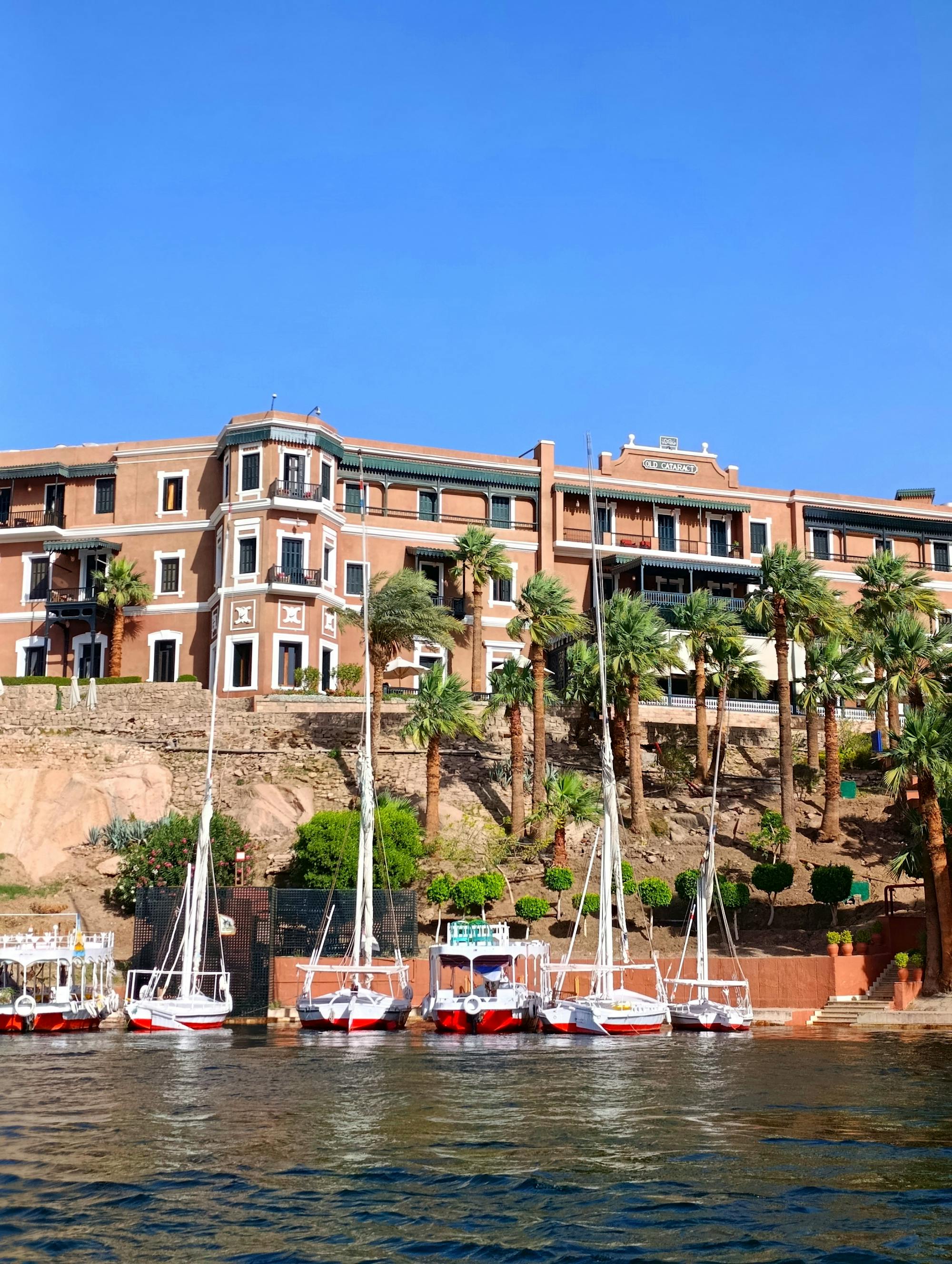
Egypt's accommodation landscape spans some of the world's most iconic hotel settings — a Nile-view room in Luxor looking directly at the Colossi of Memnon across the river, a dahabiya sailboat cabin drifting between ancient temples, a desert camp beneath the Milky Way near Siwa Oasis — alongside efficient modern hotels in Cairo and all-inclusive beach resorts on the Red Sea. Most Egypt itineraries combine at least two or three very different accommodation types, which is part of what makes the country so compelling.
Egypt's accommodation landscape spans some of the world's most iconic hotel settings — a Nile-view room in Luxor looking directly at the Colossi of Memnon across the river, a dahabiya sailboat cabin drifting between ancient temples, a desert camp beneath the Milky Way near Siwa Oasis — alongside efficient modern hotels in Cairo and all-inclusive beach resorts on the Red Sea. Most Egypt itineraries combine at least two or three very different accommodation types, which is part of what makes the country so compelling.
Cairo Hotels
Cairo's hotel scene is anchored by iconic properties with extraordinary histories. The Mena House at the foot of the Giza Pyramids — a 19th-century hunting lodge that became the venue for the 1943 Cairo Conference attended by Churchill, Roosevelt, and Chiang Kai-shek — offers rooms with direct pyramid views and is one of the world's great position hotels. The Sofitel Cairo Nile El Gezirah occupies a dramatic position on Gezira Island in the Nile with views upstream to the pyramids. The Four Seasons Cairo at Nile Plaza and Four Seasons Cairo at First Residence are both excellent luxury properties. For boutique options, several historic properties in the Zamalek island neighbourhood offer more intimate stays.
Nile Cruises
A Nile cruise between Luxor and Aswan (or reverse) is one of travel's iconic experiences — gliding past temples, villages, and palm-fringed banks on a boat that calls at Edfu, Kom Ombo, Esna, and smaller sites along the way. The market divides into two very different experiences: large cruise ships (150–300 passengers) that operate on a fixed schedule with group tours at each stop, and smaller traditional dahabiyas (6–24 passengers) that sail at their own pace on a private or semi-private basis, stopping at sites the large ships miss and cooking fresh food on board. Dahabiyas are slower (sail-powered, supplemented by motor) and significantly more expensive but offer an incomparably more intimate experience.
Luxor Hotels
Luxor has a range of excellent hotels on both the East and West Banks. The Winter Palace (Sofitel Luxor), a Victorian colonial hotel in beautiful gardens that opened in 1886, is a heritage landmark — Agatha Christie wrote parts of Death on the Nile here. The Al Moudira on the West Bank is a magnificent boutique property with beautiful architecture and gardens, positioned close to the Valley of the Kings. The Steigenberger Nile Palace offers large-hotel comfort with Nile views at competitive prices.
Red Sea Resorts
Hurghada and Sharm el-Sheikh offer Egypt's most developed beach and diving resort infrastructure — largely all-inclusive package holiday territory, dominated by large resort complexes from international chains. For more distinctive options, El Gouna (near Hurghada) is a purpose-built lagoon town with interesting architecture and a more upmarket feel. The Sinai Peninsula (Dahab, Nuweiba) offers a completely different — more backpacker and diving-focused — alternative to the large resorts.
Desert and Oasis Lodges
Egypt's Western Desert oases — particularly Siwa and Bahariya — offer a remote, extraordinary accommodation experience. Siwa Oasis, near the Libyan border, is home to the remarkable Adrère Amellal — an eco-lodge built entirely from kershef (salt crystal and mud) with no electricity, lit only by candlelight and firelight, positioned beside a natural spring lake surrounded by dunes and palm groves. It is one of Africa's most atmospheric places to sleep.