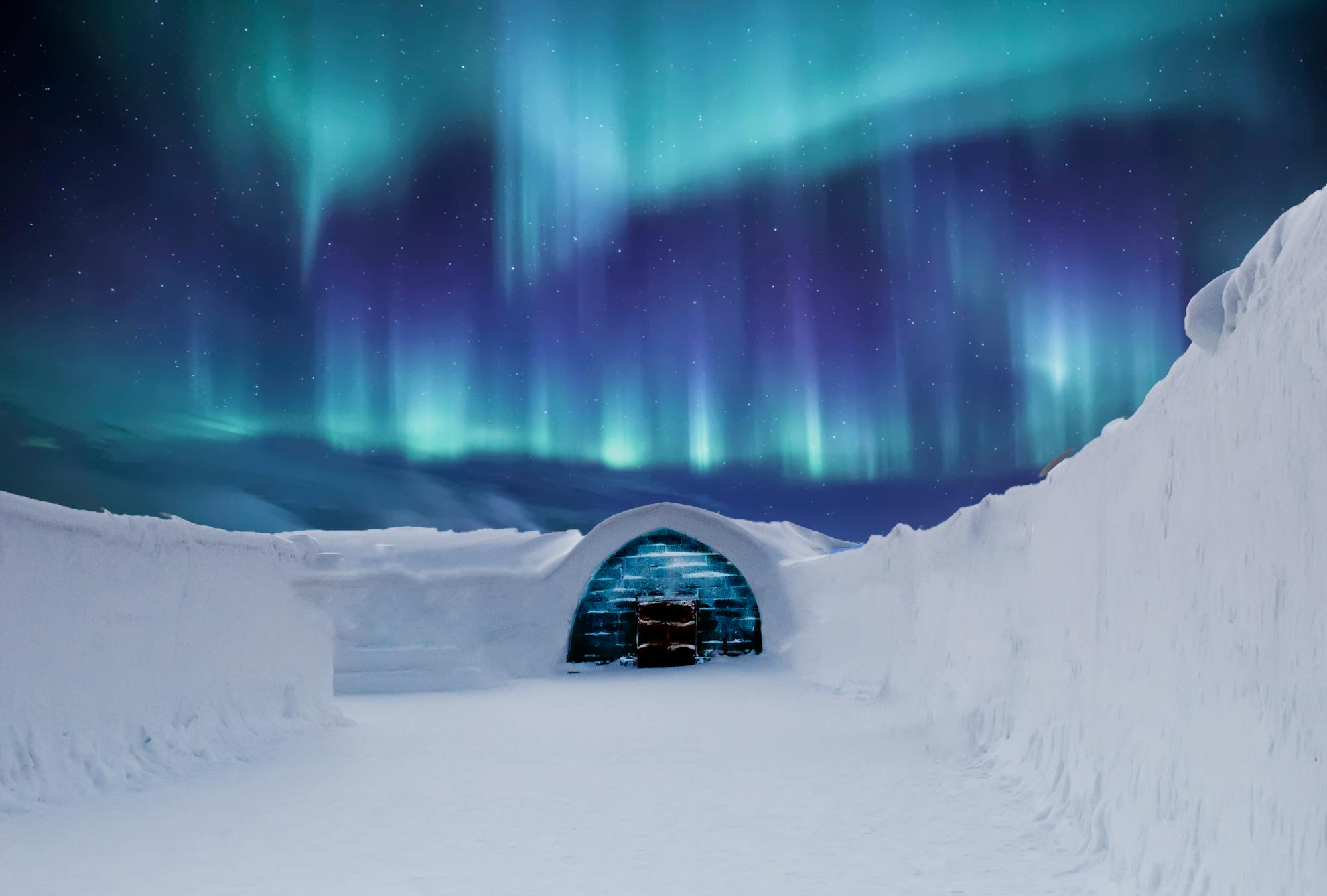
Accommodation in Lapland is as distinctive as the landscape itself, with the region having pioneered some of the world's most imaginative hotel concepts — glass-roofed igloos from which guests watch the Northern Lights from their beds, luxury treehouses suspended above snow-covered forests, and wilderness camps on frozen lakes accessible only by snowmobile. Whether you opt for theatrical luxury or simple functionality, choosing the right base for your activities is the most important accommodation decision you will make.
Accommodation in Lapland is as distinctive as the landscape itself. The region has pioneered some of the world's most imaginative hotel concepts — glass-roofed igloos from which guests watch the Northern Lights from their beds, luxury treehouses suspended above snow-covered forests, underground tunnels connecting heated log cabins, and wilderness camps on frozen lakes accessible only by snowmobile. Alongside these statement experiences, Lapland offers a wide range of comfortable resort hotels, cosy lakeside cottages, Sámi-inspired lodges, and budget guesthouses that serve the many travellers who prioritise the outdoor activities over the accommodation itself. Whether you opt for theatrical luxury or simple functionality, choosing the right base for your activities is the most important accommodation decision you will make.
Best Locations to Base Yourself
Finnish Lapland offers the most developed tourist infrastructure. Rovaniemi, the regional capital sitting precisely on the Arctic Circle, is the best all-round base: it has the widest range of accommodation, the best transport connections, the Santa Claus Village, and easy access to wilderness activities. Levi, two hours north of Rovaniemi, is Finland's largest ski resort and a purpose-built winter sports destination with excellent slopes, a concentrated selection of glass igloos and luxury cabins, and a lively après-ski atmosphere. Saariselkä, in the far north near Inari, sits on the edge of Urho Kekkonen National Park and is the best base for serious wilderness immersion — it's quieter, more remote, and exceptional for cross-country skiing and aurora viewing. Swedish Lapland's Abisko is globally famous for its exceptionally clear aurora-viewing conditions, as it sits in a microclimate with very low cloud cover — the Aurora Sky Station cable car is the world's most reliable location for Northern Lights viewing.
Unique Accommodation Experiences
The glass igloo concept — pioneered in Saariselkä and now widespread across Finnish Lapland — places guests in individual heated pod-shaped rooms with transparent roofs, allowing you to watch the stars and Northern Lights lying in bed. The Kakslauttanen Arctic Resort near Saariselkä is the original and most famous, with its thermal glass igloos maintaining comfortable temperatures even when it's -30°C outside. Levi and Ylläs have added their own glass igloo villages with varying levels of luxury. Aurora Cabins in the forest near Rovaniemi offer a more intimate version with private hot tubs. Wilderness camps — where a small cluster of heated tents or cabins is set up on a frozen lake several kilometres from the nearest road — offer complete silence, private aurora viewing, and ice fishing from your doorstep. These can only be accessed by snowmobile and are among the most memorable accommodation experiences in Europe.
Mid-Range and Family Options
Resort hotels in Levi, Ylläs, and Rovaniemi offer comfortable, well-equipped rooms with saunas (private or shared), ski-in/ski-out access, and activity booking desks from around €100–€180 per room in winter. Many resorts have dedicated family facilities including children's ski schools, supervised activity programmes, and Santa Claus experiences designed for young children. Log cabin rentals — available by the week throughout Lapland — are excellent for families and groups, offering full kitchen facilities, private saunas, and the freedom to self-cater while based in a genuinely beautiful forest or lakeside setting. The Santa Claus Holiday Village in Rovaniemi has a range of cabin and igloo types suited to families with children, with the full Santa experience on-site.
Budget Stays
Budget accommodation in Lapland is more limited than in southern Finland, but does exist. Rovaniemi has several hostels and budget guesthouses offering dormitory beds from around €25–€35 per night and private rooms from €60–€80. The city's position on the main rail line from Helsinki makes it accessible by overnight train, saving on accommodation costs. Throughout Lapland, camping is permitted under the Right to Roam (jokamiehenoikeus) — though winter camping requires specialist equipment and experience. Wilderness huts (autiotupa) maintained by the Finnish Forestry Administration (Metsähallitus) offer free overnight shelter on the major trekking routes, making summer trekking through Lapland surprisingly affordable for equipped hikers.
Booking Tips
Glass igloos and treehouse suites at the most famous resorts book out 6–12 months ahead, particularly for December and the Christmas/New Year period. If Northern Lights accommodation is on your bucket list, begin looking in February or March for the following winter season. Christmas week (20–27 December) is the single most expensive and most heavily booked period, commanding 50–100% premiums over regular winter prices. January and February offer the most reliable Northern Lights viewing with somewhat more availability than December. Summer accommodation (June–August) is generally much easier to book and considerably cheaper than winter. Always check whether your accommodation includes Arctic suits for outdoor activities — many resorts loan these to guests, which significantly reduces the gear you need to bring. Confirm sauna access: private saunas are worth paying extra for in Lapland, where the sauna ritual is as important as any organised activity.