<h2>Sentrum / Karl Johans gate — For Central Convenience</h2> <p>Oslo's central Sentrum district, along the Karl Johans gate pedestrian street from the Central Station to the Royal Palace, is the most convenient base for first-time visitors. The National Museum, Vigeland Park, the parliament building, and the main shopping district are all within easy walking distance. Hotels range from budget chains to grand historic properties. The neighborhood is efficient but less atmospheric than some alternatives. Best for: first-time visitors, business travelers, those who prioritize central location and transport links.</p> <h2>Aker Brygge / Tjuvholmen — For Waterfront Luxury</h2> <p>Oslo's regenerated harbourfront at Aker Brygge and the adjacent Tjuvholmen art district is the city's most upscale address. The waterfront is lined with excellent restaurants, the Astrup Fearnley Museum of Modern Art, and some of Oslo's finest hotels. In summer, the outdoor terraces and kayaking from the harbor make this one of the city's most desirable locations. Prices reflect the premium address. Best for: luxury travelers, design enthusiasts, couples, those seeking waterfront views.</p> <h2>Grünerløkka — For Hip Urban Culture</h2> <p>Grünerløkka is Oslo's most fashionable neighborhood — a former working-class district now home to the city's best coffee shops, vintage stores, design boutiques, and craft beer bars. The Akerselva river park runs through the neighborhood, offering excellent walking in all seasons. Accommodation here tends toward stylish boutique hotels and apartments. It's a 15-minute walk or short tram ride to the city center. Best for: independent travelers, design and food enthusiasts, younger travelers, those seeking local atmosphere.</p> <h2>Vulkan and Grønland — For Creative Energy</h2> <p>Adjacent to Grünerløkka, the Vulkan district centers on Oslo's best food market (Mathallen), several excellent restaurants, and a former industrial complex converted into creative studios and concert venues. Grønland, to the south, is Oslo's most multicultural neighborhood — affordable, diverse, and rich with international food options. Both areas are a 10-15 minute walk from the city center. Best for: food lovers, budget-conscious travelers, those seeking a more local experience.</p> <h2>Frogner — For Elegant Residential Life</h2> <p>Frogner, west of the city center, is Oslo's most affluent residential neighborhood — leafy, quiet, and home to Vigeland Sculpture Park and some of the city's finest restaurants and boutiques along Bygdøy allé. Accommodation here is mostly upscale hotels and serviced apartments. The neighborhood is a 20-minute walk or short tram ride from the center. Best for: luxury travelers, families (proximity to Vigeland Park and Bygdøy museums), those seeking a quieter, more residential base.</p> <h2>Practical Tips for Booking in Oslo</h2> <p>Oslo is consistently ranked among Europe's most expensive cities — budget accordingly, and consider self-catering apartments for longer stays to offset food costs. The Oslo Pass (1, 2, or 3-day options) covers public transport and most museum entries and is excellent value for active sightseers. Book accommodation well in advance for summer (June–August), when demand is high. Most hotels include breakfast, which is worth taking advantage of given Oslo's high restaurant prices. The metro (T-bane), tram, and bus network is efficient and covers the entire city.</p>
Sentrum / Karl Johans gate — For Central Convenience
Oslo's central Sentrum district, along the Karl Johans gate pedestrian street from the Central Station to the Royal Palace, is the most convenient base for first-time visitors. The National Museum, Vigeland Park, the parliament building, and the main shopping district are all within easy walking distance. Hotels range from budget chains to grand historic properties. The neighborhood is efficient but less atmospheric than some alternatives. Best for: first-time visitors, business travelers, those who prioritize central location and transport links.
Aker Brygge / Tjuvholmen — For Waterfront Luxury
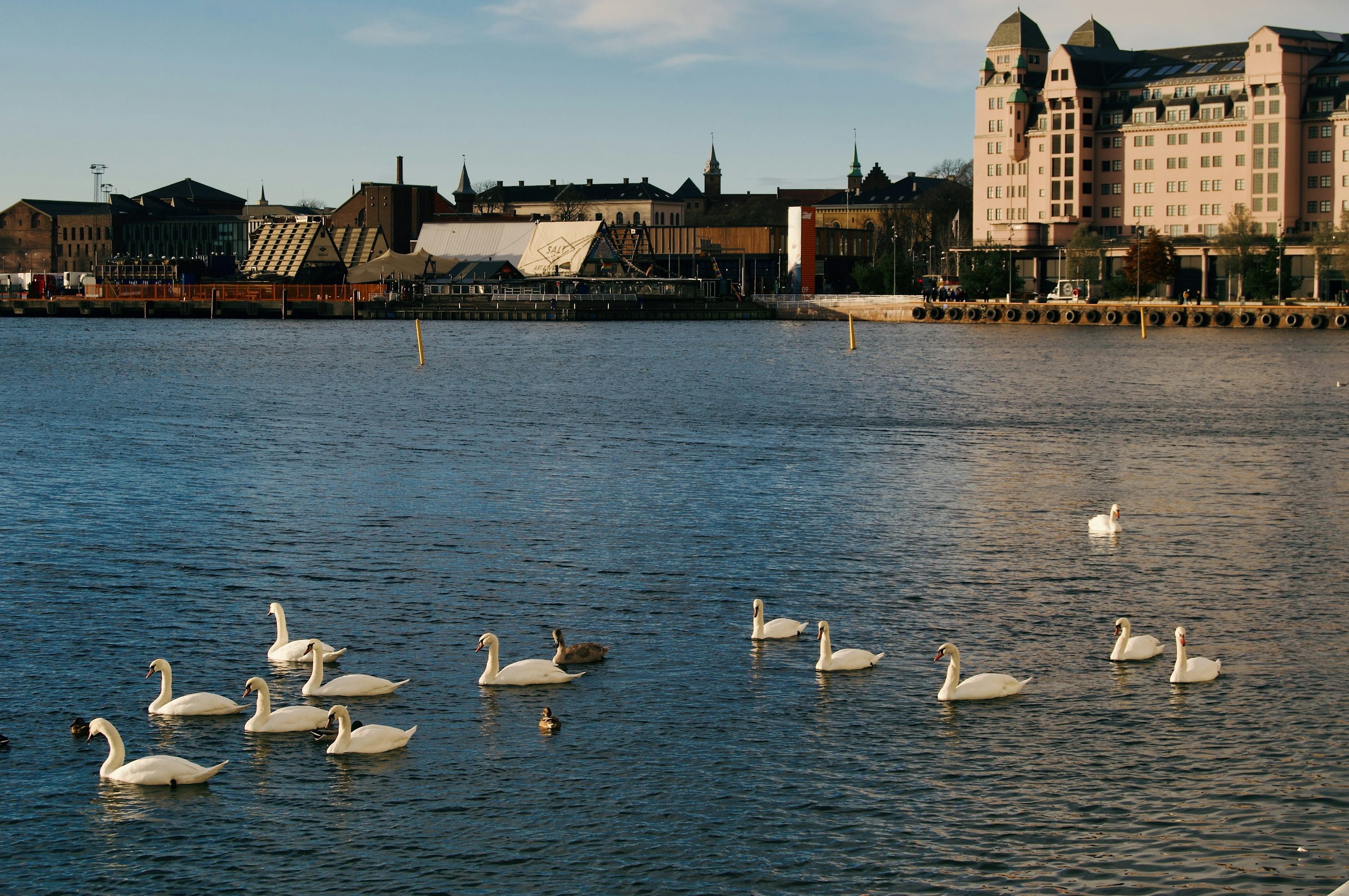
Oslo's regenerated harbourfront at Aker Brygge and the adjacent Tjuvholmen art district is the city's most upscale address. The waterfront is lined with excellent restaurants, the Astrup Fearnley Museum of Modern Art, and some of Oslo's finest hotels. In summer, the outdoor terraces and kayaking from the harbor make this one of the city's most desirable locations. Prices reflect the premium address. Best for: luxury travelers, design enthusiasts, couples, those seeking waterfront views.
Grünerløkka — For Hip Urban Culture
Grünerløkka is Oslo's most fashionable neighborhood — a former working-class district now home to the city's best coffee shops, vintage stores, design boutiques, and craft beer bars. The Akerselva river park runs through the neighborhood, offering excellent walking in all seasons. Accommodation here tends toward stylish boutique hotels and apartments. It's a 15-minute walk or short tram ride to the city center. Best for: independent travelers, design and food enthusiasts, younger travelers, those seeking local atmosphere.
Vulkan and Grønland — For Creative Energy
Adjacent to Grünerløkka, the Vulkan district centers on Oslo's best food market (Mathallen), several excellent restaurants, and a former industrial complex converted into creative studios and concert venues. Grønland, to the south, is Oslo's most multicultural neighborhood — affordable, diverse, and rich with international food options. Both areas are a 10-15 minute walk from the city center. Best for: food lovers, budget-conscious travelers, those seeking a more local experience.
Frogner — For Elegant Residential Life
Frogner, west of the city center, is Oslo's most affluent residential neighborhood — leafy, quiet, and home to Vigeland Sculpture Park and some of the city's finest restaurants and boutiques along Bygdøy allé. Accommodation here is mostly upscale hotels and serviced apartments. The neighborhood is a 20-minute walk or short tram ride from the center. Best for: luxury travelers, families (proximity to Vigeland Park and Bygdøy museums), those seeking a quieter, more residential base.
Practical Tips for Booking in Oslo
Oslo is consistently ranked among Europe's most expensive cities — budget accordingly, and consider self-catering apartments for longer stays to offset food costs. The Oslo Pass (1, 2, or 3-day options) covers public transport and most museum entries and is excellent value for active sightseers. Book accommodation well in advance for summer (June–August), when demand is high. Most hotels include breakfast, which is worth taking advantage of given Oslo's high restaurant prices. The metro (T-bane), tram, and bus network is efficient and covers the entire city.