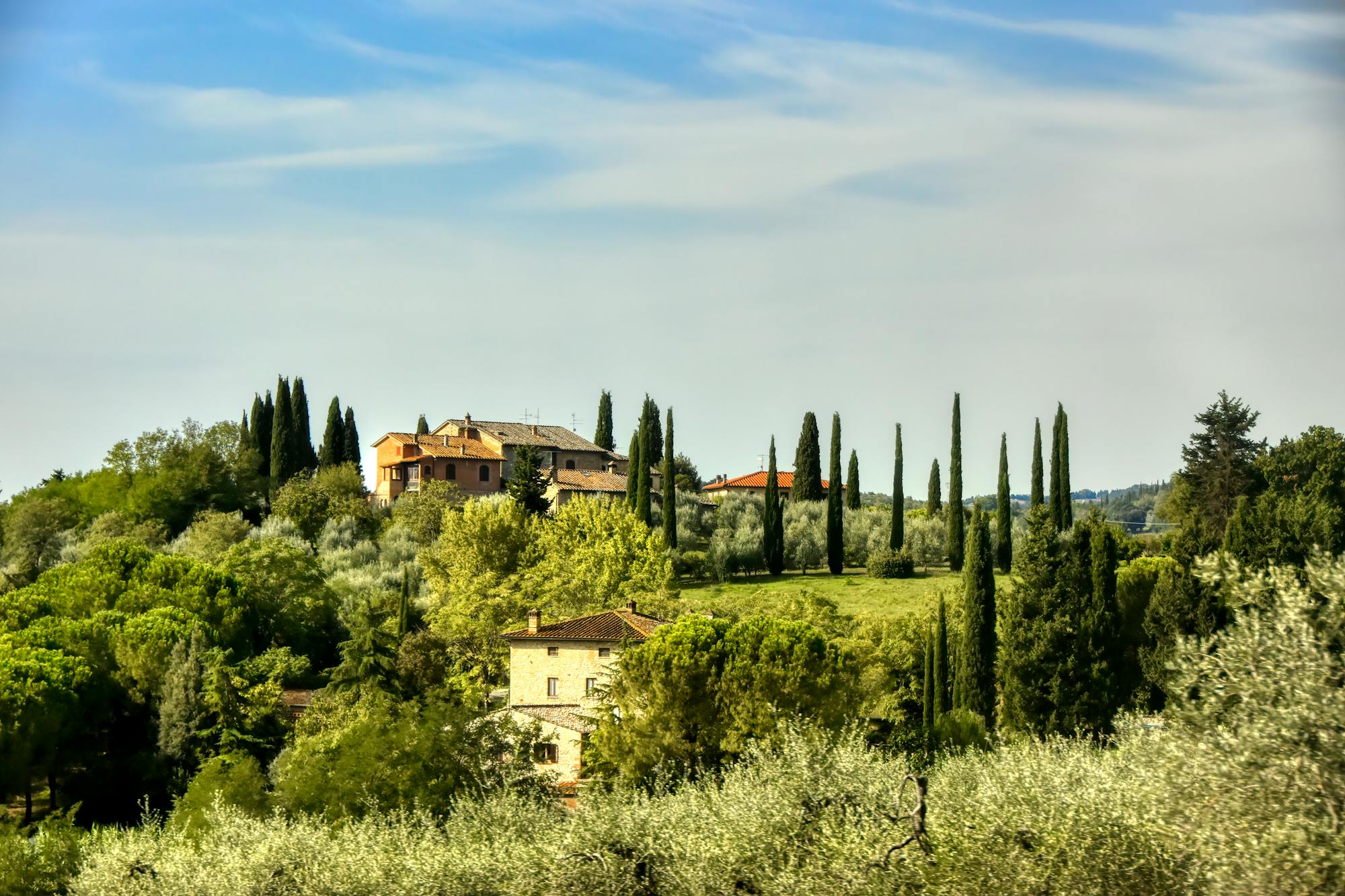
Tuscany offers one of the world's most varied and romantic accommodation landscapes — from grand Renaissance palaces converted into five-star hotels in Florence, to agriturismo farmhouses among vineyards in Chianti, to hilltop medieval towers offering panoramic views, to boutique hotels in walled cities like Siena and Lucca. The choice between a city base and a rural base dramatically shapes the Tuscany experience; many visitors combine both, spending a few nights in Florence and a few in the countryside, exploring by rental car.
Tuscany offers one of the world's most varied and romantic accommodation landscapes — from grand Renaissance palaces converted into five-star hotels in Florence, to agriturismo farmhouses among vineyards in Chianti, to hilltop medieval towers offering panoramic views, to boutique hotels in walled cities like Siena and Lucca. The choice between a city base and a rural base dramatically shapes the Tuscany experience; many visitors combine both, spending a few nights in Florence and a few in the countryside, exploring by rental car.
Best Areas to Stay
Florence is the natural base for most visitors — the art, museums, and restaurants are all here, and it makes a good hub for day trips to Siena, Pisa, and Lucca. The most atmospheric areas to stay are Oltrarno (the quieter south bank, with artisan workshops and local restaurants), the area around Santa Croce (lively, central, slightly less tourist-saturated than the Duomo area), and the San Lorenzo market district. The streets immediately around the Duomo are convenient but noisy and tourist-heavy. Siena itself makes an excellent alternative base — a true medieval city rather than a museum, with excellent restaurants and far fewer overnight tourists than Florence. Staying inside the city walls means you have it to yourself in the evenings after day-trippers leave. Chianti countryside stays — in wine estates (cantine) or converted farmhouses — offer the most romantic rural experience, roughly halfway between Florence and Siena. Val d'Orcia bases (Pienza, Montalcino) are ideal for those prioritising the most cinematic Tuscan landscape and wine country.
Luxury Options
Florence's luxury hotel scene is anchored by a handful of legendary properties. Villa Cora — a 19th-century villa above the Oltrarno with gardens and a pool — offers a tranquil, aristocratic Florentine experience. The Portrait Firenze on the Lungarno (Ferragamo family) is the city's most chic design hotel, with rooftop views of the Ponte Vecchio. Four Seasons Florence (Palazzo della Gherardesca) occupies a 15th-century palace with the largest private garden in Florence. For rural luxury, the Castiglion del Bosco estate near Montalcino — a Brunello di Montalcino producer with a hotel of extraordinary architectural quality — is among Italy's finest resort experiences. Borgo Santo Pietro near Siena, a 13th-century hamlet converted to a luxury hotel with its own walled garden and spa, is another benchmark property. The Adler Thermae near Bagno Vignoni in the Val d'Orcia offers thermal spa access and stunning valley views.
Mid-Range and Agriturismi
Tuscany's agriturismo sector — working farms offering accommodation and often meals, regulated by the Italian government — is one of the best reasons to self-drive the region. Quality ranges from basic to exceptional; the finest (like Podere Il Casale near Pienza or the wine estates of Chianti Classico) rival boutique hotels in comfort while adding the authentic dimension of farm and winery life. In Florence, excellent mid-range boutique hotels include Soprarno Suites in Oltrarno and the Hotel Davanzati near Piazza della Repubblica — both offer genuine character at manageable prices (€100–€180/night). In Siena, the Palazzo Ravizza — a family-run 17th-century villa just outside the walls with garden views — is a beautifully priced property with real historical atmosphere. The hill towns (San Gimignano, Volterra, Montepulciano) have good B&B and small hotel options within the walls at €80–€140/night.
Budget Accommodation
Florence has a good range of budget options, though central hostels fill quickly in peak season. The Plus Florence hostel near Santa Maria Novella station and Academy Hostel near the Accademia are the most reliable choices — clean, social, and well-located. Budget pensioni in the Oltrarno and around Santa Croce offer private rooms from €60–€80 in shoulder season. Outside Florence, small B&Bs in Siena's contrade (medieval city wards) and in the hill towns offer excellent value — Volterra and Massa Marittima, less visited than San Gimignano, have affordable character accommodation. Camping in the Chianti and on the Maremma coast is a popular option for summer; the Camping Chianti site near Greve is well-equipped.
Booking Advice
Florence accommodation must be booked 2–4 months ahead for spring (April–May) and autumn (September–October) travel — these are the most popular seasons and quality hotels sell out fast. August in Florence is extremely hot, crowded, and expensive; many locals leave — the city fills with tourists but loses some of its daily character. For agriturismi in Chianti and the Val d'Orcia, minimum stays of 3–7 nights are common, particularly in peak season (May–September). The Palio di Siena (July 2 and August 16) makes Siena impossible to book within 3 months — if you want to attend, book a year ahead. Many wine-estate hotels and top agriturismi do not appear on Booking.com — their own websites or specialist agencies (Sawdays, i-escape, Simply Tuscany) provide better access. Self-catering villa rental — particularly attractive for groups or families — is handled by agencies like Cottages to Castles and Tuscany Now & More.