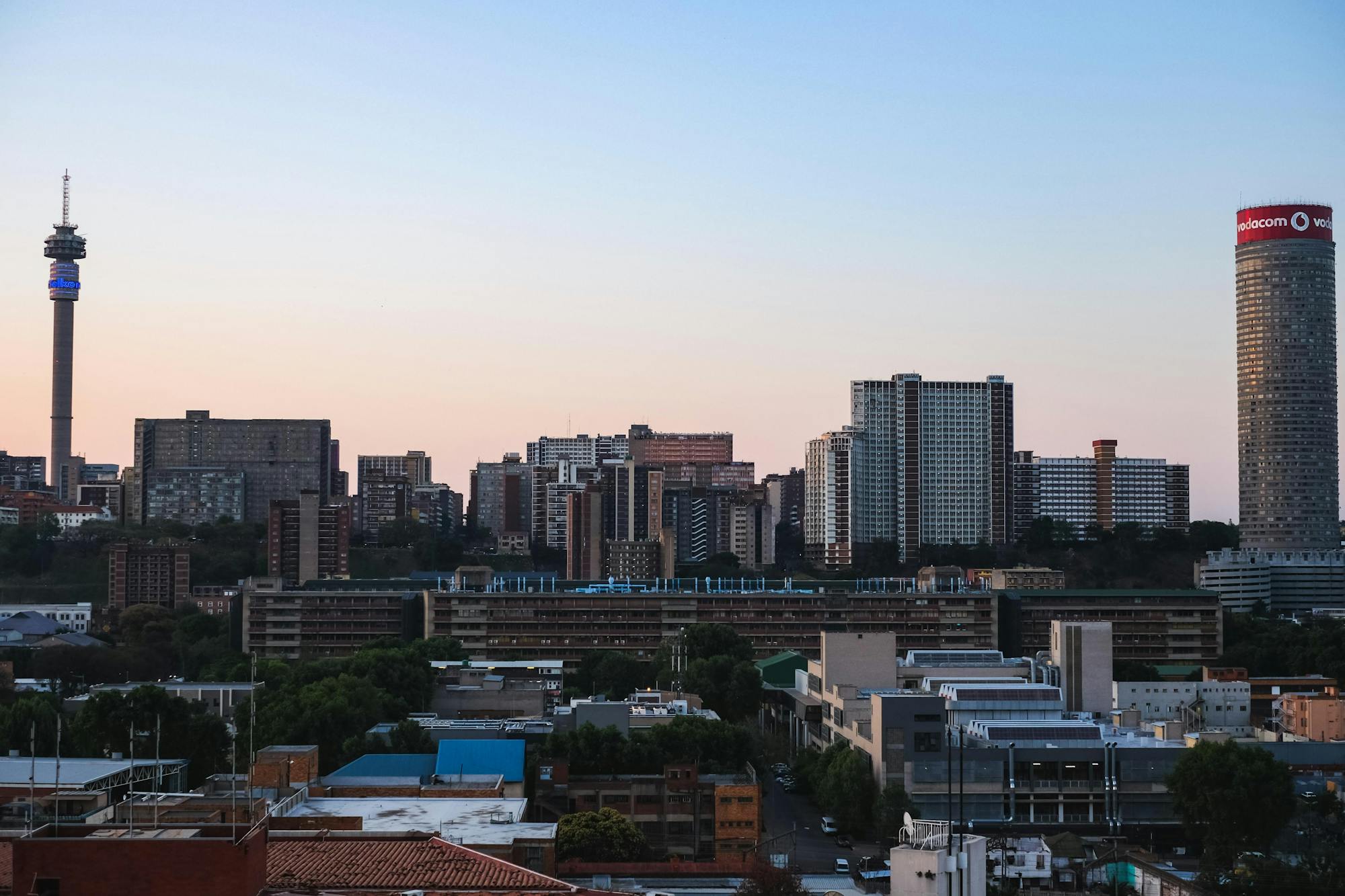
The best time to visit Johannesburg is during the dry winter months of May to August, when the Highveld delivers clear blue skies, warm sunny days (15–22°C) and cool, crisp nights — ideal conditions for both city sightseeing and day trips to nearby game reserves. The summer months (November–February) bring Johannesburg's famous afternoon thunderstorms — dramatic, intense and usually short-lived — with warm, humid conditions between storms.
- Best time to visit: May to August, the dry winter months with clear skies and sunny days
The best time to visit Johannesburg is during the dry winter months of May to August, when the Highveld delivers clear blue skies, warm sunny days (15–22°C) and cool, crisp nights — ideal conditions for both city sightseeing and day trips to nearby game reserves. The summer months (November–February) bring Johannesburg's famous afternoon thunderstorms — dramatic, intense and usually short-lived — with warm, humid conditions between storms. Spring (September–October) and early autumn (March–April) are pleasant transitional periods worth considering.
Best Time to Visit Johannesburg: Peak Season
Johannesburg doesn't have a single tourism peak season in the way that Cape Town does, but school holidays (Easter in April, July school holidays, and September/October) see elevated domestic travel and higher hotel demand. The FNB Joburg Art Fair (October) and the Rand Show (Easter) attract significant visitors. December and January are busy for hotels as corporate travel winds down and leisure visitors increase, but this is also the summer wet season — not Johannesburg's finest weather period. They also overlap with the festive season and festive period, so early December is often easier if you want fewer crowds than the main holiday rush.
Best Time to Visit: Off-Peak / Low Season
There is no true low season in Johannesburg — the city functions year-round as Africa's primary business hub. However, summer (November–February) brings the most challenging weather: these are the summer months and among the hottest months, with warm temperatures, high daytime temperatures of 25–32°C, high humidity, and regular afternoon thunderstorms, plus occasional hot and dry weather between storms. The rain rarely lasts more than 1–2 hours, but it can disrupt outdoor activities. There are still more sunny periods than rainy days between storms, but this is still the rainy season in Johannesburg. January is the quietest month overall as many locals are on holiday and business activity slows.
Shoulder Season Highlights in Cape Town
September and October are the best time to visit if you want a very good time to visit Johannesburg, as the dry season is ending and temperatures start rising after winter, bringing warmer days (18–27°C) while the jacaranda trees that line Johannesburg and Pretoria's streets burst into spectacular purple bloom (typically mid-October) and all facilities operate at full capacity. March and April offer the autumn equivalent — rains easing, cooler weather and cooler temperatures than midsummer, with the landscape still lushly green. Both shoulder periods represent the best balance of good weather and reasonable rates, though around Easter break, prices and domestic demand can rise.
Weather Overview by Season
Summer (Nov–Mar): 18–32°C, high humidity, daily afternoon thunderstorms especially December–February. Autumn (Apr–May): 12–25°C, drying out, pleasant and sunny. Winter (Jun–Aug): 4–20°C, these winter months bring cooler winter months, dry weather, and clear blue skies, with warm weather around midday but cold nights and an early morning chill. Spring (Sep–Oct): 10–27°C, warming rapidly, occasional early thunderstorms by October. Johannesburg sits at 1,753m altitude, so average temperatures can look mild on paper, but the sun feels more intense and nights cool rapidly regardless of season. UV protection is essential year-round.
Key Events During Whale Season
The FNB Joburg Art Fair (October) is one of South Africa's premier contemporary art events. The Jacaranda Festival in Pretoria (October) celebrates the spectacular purple blooming of the city's famous trees. The Rand Show at the Johannesburg Expo Centre (Easter) is South Africa's largest annual consumer exhibition. The Johannesburg International Mozart Festival (January) brings world-class classical music to the city. Heritage Day / National Braai Day (September 24) sees parks and gardens filled with community barbecues — one of South Africa's most genuinely cross-cultural celebrations.
Many travellers who visit South Africa start planning a wider route that pairs Johannesburg with visit Cape Town, table mountain, the cable car, kruger national park, kruger park, and other game reserves and game parks for wildlife viewing, game viewing, and game drives in the northern regions, often considered the best time to visit south for safari conditions outside the peak tourist season.
Others combine the city with the western cape and eastern cape, plus coastal towns along the south coast and garden route, for whale watching during whale season and the broader whale watching season, when southern right whales are seen and the hermanus whale festival takes place; these eastern and western cape stretches are also a highlight of south africa as a year round destination.
Depending on interests, add-ons can include kwazulu natal, northern kwazulu natal, the east coast, the drakensberg mountains, the west coast, the northern cape, and the wine regions; seasonal draws range from colourful flowers to when migratory birds start returning, broader migratory birds activity, and even baby animals in some reserves, though greener months can make it harder to spot animals.