Florence is the cradle of the Renaissance — a compact, walkable city of extraordinary artistic and architectural density where Michelangelo's David, Botticelli's Birth of Venus, and Brunelleschi's cathedral dome are all within walking distance of each other. It is also a city of excellent restaurants, world-class wine, and a sophisticated local culture that rewards visitors who go beyond the queues at the Uffizi.
Florence is the cradle of the Renaissance — a compact, walkable city of extraordinary artistic and architectural density where Michelangelo's David, Botticelli's Birth of Venus, and Brunelleschi's cathedral dome are all within walking distance of each other. The capital of Tuscany sits in the Arno valley surrounded by cypress-studded hills, and its historic centre is a UNESCO World Heritage Site of almost unparalleled concentration — every church, palace, and piazza contains masterpieces. It is also a city of excellent restaurants, world-class wine, and a sophisticated local culture that rewards visitors who go beyond the queues at the Uffizi.
Best Things to Do in Florence Renaissance Art Tuscan Food Unforgettable Experiences: Top Attractions
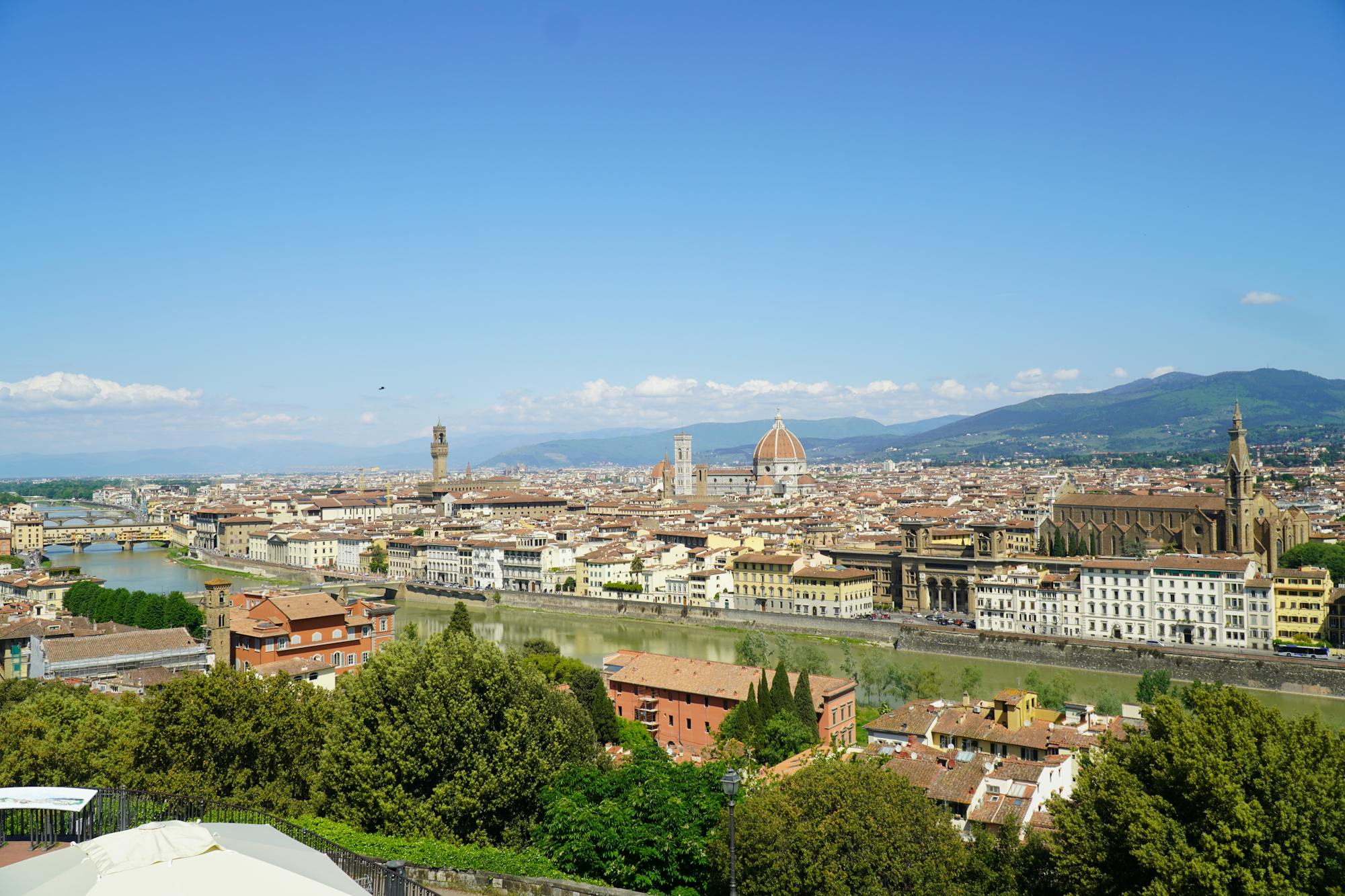
The Duomo (Santa Maria del Fiore) is Florence's defining monument: Florence Cathedral sits in Piazza del Duomo, anchors the Duomo complex, and its magnificent terracotta-tiled dome remains the largest masonry dome in the world and one of the greatest architectural achievements in history. Climb the 463 steps to experience Brunelleschi's Dome or take on Giotto's Bell Tower for spectacular views across the city and Tuscan hills — book timed entry online to avoid the queues. In the same area, the Baptistery of St. John is known for the famous Gates of Paradise. The Uffizi Gallery, housed in a long U-shaped palazzo beside the Arno River, shows why Florence became the great center of Renaissance art: Botticelli's Primavera and Birth of Venus, works by Leonardo da Vinci, Caravaggio's Medusa, Raphael's portraits, and hundreds more masterpieces in room after room. Book tickets online weeks in advance in peak season. The Accademia Gallery houses Michelangelo's David, carved when he was 26 years old — the world's most famous sculpture, in a purpose-built rotunda that frames it perfectly — and it remains one of Florence's true must-see attractions. Explore Piazza della Signoria, a historic square beside the Uffizi and one of the city's great open-air stages. Its highlights include Palazzo Vecchio, which has served as Florence's city hall since the 13th century, and the Loggia dei Lanzi, where you can admire exceptional Renaissance sculpture. The Ponte Vecchio, Florence's oldest bridge (1345), lined with goldsmiths' and jewellery shops where authentic Florentine gold must be at least 18k, is beautiful at any time but magical at dawn before the crowds. Walk across it and up to the Piazzale Michelangelo for one of the best views of the Florence skyline — especially beautiful at golden hour — and continue uphill to San Miniato al Monte if you want an even quieter panorama.
Unique Local Experiences and Renaissance Art
Florence, Italy is ideal for art lovers and food-focused visitors visiting Florence, with a culinary culture rooted in Tuscan peasant tradition elevated to high art. The Mercato Centrale on Via dell'Ariento has two floors — the ground floor is a traditional food market still used by locals, while the upper floor is a contemporary food hall with excellent stalls serving lampredotto, fresh pasta, pappa al pomodoro, a thick tomato and bread soup from Tuscany, and other staples of Tuscan cuisine and Italian food. Nearby, Mercato San Lorenzo is famous for leather markets. The quintessential Florence street food experience is a lampredotto sandwich from one of the city's historic trippaio street carts (try Nerbone in the Mercato Centrale or Lampredotto da Nerbone).
A cooking class is also a good way to learn traditional Tuscan dishes firsthand, and many include a market tour and hands-on experience.
For wine, Florence is the gateway to the chianti wine region — join a half-day Chianti wine tour to visit vineyards and taste Sangiovese and Tuscan wines in the landscape that produced it. The city's leather craft tradition is alive in the Oltrarno neighbourhood (the south bank of the Arno) where traditional artisan workshops (botteghe) still operate, and the Scuola del Cuoio offers leather crafting workshops. Palazzo Pitti, a famous building, is a major landmark in the district, and some visits include the royal apartments or temporary exhibits including modern art. Boboli Gardens extend behind it, with Renaissance statues and excellent views of the Duomo and city. For a more local side of the district, spend time around piazza santo spirito and the basilica di santo spirito, by contrast to the Basilica di San Lorenzo and the Medici Chapels, tied to Medici history for over three centuries. Santa Maria Novella, part of the historic centre, dates back to the late 1200s.
Day Trips from Florence
Siena (1.5 hours by bus) is one of Italy's most beautiful medieval cities and an easy guided tour option on a Florence trip — the fan-shaped Piazza del Campo, the Gothic cathedral (Duomo di Siena), and the painted Palazzo Pubblico all contained within remarkably intact medieval walls. The city is less crowded than Florence and rewards a full day's exploration. Pisa is just 50 minutes by train from Florence. San Gimignano (1.5 hours by bus via Poggibonsi), known as the "Manhattan of the Middle Ages" for its surviving medieval towers, sits in the Tuscan countryside amid Vernaccia di San Gimignano wine country and stunning landscapes — a picturesque afternoon excursion. Cinque Terre is also accessible as a day trip from Florence, with late spring through early fall especially appealing. Day trips beyond the famous museums also help round out a first trip to Florence and a florence bucket list. For many travelers visiting Italy, Florence pairs naturally with countryside excursions.
Practical Tips for Visitors
Florence, Italy's city center, in the historic centre, a UNESCO World Heritage Site, is compact, and central Florence is best explored on foot because most key sights are within walking distance. Hire a bicycle to explore the Oltrarno and the Arno riverside paths, with two wheels making the narrow streets easier to navigate. Book Uffizi and Accademia tickets at least 2–4 weeks ahead in summer — same-day entry is rarely available for these famous museums. It's also worth mixing in lesser known museums for a broader cultural view. Florence feels like an open-air museum, with stunning churches in and around the historic center, and most major churches (including Santa Croce, the burial place of Michelangelo and Galileo, and Santa Maria Novella) charge entry and require shoulders covered. San Lorenzo is also a convenient base if you want to stay near markets, dining, and major sights. Must-try foods: bistecca alla Fiorentina (the city's famous T-bone steak, served rare), ribollita (hearty bread and bean soup), pappardelle al cinghiale (wide pasta with wild boar ragù), cantucci with Vin Santo, and gelato from one of the city's artisan gelaterie (look for gelato that doesn't have towering multi-coloured peaks — that's artificial colouring). Florence is popular and crowded May–October; early booking of accommodation and museum tickets is essential, so plan ahead for a smoother visit.