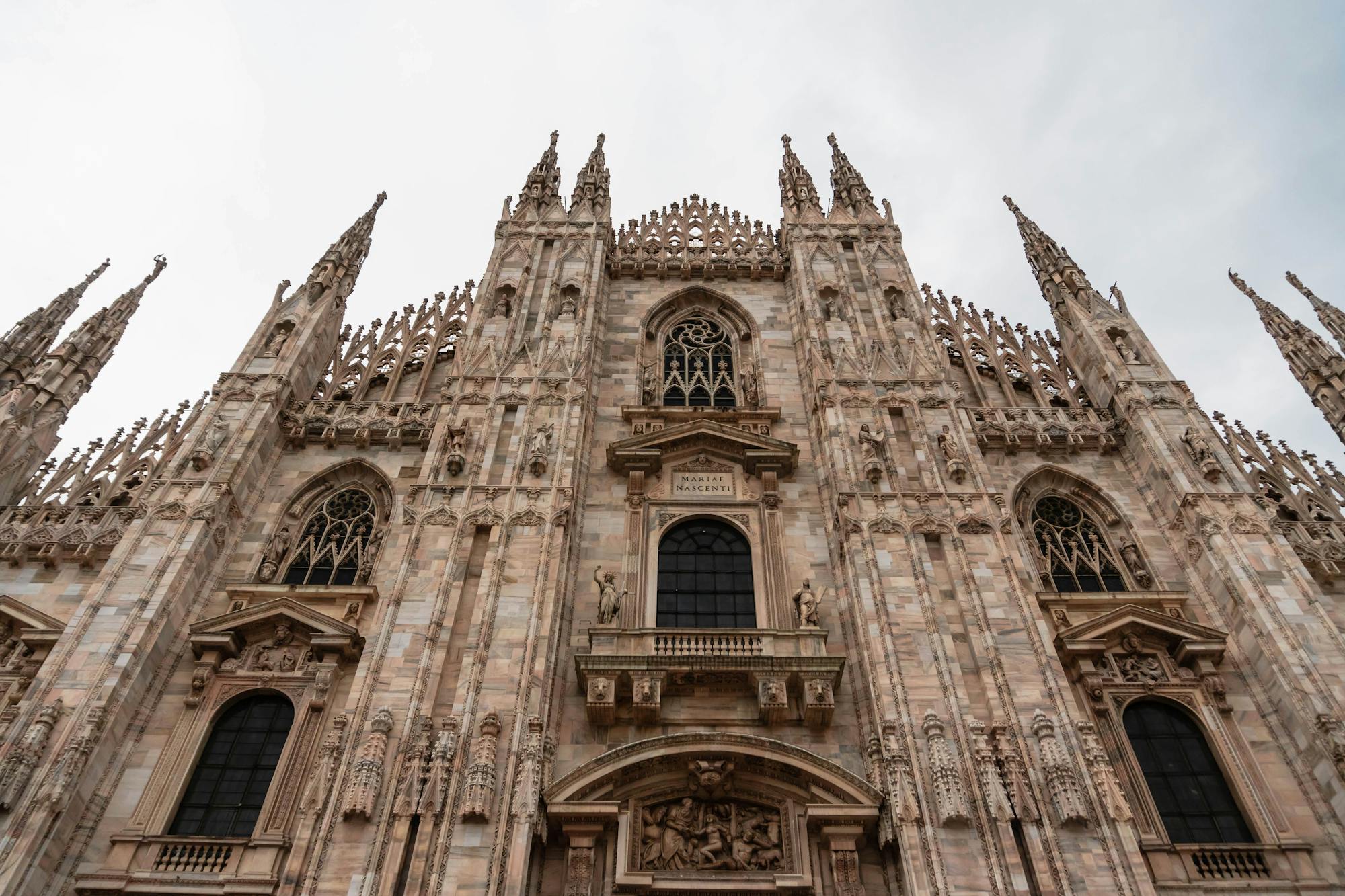
Milan is Italy's most forward-looking city — a global capital of fashion, design, and finance that is also home to Leonardo da Vinci's Last Supper, one of the world's greatest Gothic cathedrals, and a food and drink culture that effortlessly combines Milanese tradition with international sophistication.
Milan is Italy's most forward-looking city — a global capital of fashion, design, and finance that is also home to Leonardo da Vinci's Last Supper, one of the world's greatest Gothic cathedrals, and a food and drink culture that effortlessly combines Milanese tradition with international sophistication. Often dismissed as "not very Italian" by travellers who head straight to Rome or Florence, Milan rewards those who engage with it on its own terms: a dynamic, stylish, endlessly interesting city where the aperitivo culture was invented, the Navigli canals come alive at night, and world-class art and architecture sit behind every other doorway.
Best Things to Do in Milan Fashion Art Culture Modern Italian Experiences: Top Attractions
The Duomo di Milano, also known as the Milan Cathedral or Milan Duomo, rises over Piazza del Duomo in Milan, Italy as Europe's largest Gothic cathedral, the fifth-largest church in the world, and one of Italy's most extraordinary buildings, with a rich history shaped over nearly six centuries of construction and a pink-hued Candoglia marble exterior encrusted with 3,400 statues, 135 marble spires, and the golden Madonnina at its peak. Climb (by lift or stairs) to the roof terraces, where visitors can walk on the entire rooftop of Il Duomo for sweeping views across this amazing city and, on clear days, the Alps. The ticket office can be busy, so book in advance if you can. The vast interior holds five naves and dozens of chapels of medieval art, framed by beautiful architecture. Adjacent to the Duomo, the Galleria Vittorio Emanuele II is the world's oldest shopping mall and connects directly to the Duomo di Milano — an architectural masterpiece, this extraordinary 19th-century glass-and-iron arcade is open 24/7 for visitors and houses Prada, Louis Vuitton, and Savini restaurant under a soaring glass dome above elegant mosaic floors. Take the traditional spin on the bull mosaic for good luck. Its historic cafés add to the atmosphere.
Leonardo da Vinci's Last Supper (Cenacolo Vinciano) in the refectory of Santa Maria delle Grazie is one of the world's most important artworks — da Vinci's fragile tempera mural, painted between 1495 and 1498, is among the city's most celebrated famous paintings and can only be visited in groups of 25 for 15-minute timed sessions; book online months in advance as it sells out extremely quickly. The Pinacoteca di Brera, in a former Jesuit college in the Brera district, is one of Milan's key art museums and houses Raphael's Betrothal of the Virgin, Mantegna's Dead Christ, and masterpieces of Italian Renaissance painting in magnificent 17th-century rooms. Nearby, Teatro alla Scala, also known as La Scala or the La Scala Opera House, was inaugurated in 1778 and is world-renowned. When you visit Milan, it remains one of the essential cultural stops in the city.
Unique Local Experiences and Aperitivo Culture
Milan invented aperitivo culture — the tradition of a pre-dinner drink (Campari Spritz, Negroni, or Aperol) accompanied by complimentary buffet food at bars from 6–9pm. The Navigli district (the canal neighbourhood in the south of the city) and Isola neighbourhood host the best aperitivo bars, with a vibrant atmosphere around the picturesque canals and long spreads of cicchetti, cured meats, and hot dishes included with the price of a drink — one of the city’s everyday culinary delights. The Mercato dell'Artigianato and the Navigli antiques market (last Sunday of the month) draw thousands to the canalside. Naviglio Grande is the district’s best-known canal. Milan's Design Week (Salone del Mobile) in April is the world's most important design fair, transforming the entire city into an immersive exhibition and offering a vivid glimpse of modern Milan — hotels sell out months ahead, but the Fuorisalone (off-site installations in every neighbourhood) are largely free and extraordinary. The ADI Design Museum showcases Italy's industrial design heritage, including the Compasso d’Oro, the world's most prestigious industrial design award. For modern art and contemporary art, visit Fondazione Prada, a modern art complex in a former distillery framed by striking modern architecture. Afterwards, stop at Bar Luce for a drink. The Prada Observatory offers a unique viewpoint on contemporary photography. The Quadrilatero della Moda (fashion quadrilateral) — Via Montenapoleone, Via della Spiga, and their connecting streets — in Italy's fashion capital is the city's iconic fashion district, where Milan's fashion scene includes brands like Prada and Gucci, worth exploring as much for the architecture and window displays as for the shopping, with window shopping very much part of the experience. Armani/Silos, in a converted 1950s granary, adds another strong fashion stop nearby.
Day Trips from Milan: Lake Como and Beyond
In northern Italy, Lake Como (40–50 minutes by train from Stazione Centrale) is one of Italy's most beautiful lake districts — elegant 19th-century villas, dramatic mountain scenery, and picturesque towns like Bellagio, Varenna, and Como itself. A perfect full-day excursion that also complements a longer milan itinerary. Bergamo Alta (1 hour by train plus funicular) is a beautifully preserved walled medieval hilltop city with an extraordinary Venetian-built fortification, the magnificent Cappella Colleoni, and a character entirely distinct from Milan — a superb half-day trip.
Practical Tips for Visitors: Navigating Public Transportation
Milan's public transportation is efficient and makes it easy to reach the main attractions in central Milan and the city centre, making it one of the easiest major european cities to explore by transit. Parco Sempione, Milan's largest park, sits behind Sforza Castle and offers welcome green spaces when you need a break from the dense city centre. Sforzesco Castle was built in the 15th century and houses multiple museums and courtyards, and the arco della pace stands at the far end of the park. An early morning start in the historic center is ideal if you want a walking tour of the key sights. A good route for your milan adventure can also pass the Colonne di San Lorenzo, Roman ruins from the 2nd century, before following the cobblestone streets deeper into the old center. After san lorenzo, add the Basilica di Sant'Ambrogio, founded in 386 AD. You can also include Museo del Novecento for 20th-century Italian modern art. Day passes offer excellent value. The city is also very cycleable — BikeMi, Milan's public bike-share system, is excellent. Milan operates on a later schedule than other Italian cities — most restaurants don't open for dinner until 7:30–8pm, and aperitivo at 7pm is the standard start to the evening. Must-try foods: risotto alla Milanese (saffron risotto with bone marrow, a true Milanese classic), ossobuco con gremolata (braised veal shin), cotoletta alla Milanese (breaded veal cutlet, Milan's answer to Wiener Schnitzel), panettone (the city's Christmas bread, available year-round in the best pasticcerie), Milanese meatballs, and an Aperol Spritz at a Navigli canalside bar at dusk — authentic Milanese cuisine and classic Milanese dishes are a big part of the delicious food scene and one of the best ways to understand local culture.