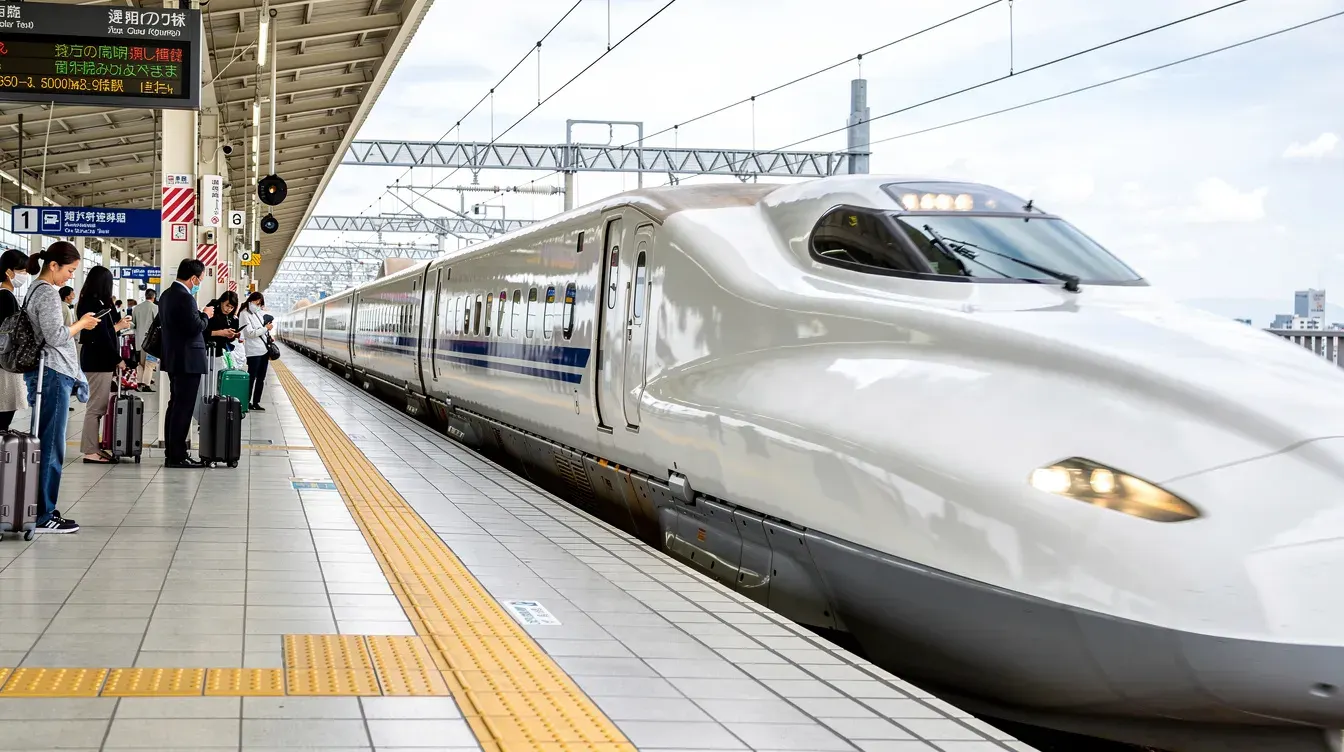
Taking the Shinkansen from Tokyo to Osaka is one of Japan's most popular travel options - and for good reason. Faster than flying door-to-door, more comfortable than driving, and famous for punctuality with delays averaging under a minute, the bullet train turns a 500-kilometer journey into an effortless ride between two of the world's great cities.
Quick overview: Tokyo–Osaka Shinkansen at a glance
The Tokaido Shinkansen is Japan's busiest bullet train line, carrying over 150 million passengers per year between Tokyo and Shin-Osaka. It is the default way to travel between these two major cities. The Shinkansen provides a seamless travel experience without the hassles of flying - no airport security lines, no long check-ins, and city-center departures every few minutes. The fastest Shinkansen services operate between Tokyo and Osaka, and three service types cover the route.
The fastest Nozomi trains take about 2 hours 21 minutes, and most Nozomi services about 2 hours 30 minutes. Hikari trains take approximately 2 hours 53 minutes. Kodama services, stopping everywhere, run roughly 3 hours 50 minutes to 4 hours.
Ticket prices depend on the train type and the class you choose: Nozomi costs a little more than Hikari and Kodama, and Green Car seats cost more than Ordinary Car seats. We confirm the exact fare for your date before you book.
Departure stations: Tokyo Station and Shinagawa Station in Tokyo. Arrival: Shin-Osaka Station in Osaka, with quick onward links to Umeda (about 5 minutes by JR) and Namba (around 15 minutes via the Osaka Metro Midosuji Line).
Travel Ninja can slot the Shinkansen bullet train into a door-to-door itinerary - hotel to hotel - with transfers and seat reservations already planned.
Route & major stations between Tokyo and Osaka
The Tokaido Shinkansen, operated by JR Central (Central Japan Railway Company), opened on October 1, 1964, just days before the Tokyo Olympics. It runs approximately 515 kilometers on dedicated high-speed tracks linking Tokyo and Osaka via Nagoya and Kyoto.
Key stops in order: Tokyo, Shinagawa, Shin-Yokohama, Odawara, Atami, Mishima, Shin-Fuji, Shizuoka, Kakegawa, Hamamatsu, Toyohashi, Mikawa-Anjō, Nagoya, Gifu-Hashima, Maibara, Kyoto, Shin-Osaka. Not every train stops at each station.
The Nozomi service skips most intermediate stations (most Nozomi stop only at Tokyo, Shinagawa, Shin-Yokohama, Nagoya, Kyoto, and Shin-Osaka). Hikari trains make moderate stops, while Kodama trains stop at every station - explaining the wide range in total travel time.
Every train calls at Shin-Osaka, where the Tokaido line ends. Many Nozomi and some Hikari run on along the Sanyo Shinkansen toward Hiroshima and Hakata, so make sure you get off at Shin-Osaka. From there, travelers transfer to the JR Kyoto Line or the Osaka Metro Midosuji Line to reach city-center destinations like Umeda and Namba.
Popular intermediate stopovers for a luxury Japan itinerary: Shizuoka for Mt. Fuji views and tea fields, Nagoya for the Toyota Commemorative Museum and Nagoya Castle, and Kyoto for temples and kaiseki dining. Travel Ninja can build any of these into a multi-day route; for the Kyoto leg on its own, see Tokyo to Kyoto Shinkansen.
Train types: Nozomi, Hikari, and Kodama on the Tokyo–Osaka route
There are three main types of Shinkansen services on the Tokaido line between Tokyo and Shin-Osaka. Here is how they compare for this specific corridor.
| Train | Stops between Tokyo and Shin-Osaka | Journey time | Japan Rail Pass |
|---|---|---|---|
| Nozomi | Shinagawa, Shin-Yokohama, Nagoya, Kyoto | About 2h 21m to 2h 30m | Needs the Nozomi/Mizuho supplementary ticket |
| Hikari | The Nozomi stops plus a few smaller stations | About 2h 50m to 3h | Covered |
| Kodama | Every station | About 3h 50m to 4h | Covered |
Nozomi: the fastest Shinkansen service
Nozomi is the fastest Shinkansen service, taking around 2 hours 20 minutes to 2 hours 30 minutes from Tokyo to Shin-Osaka. It is the most frequent, with up to 10 or more departures per hour at peak times. During crowded periods, some trains become fully reserved. Nozomi is not fully covered by the classic Japan Rail Pass - pass holders must purchase a supplementary Nozomi/Mizuho ticket introduced in October 2023.
Hikari: the Japan Rail Pass sweet spot
Hikari takes about 2 hours 50 minutes to 3 hours and makes more stops than Nozomi. Fewer departures run each hour, but Hikari trains are fully covered by the Japan Rail Pass without surcharge, making them the sweet spot between speed and value for pass holders.
Kodama: every station, more space
Kodama is the slowest Shinkansen service and stops at every station, taking about 3 hours 50 minutes to 4 hours. Kodama services tend to have more availability of non reserved cars, can be quieter, and pair well with discount products like JR Central's Hayatoku7 early-booking fare.
All Tokaido Shinkansen services now use modern N700A and N700S trainsets in 16-car formations, with standardized onboard facilities including power outlets, Wi-Fi, and consistent comfort across train types.
When we plan a Japan trip, we usually suggest Nozomi for travelers short on time, Hikari for Japan Rail Pass holders, and Kodama trains for scenic, slower-paced itineraries.
Shinkansen tickets, seat reservations, and QR code collection
Passengers riding the Tokaido Shinkansen need both a base fare ticket and a Shinkansen supplement (or an integrated ticket covering both), unless they hold a valid rail pass. Most Shinkansen trains offer both reserved and non-reserved seats. Shinkansen tickets can be purchased online or at stations, and you can reserve Shinkansen seats up to one month in advance.
Ticket options include: buying paper tickets at JR ticket offices (Midori-no-madoguchi), purchasing at ticket machines in major stations, booking through JR Central or JR West online platforms like smartEX, or using trusted retailers that send a QR code for ticket pickup.
QR code collection works simply: receive a QR code by email after you book online, scan it at designated JR Central or JR West machines at major stations like Tokyo Station or Shin-Osaka, then collect your printed tickets before boarding.
Reserved seats require advance booking for guaranteed seating - your ticket shows a specific car and seat number. Non-reserved seats allow boarding without prior seat booking on a first-come, first-served basis. Passengers queue on the platform at designated non reserved car positions. During peak hours and holidays, standing is possible in non reserved cars.
For the Golden Route between Tokyo and Osaka, advance seat reservations are strongly recommended during New Year (late December–early January), Golden Week (late April–early May), and Obon (mid-August). Some trains become fully reserved during peak travel seasons and long lines for non reserved cars are common.
Travel Ninja books Shinkansen seats for you: tell us your date, how many are traveling and Ordinary or Green Car, and we find the train, send a secure payment link, then follow up with your tickets or collection details. Book Tokyo to Osaka Shinkansen train tickets in one conversation.
Using the Japan Rail Pass and other rail passes
The Japan Rail Pass and regional passes can dramatically affect how travelers choose between Nozomi, Hikari, and Kodama on the Tokyo to Osaka leg. Understanding the economics is essential before deciding which ticket option is most cost effective for your trip.
The Japan Rail Pass fully covers Hikari and Kodama trains between Tokyo and Shin-Osaka at no extra charge. Access to the Nozomi service requires purchase of a special Nozomi/Mizuho supplementary ticket, introduced in October 2023. Japan Rail Pass holders can reserve seats for free on covered services.
Pass holders go through the automatic ticket gates like everyone else: the current Japan Rail Pass is a magnetic ticket that works at both the regular JR gates and the Shinkansen gates. Staffed gates are always there if the pass is rejected.
Regional passes - such as JR West's Kansai area passes - don't cover the Tokaido Shinkansen between Tokyo and Osaka, but they can pay off for side trips once you are in the Kansai region.
Example scenario: a 7-day Japan Rail Pass covers a Tokyo–Osaka return on Hikari plus a Kyoto side-trip and additional local Japan Railway lines. Since the pass price rise in October 2023, though, it rarely pays off for a single Tokyo–Osaka return on its own - it starts to make sense once you add longer rides such as Hiroshima. And if you're flying out of Kansai International Airport and only need a one-way Shinkansen ticket, an individual point-to-point fare is usually cheaper.
Your Travel Ninja specialist can work out whether a pass or point-to-point Shinkansen tickets are the better value for your route before anything is booked.
Classes on board: Ordinary vs Green Car and onboard experience
All Tokaido Shinkansen services on the Tokyo–Osaka route offer two main classes: ordinary (standard) and Green Car (first class). Each class has its own character, and choosing the right one shapes the journey.
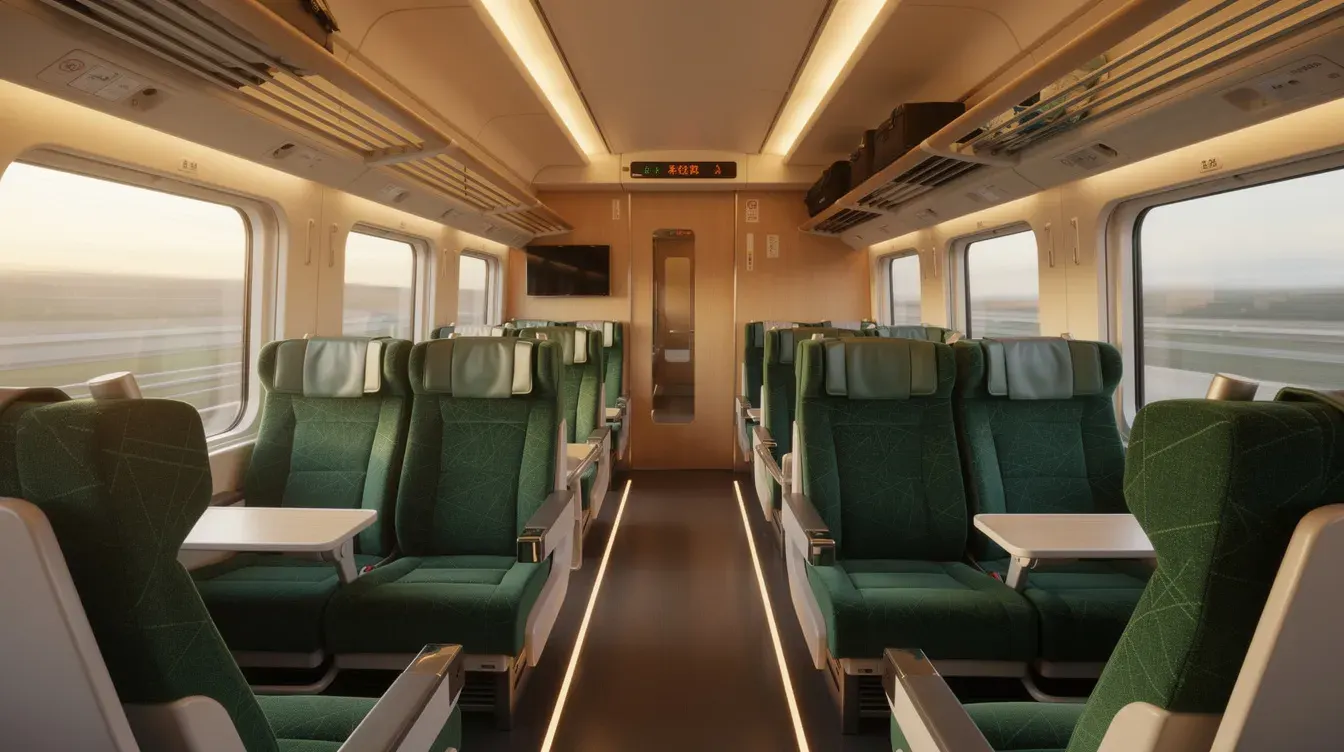
Ordinary Car seats are arranged in 3+2 rows. Standard seating on Shinkansen offers spacious configurations and generous legroom, with power outlets (at every seat on N700S sets, at window and front-row seats on N700A sets) and overhead racks for carry-on luggage. Ordinary cars include both reserved and non reserved seat options.
Green Car seats are arranged in 2+2 rows with wider seats, more legroom and recline, and a noticeably quieter environment. All seats in Green Cars are reserved, making it ideal for business and luxury travelers who value calm and space. At-seat power outlets and reading lamps come standard.
Gran Class offers fully reclining seats for maximum comfort on certain Shinkansen lines - however, Gran Class is not available on Tokaido Shinkansen services between Tokyo and Osaka.
Ekiben culture involves enjoying meals purchased at train stations during the journey. With the traditional trolley service on the Tokaido Shinkansen ending in October 2023, JR Central replaced it with QR code mobile ordering for Green Car passengers on many trains. Picking up a beautifully boxed ekiben at Tokyo Station before departure remains one of the ride's quiet pleasures.
Oversized luggage - bags of 160 to 250 cm in total length, width and height - requires reservation of a seat with an oversized baggage area in certain cars; anything larger is not allowed on board. Smoking rooms were removed from Tokaido Shinkansen trains in March 2024, and phone calls are taken in the deck between cars rather than at your seat.
If you usually fly business class and stay in 5-star hotels, tell us and we'll default your Shinkansen seat reservations to the Green Car, with the cost difference shown before you book.
Schedules, peak times, and making seat reservations
Shinkansen trains operate with high frequency, departing multiple times per hour. At the busiest daytime periods, roughly 12–15 trains run between Tokyo and Shin-Osaka each hour when counting all Nozomi, Hikari, and Kodama services combined - Shinkansen trains depart frequently, at least every 10 minutes for most of the day and every few minutes at peak, giving near "turn up and go" convenience.
First departure time from Tokyo to Shin-Osaka: around 6:00 a.m., arriving approximately 8:22 a.m. The last train that runs through to Shin-Osaka is the 9:24 p.m. Nozomi; Hikari and Kodama services to Shin-Osaka finish earlier in the evening.
Timetables are searchable on JR Central's English website. Station displays show train number, departure time, destination, and car positions for reserved versus non reserved sections.
Reservations can be made at English-language ticket machines, JR ticket offices, or via online services before arrival in Japan. Tickets for the Shinkansen can be bought at ticket machines quickly at any major station. During holidays and Friday evening rush, reserved seats on Nozomi fill fast.
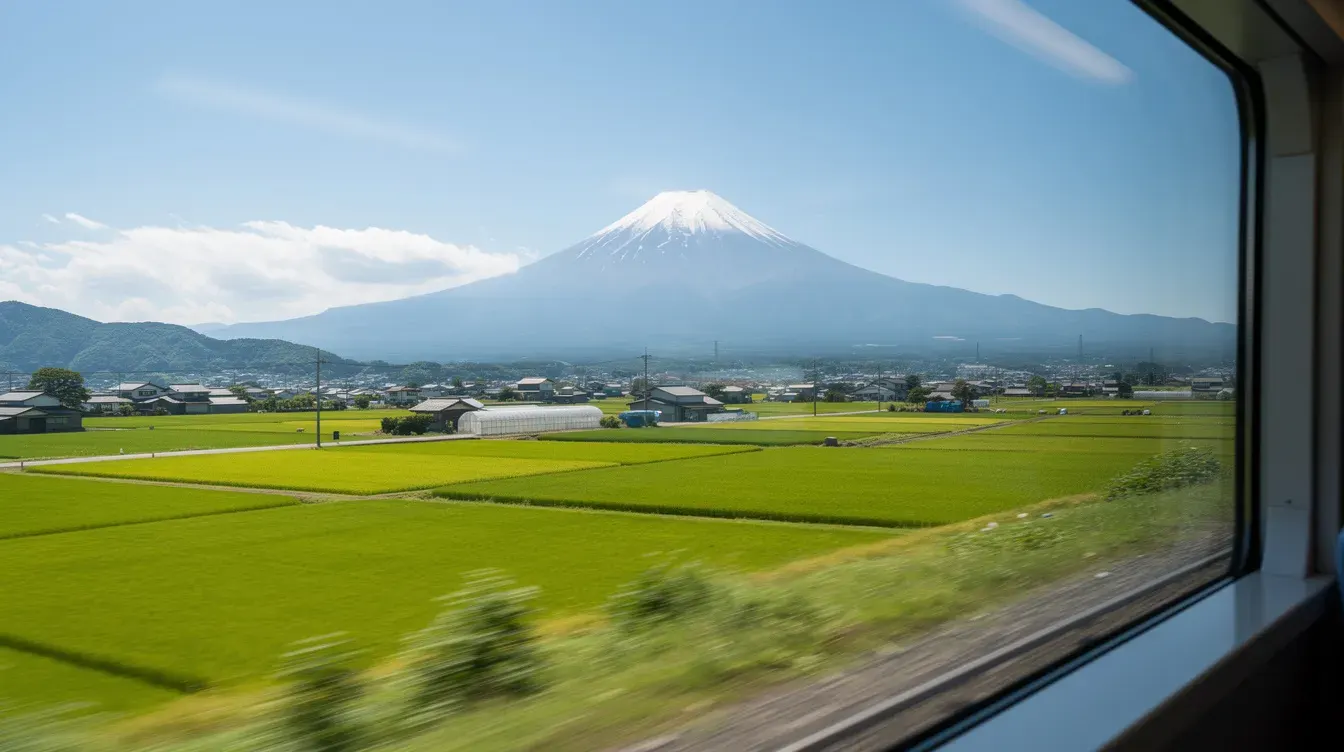
Mount Fuji can be seen from the Shinkansen on clear days, particularly when seated on the right side. For the Tokyo to Osaka direction, choose seats on the right-hand side (seat E in Ordinary Cars, seat D in the Green Car) and look out about 40 to 45 minutes after leaving Tokyo on a Nozomi (later on Hikari and Kodama), near Shin-Fuji Station; mid-morning departures give the best chance. Traveling in the opposite direction, Fuji appears on the left.
We plan departure times to avoid commuter peaks, line them up with hotel check-out and check-in, and leave buffer time for transfers at Tokyo, Shinagawa, or Shin-Osaka.
How to ride: gates, platforms, and finding your seat
The process of boarding a Shinkansen is straightforward once you understand the flow: enter the station, pass through JR gates, reach the Shinkansen area, board your train, and arrive at Shin-Osaka. The Shinkansen is known for its punctuality, with delays averaging under a minute - so arrive at the platform a few minutes early and trust the timetable.
Two-gate system: if you arrive on a local JR line, you first pass through normal JR gates, then insert both your base fare ticket and Shinkansen ticket together at the dedicated Shinkansen ticket gates to reach the platforms. Japan Rail Pass holders put the pass through the same gates, and if you booked on smartEX with a linked IC card, you simply tap the card at the Shinkansen gate.
Shinkansen platforms display bilingual LED boards showing departure time, train name (Nozomi, Hikari, or Kodama), train number, and car numbers for reserved versus non reserved sections.
For reserved seats: find the car number printed on your ticket, line up at the corresponding platform marker, board at your door, and match seat row and letter (e.g., Car 10, Seat 5A).
For a non reserved seat: locate cars designated as non reserved (often Cars 1–3), queue early during busy periods to avoid long lines, and be prepared to stand if the train is full. Several trains leave from the same platform in quick succession, so confirm the train name and departure time on the display before boarding.
At Shin-Osaka, follow signs to JR lines or Osaka Metro Midosuji Line. About 5 minutes to Umeda/Osaka Station via JR line; around 15 minutes to Namba by subway.
Unsure where to go inside Tokyo Station or Shin-Osaka on the day? Ask the Travel Ninja 24/7 AI concierge.
Tokyo–Osaka in your wider Japan itinerary
The Tokyo–Osaka Shinkansen leg often anchors a broader "Golden Route" itinerary covering Japan's most celebrated destinations. With the Shinkansen handling the corridor's heavy lifting, the real magic lies in what you do at each stop.
A classic 7–10 day luxury route: Tokyo (3 nights) → Hakone or Shizuoka via Shinkansen (1–2 nights) → Kyoto (2–3 nights) → Osaka (1–2 nights), with all bullet train segments pre-planned. See our full Japan itinerary guide for detailed day-by-day plans.
Side trips from Shin-Osaka or Kyoto by Shinkansen or limited express: Himeji Castle, Hiroshima and Miyajima (see Osaka to Hiroshima Shinkansen), or the Kii Peninsula for Kumano Kodo pilgrim trails. Explore more in our guide to the best places to visit in Japan.
Luggage forwarding services (takkyubin) send suitcases ahead between hotels in Tokyo, Kyoto, and Osaka - usually arriving the next day - so you can ride with just a small bag.
Travel Ninja specializes in stitching together Shinkansen segments with 5-star hotels, private guides, and curated experiences such as tea ceremonies and private temple visits on our Japan cultural immersion tour.
The efficiency of the Tokyo–Osaka Shinkansen frees up time and energy for deeper, bespoke experiences across Japan's most extraordinary destinations.
Travel Ninja: planning and booking your Tokyo–Osaka Shinkansen journey
Travel Ninja is an AI-powered travel platform that designs and books end-to-end luxury itineraries centered around the Shinkansen bullet train, from Tokyo to Osaka and beyond. Two decades of travel expertise back every recommendation.
Input your preferences - comfort level, interests like food, design, nature, or culture - and Travel Ninja proposes a day-by-day plan with Shinkansen departures, seat reservations, and hotel check-in times aligned to your schedule.
Weigh the options - Japan Rail Pass versus individual Shinkansen tickets, ordinary versus Green Car, Nozomi versus Hikari - against your budget and planned route before anything is booked.
Book hotels, Shinkansen seats, transfers, and selected experiences in one place: a specialist reserves them under your name once you approve the plan.
The 24/7 AI concierge answers questions on the road, and your specialist stays with you until you're home: a train cancelled the night before departure is their problem to solve, not yours.
Start planning your Tokyo–Osaka journey with Travel Ninja. Save hours of research, eliminate logistical stress, and experience Japan's iconic high-speed rail the way it was meant to be enjoyed - with every detail handled.